(I) A Major Publisher Compensates All Players After a Gacha Pool Bug in a “Anime-style Games” Game
On January 20, a serious bug occurred in the latest gacha pool of the mainland China server of a “Anime-style Games” mobile game published by a major Shanghai-based company. Due to the bug, the gacha pool was unable to produce any 4-star or 5-star characters, and players could only obtain characters through the pity mechanism.
In response, the game was taken offline for emergency maintenance. In the subsequent apology announcement, the operator announced that all players on the server would be granted the three featured characters from the current recruitment banner and that all gacha resources consumed during the bug period would be refunded.
Nuocheng Commentary:
Operational incidents are a challenge that most game companies will inevitably face. If handled improperly, such incidents can easily escalate into large-scale public opinion crises or user complaints. In this case, the operator promptly suspended services, issued an apology announcement, and adopted remedial measures, including granting specific characters to all players and refunding gacha resources consumed during the bug period. These measures constitute concrete performance of contractual liability.
Such measures not only compensated players for virtual property losses caused by the bug (including gacha resources and expected character entitlements), but also effectively prevented the escalation of disputes. This approach aligns with judicial practice, which generally holds that “game operators shall bear remedial and compensatory liability for service defects.” Moreover, since the operator had already taken timely remedial measures and fully compensated players for their reasonable losses, courts typically do not support further monetary compensation claims where players fail to provide evidence of actual damages exceeding virtual property losses.
(II) Two Individuals Sentenced for Illegally Obtaining Personal Information and Selling Love and Deepspace Accounts
Lin operated an online store providing game boosting services. For the purpose of illegal profit, Lin commissioned Xie, who was proficient in programming, to develop an automated script targeting the popular mobile game Love and Deepspace. The script enabled automated login, daily check-ins, and completion of routine in-game tasks.
To maximize the script’s commercial value, Lin obtained more than three million pieces of citizens’ personal information through illegal channels, including names and ID card numbers. Lin then organized personnel to use virtual email accounts to batch-register game accounts and complete real-name authentication. The two used the script to operate a large number of accounts simultaneously for “account farming,” and subsequently sold the accounts through the online store at different prices based on the amount of virtual currency and rare items contained in each account.
In September 2024, the game developer detected anomalies and reported the matter to the police. Investigation revealed that the script written by Xie, without authorization, obtained player login token data sent by the game server and directly transmitted data packets to the server, thereby interfering with the normal operation of the server. The script was identified as a destructive program. As of the time of the offense, the two had generated illegal profits of more than RMB 1.6 million through the sale of game accounts.
After trial, the court held that Lin and Xie had violated state regulations by intruding into computer information systems to obtain data, and had illegally obtained and provided citizens’ personal information under particularly serious circumstances. Their conduct constituted both the crime of illegally obtaining computer information system data and the crime of infringing upon citizens’ personal information, and they were subject to combined punishment for multiple offenses.
Given that both defendants had compensated the victim company for economic losses and obtained forgiveness, lighter punishment was warranted. Ultimately, the court accepted all charges and sentencing recommendations proposed by the procuratorate and sentenced Lin and Xie each to four years and five months of fixed-term imprisonment, along with a fine of RMB 80,000.
In addition, the court supported the criminal incidental civil public interest litigation initiated by the procuratorate, ordering the two to delete the illegally collected and stored citizens’ personal information and to issue a public apology to society through national-level media.
Nuocheng Commentary:
The real-name registration system for online game accounts provides strong legal support for game companies in combating black and grey market activities such as bulk account registration and account resale.
On the one hand, by requiring the submission of real identity information as a prerequisite for account registration, the real-name system effectively filters out some individuals intending to engage in illegal activities, thereby compressing the operational space of black and grey industries at the source and reducing the phenomenon of mass account registration.
On the other hand, even where illegal actors obtain large amounts of citizens’ identity information through unlawful channels for account registration, the nature of their conduct fundamentally changes—from a civil dispute affecting a game company’s service order to a criminal offense infringing upon the personal information security of a large number of citizens.
This transformation not only significantly increases the cost of illegality, but also enables game companies to work more effectively with public security and judicial authorities to take stronger enforcement measures, precisely curb account resale black-market activities, and safeguard the healthy and orderly development of the game industry.
(III) Art Department Executives at a Major Game Company Criminally Detained for Alleged Corruption
Recently, Perfect World released an announcement disclosing multiple cases of internal and external collusion and corruption involving employees and suppliers uncovered in 2025. Investigations revealed that Diao, the art department team leader of the Qingyun Studio’s New Zhuxian World project, abused his position during his tenure to collude with suppliers, inflate procurement prices, solicit and accept bribes, and embezzle company property.
Song, the former animation team leader of the Lingxiao Studio’s Perfect New World project, abused his position and influence to inflate procurement prices, illegally subcontract business to closely related parties, and solicit and accept bribes. Wang, the former art director of the same project, illegally introduced unqualified suppliers, instigated and cooperated with suppliers to falsify prices, and long-term solicited and accepted large sums of bribes.
The company determined that the above conduct was suspected of constituting criminal offenses and reported the matter to public security authorities.
At present, the police have lawfully placed Diao, Song, and Wang under criminal detention. Perfect World has dismissed Diao and permanently barred him from re-employment. The announcement stated that the company maintains a zero-tolerance policy toward corruption and fraud, has previously reported relevant leads to the police, and will continue to keep reporting channels open to safeguard corporate interests.
Nuocheng Commentary:
This anti-corruption announcement by Perfect World focuses on art-related positions, with all involved personnel colluding with external suppliers to seek personal gain through bribery and inflated procurement prices. In fact, anti-corruption efforts have long been a key focus for major game companies in standardizing internal management and protecting corporate interests.
In conducting anti-corruption work, enterprises should pay attention to the following:
Clue acquisition: Continuously keep reporting channels open, actively encourage employees, suppliers, and relevant parties to report misconduct under real names, and strengthen special audits and routine inspections of core business areas such as procurement and outsourcing to proactively identify early warning signs and tendencies.
Handling corruption: In addition to investigating and dealing with corrupt personnel in accordance with the law or internal management rules, companies may also publicly disclose typical cases to create strong deterrence, while simultaneously analyzing institutional loopholes revealed by such cases and improving supplier management and approval processes to build a solid anti-corruption defense.
(IV) Italy Investigates Two Blizzard Games for “Misleading and Aggressive Sales Practices”
Recently, the Italian Competition Authority (AGCM) announced the launch of formal investigations into two popular mobile games under Activision Blizzard (Microsoft Group): Diablo Immortal and Call of Duty Mobile.
The regulator stated that although these games are labeled as “free-to-play,” their in-game purchase mechanisms and interaction design may violate the Italian Consumer Code and pose additional risks to minors.
According to reports, the AGCM alleges that these games employ misleading and aggressive interface designs, push mechanisms, and default settings that induce players to repeatedly engage in gameplay and spending, and may even lead to minors making payments without adequate informed consent.
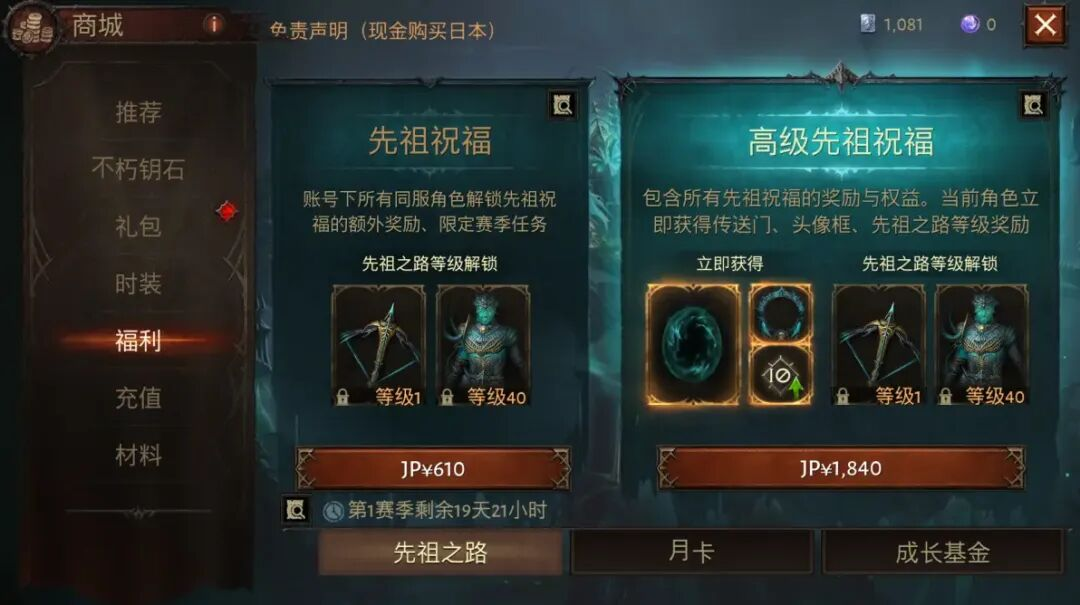
The AGCM emphasized that the investigation does not target the game content itself, but rather focuses on whether the commercialization models and interface design materially affect consumers’ rational decision-making. This enforcement action also signals the continued strengthening of regulatory oversight in the digital consumer sector by European authorities.
Nuocheng Commentary:
The AGCM’s investigation into Diablo Immortal and Call of Duty Mobile is not an isolated action targeting Microsoft Group’s mobile game business, but rather reflects a growing compliance risk across the EU, where in-game purchase transparency and “dark patterns” have become key regulatory priorities.
This case demonstrates that game companies’ compliance obligations are no longer limited to content compliance, but extend to the form and logic of product design. Companies urgently need to move beyond traditional compliance perspectives and expand their review scope to encompass business strategies, user interface (UI) design, and decision-guiding pathways.
Under the increasingly stringent EU regulatory framework, the mainstream “free-to-play + in-app monetization” business model is facing comprehensive scrutiny. This requires companies to reassess compliance across critical areas such as virtual currency system design, promotional activity planning, and consumer protection mechanisms—particularly protections for minors—in order to respond to an increasingly complex regulatory environment.