(I) Unauthorized Production and Sale of Game Figures: Three Defendants Liable for RMB 300,000+
Recently, the Xuhui District People’s Court of Shanghai successfully mediated a copyright infringement dispute involving character figures from Blue Archive.
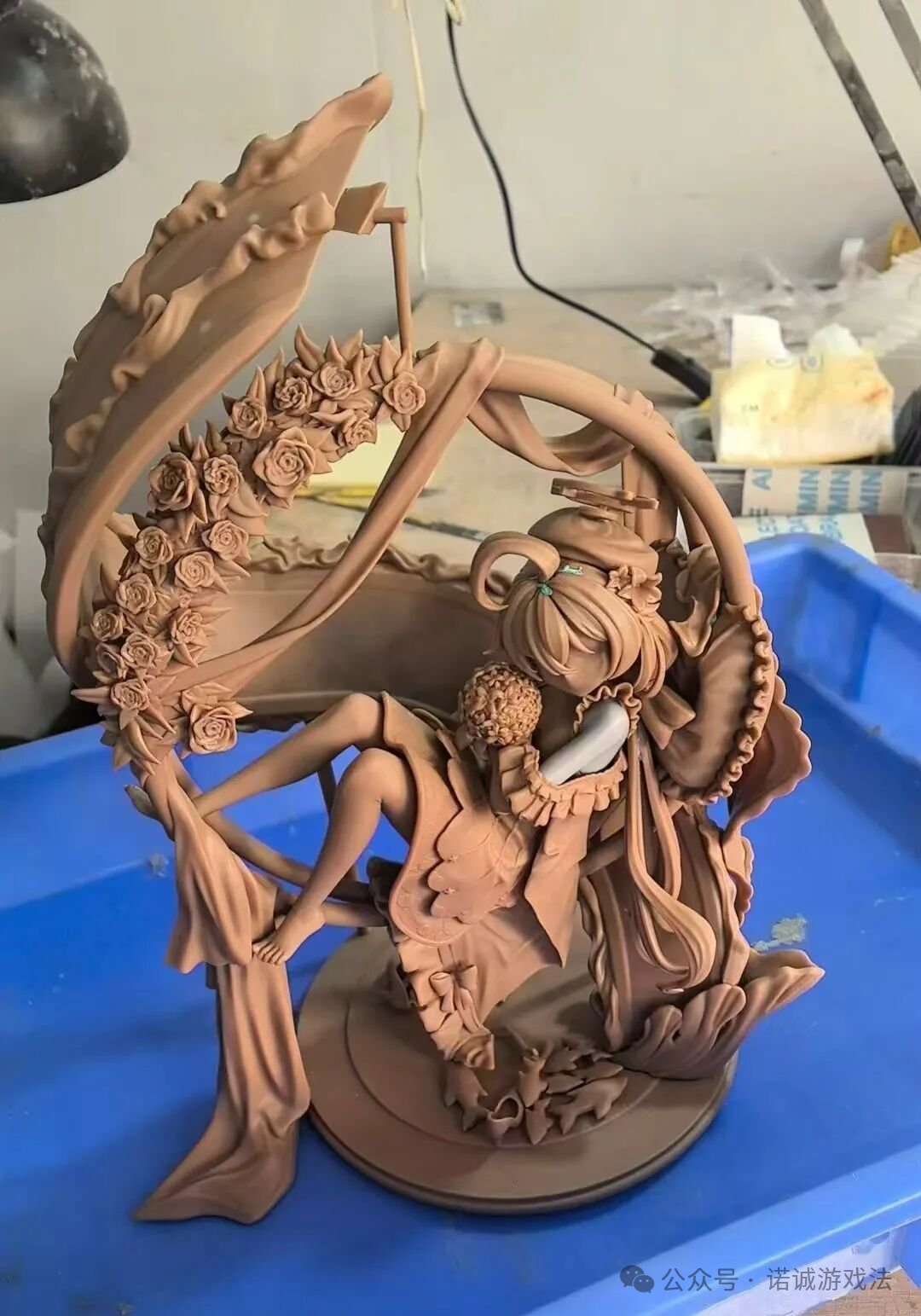
Defendant Zhao, without authorization from the copyright holder, Yostar, replicated multiple popular in-game characters on a 1:1 scale, created molds, and mass-produced pirated figures, which were sold through private channels such as QQ groups.
Defendants Wu and Yang, as online collectible shop operators, knowingly sourced the infringing products from Zhao and resold them at a markup.
Facing enforcement actions, Zhao argued that the figures constituted “secondary creation,” while the distributors claimed lack of knowledge or mere resale as defenses.
After examination, the court determined that the figures were substantially similar to the original in-game character designs, thereby constituting infringement. The court further clarified the legal distinction between protected original expression and the lawful boundaries of “secondary creation.”
Ultimately, the parties reached a settlement: Zhao and the others ceased infringement, removed the products, and jointly compensated the rights holder (Shanghai Xingxiao Network Technology Co., Ltd.) for economic losses and reasonable expenses totaling over RMB 300,000.
Nuocheng Commentary:
This case exemplifies common infringement issues in game IP derivative products.
“Substantial similarity” is the core test for infringement, not exact duplication.
Even with minor modifications (e.g., pose or accessories), retention of core original expressive elements—such as iconic hairstyles, costumes, color schemes, or weapons—may still result in infringement if consumers can पहचान the character.Full-chain liability enforcement is critical.
From manufacturer to distributor, all parties were held jointly liable, reinforcing that enforcement should target the entire infringement chain, not merely upstream producers.Proactive and ecosystem-based licensing strategies are essential.
Game companies should actively cultivate legitimate derivative markets through official licensing or structured fan creation programs, thereby channeling user creativity into compliant pathways.
(II) Game Level Design Inducing Payments: Company Compensates RMB 150,000 Worth of In-game Assets
The Beijing Consumers Association recently disclosed a dispute involving a football game player who spent RMB 840,000 but remained unable to clear the “final level.”
The player alleged that the operator had designed an unreasonably difficult or effectively unattainable level to induce further spending, potentially constituting fraud.
During mediation, the operator acknowledged design defects but denied intentional misconduct. Ultimately, under regulatory intervention, the company issued an apology and compensated the player with approximately RMB 150,000 worth of in-game items and virtual currency.
Nuocheng Commentary:
This case serves as a warning for games featuring pay-to-win progression or difficulty-based monetization.
Improper game design may trigger false advertising liability, even absent probabilistic mechanics.
If a game misrepresents achievable progression endpoints—e.g., presenting an unattainable goal as realistically achievable—it may constitute false claims regarding the performance or functionality of services, violating Article 20 of the Consumer Protection Law of the PRC, and potentially triggering triple damages for consumer fraud under Article 55.
(III) Illegal Operation of Private Game Servers: Three Defendants Convicted for Copyright Infringement
The Hangzhou Railway Transport Procuratorate recently concluded a criminal case involving illegal operation of a private game server.
Three individuals (Zhang, Li, and Liu) jointly operated a private server for “Game L,” purchasing pirated server files, modifying drop rate parameters, and attracting players with “high drop rates and low spending”. They also operated a website and leased servers, generating over RMB 700,000 in player充值.
Following a report by the rights holder, the suspects were arrested. The court convicted them of the Crime of Copyright Infringement, sentencing them to fixed-term imprisonment of two years and eight months to three years (with suspended sentences) and imposing fines.
Nuocheng Commentary:
Key enforcement considerations in private server cases include:
Jurisdiction selection:
Criminal jurisdiction may be established at multiple locations, including server location, operator location, or place of harm. Specialized courts or procuratorates (e.g., railway transport courts) may exercise centralized jurisdiction.Judicial appraisal of code similarity:
Assessment typically involves comparison of source code structure, logic, annotations, runtime outputs, and unique identifiers, requiring a finding of substantial similarity.Comprehensive evidence preparation:
Including IP ownership proof, infringement evidence (screenshots, transaction records), and loss calculations.Strategic compensation claims:
Companies may pursue compensation via criminal附带 civil actions, settlements, or separate civil litigation, depending on defendants’ asset conditions.
(IV) Pan European Game Information (PEGI) Expands Age Rating Framework
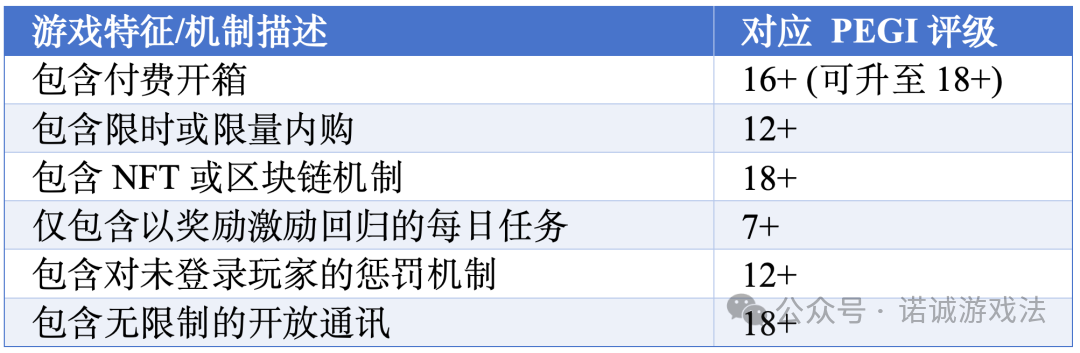
On March 12, 2026, PEGI announced a major update to its age rating system, introducing “interactive risk categories” for the first time.
The new framework incorporates factors such as:
Monetization mechanisms
Online interaction features
Retention design
The rules will take effect in June 2026 and apply to all newly submitted games.
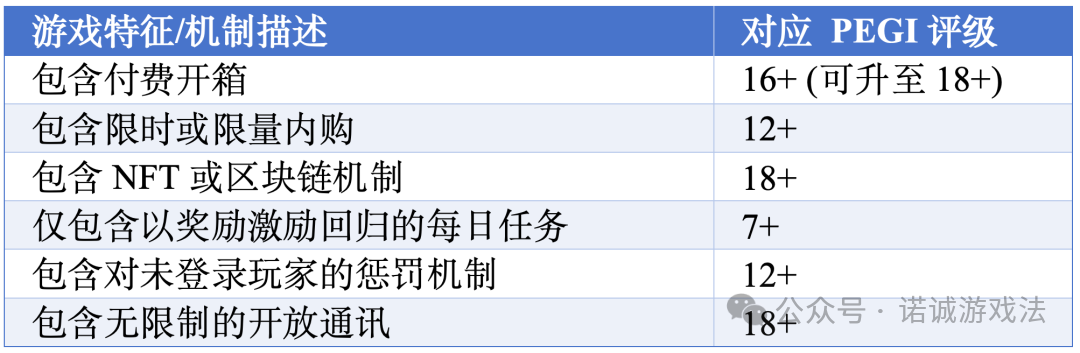 This marks a shift from mere disclosure (e.g., “in-game purchases” labels) to substantive rating intervention, where such mechanisms directly affect age classifications.
PEGI stated that the reform responds to parental concerns regarding minors’ exposure to spending, interaction, and immersive design risks, aligning with broader EU regulatory trends on digital consumer protection.
Nuocheng Commentary:
This update directly links monetization models—such as loot boxes, in-app purchases, limited-time offers, and NFTs—to age ratings.
Key implications include:
Potential rating increases (e.g., PEGI 16 or 18), leading to market contraction;
NFT/blockchain features being broadly classified as high-risk, limiting accessibility to adult users;
PEGI evolving from a content rating body to a behavioral regulatory gateway.
Game companies expanding into Europe should conduct pre-launch compliance assessments, particularly regarding probability systems, virtual asset monetization, and user protection mechanisms, and adjust product design accordingly.
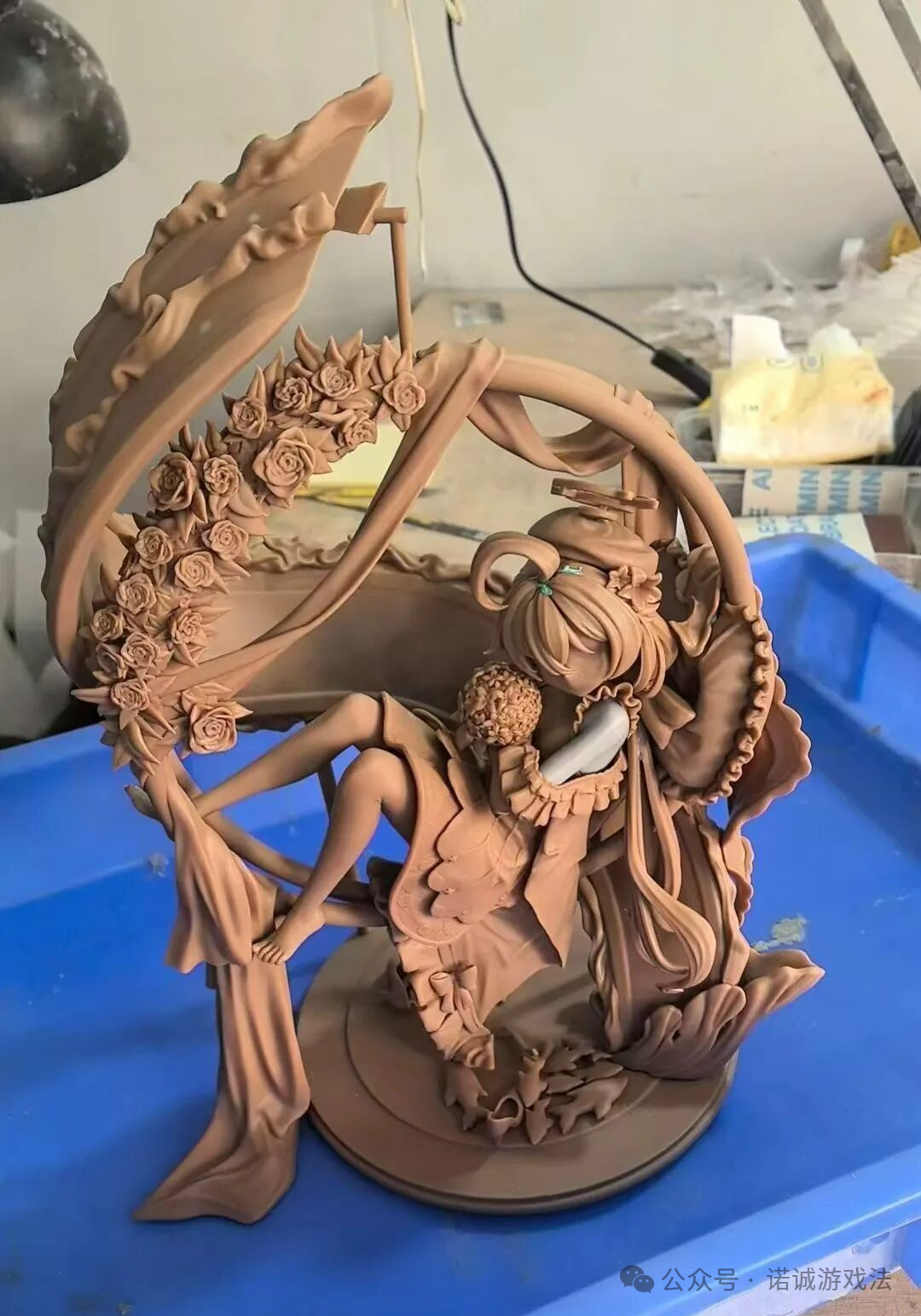 (盗版侵权手办半成品)