(I) Apple Lowers App Store Commission in China to 25%, Effective Today
On March 13, 2026, Apple Inc. announced on its developer website that, following communications with Chinese regulatory authorities, it would adjust its App Store commission policy in China. Starting from March 15, 2026, the commission rates for mobile and tablet systems within the App Store have been revised.

The standard commission rate for in-app purchases (IAP) and paid apps has been reduced from 30% to 25%. Under the App Store Small Business Program and the Mini Apps Partner Program, eligible IAP commissions and auto-renewing subscription commissions after the first year have been reduced from 15% to 12%.
This adjustment took effect on March 15 without requiring developers to re-execute new agreements. Apple stated that it will maintain fair and transparent terms for all developers and continue to provide competitive App Store rates in China that are not higher than the overall levels in other markets.
According to estimates, based on an annual “Apple tax” of RMB 50 billion, a 5% reduction could save Chinese developers approximately RMB 8.3 billion annually. This adjustment marks an important milestone in consumer rights protection in China and reflects the combined impact of regulatory enforcement and legal practice.
Nuocheng Commentary:
This commission reduction represents only a phased concession by Apple in response to antitrust pressure in the Chinese market. Although the rate has decreased, the structural barriers underlying its monopolistic position remain intact.
Compared with regions such as the European Union, Apple has neither opened third-party payment channels nor allowed sideloading or distribution via third-party app stores in China. Developers and users still face significant restrictions on choice.
Against this backdrop, attorneys Wang Qiongfei and Zhang Yanlai of Kenting Law Firm will continue to advance the “first consumer antitrust case against Apple China” and pursue administrative complaints regarding abuse of market dominance, with the aim of promoting more open competition policies in the Chinese market.
(II) Malicious Destruction of Game Accounts by Streamer May Trigger Legal Liability
Recently, a game streamer “Qingyu Tpor” with 400,000 followers drew widespread attention after maliciously destroying player accounts during livestreams.
During streams, paying fans (with tier titles such as “Captain” or “Admiral”) could request the streamer to log into their accounts via QR code for power leveling (account boosting) or account evaluation. However, for non-paying viewers, the streamer would deliberately destroy their accounts after logging in.
The incident arose when a fan failed to renew their paid status due to an automatic payment issue. After logging into the account, the streamer sold all rare collectibles and high-value in-game items accumulated over a year at the lowest system price within one minute, effectively wiping out the player’s progress.
According to media reports, such “account destruction” practices are, in some segments of the livestreaming industry, even used as a traffic-generation tactic.
The platform has since banned the streamer. The affected player is preparing to file a civil lawsuit and is also considering criminal prosecution. Several brands have terminated cooperation with the streamer in response to reputational concerns.
Nuocheng Commentary:
The so-called “livestream rules” cannot serve as a legal exemption for destroying another person’s game account.
Game accounts and in-game items constitute legally protected virtual property. Article 127 of the Civil Code of the People’s Republic of China establishes the principle of protection for virtual property, and the 2025 revision of the Provisions on Causes of Action in Civil Cases formally recognizes “disputes over online virtual property” as an independent cause of action.
In this case, the streamer disposed of high-value in-game items without the owner’s consent, constituting an intentional infringement of property rights. Civil liabilities such as compensation for damages and public apology shall apply.
Where such intentional destruction causes losses exceeding RMB 5,000, it may also constitute the Crime of Intentional Destruction of Property.
From a brand management perspective, companies should establish full-cycle public opinion risk control mechanisms when cooperating with streamers, including:
Pre-cooperation due diligence to screen for prior misconduct;
Detailed contractual clauses specifying liability for reputational damage;
Continuous monitoring and rapid response mechanisms to mitigate public relations risks.
(III) Alleged Manipulation of Loot Box Probabilities; Notary Assists Player in Massive Evidence Collection
In June 2025, a player (Gao) reported to the Pujiang Notary Office in Zhejiang Province that a mobile game operator had engaged in false advertising regarding probabilistic rewards.
The game prominently featured loot box mechanics with disclosed probabilities for obtaining certain items. However, after spending RMB 34,000, the player found a significant discrepancy between the advertised probability and actual outcomes.
After unsuccessful communication with customer service, the player sought to preserve evidence through notarized evidence preservation prior to initiating complaints or litigation.
The notary assisted in collecting two categories of evidence:
Operator-related information, including game links, login interface disclosures, user agreements, privacy policies, and licensing information;
Full gameplay recordings, including player ID, loot box rules, in-game operations, payment interfaces, and actual drop results.
The process involved continuous screen recording, capturing the entire gameplay dynamically. After over 10,000 loot box attempts within one hour, the actual probability was calculated at 0.36%, nearly ten times lower than the advertised rate.
The notarized evidence provides strong support for subsequent legal action.
Nuocheng Commentary:
The “black box probability” issue is a high-frequency source of player complaints. To mitigate such risks, game companies should:
Clearly disclose probabilities and item quantities in prominent positions;
Specify individual item probabilities rather than vague category-based disclosures;
Explain probability changes under mechanisms such as limited supply or non-repetition rules;
Establish verifiable probability systems, ensuring backend logic strictly matches disclosed rates and retains audit trails for regulatory inspection.
(IV) Nintendo Sues U.S. Government: Tariff Disputes Impact the Gaming Industry
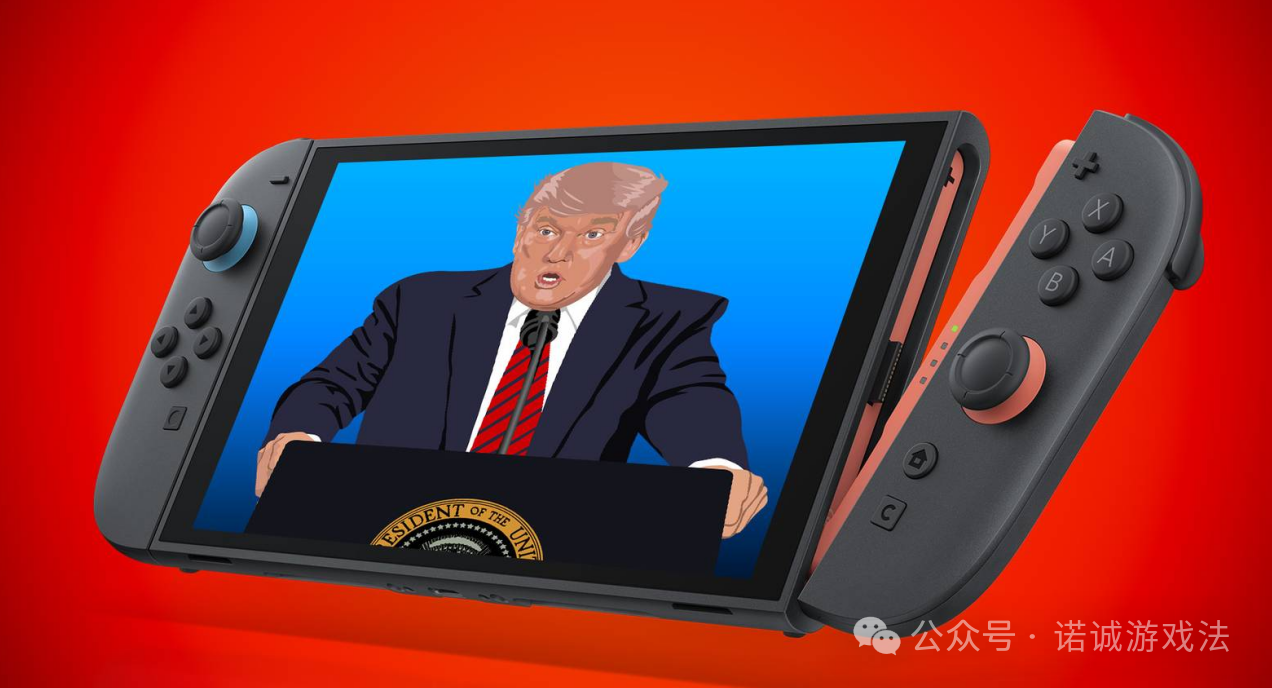
On March 6, 2026, Nintendo filed a lawsuit before the U.S. Court of International Trade, seeking refunds of tariffs imposed under the International Emergency Economic Powers Act (IEEPA) along with interest.
This case forms part of a broader wave of trade litigation. Since 2025, the U.S. government has imposed tariffs totaling approximately USD 130–200 billion.
In February 2026, the Supreme Court of the United States ruled in Learning Resources v. Trump (6:3) that the President lacks authority under IEEPA to unilaterally impose tariffs.
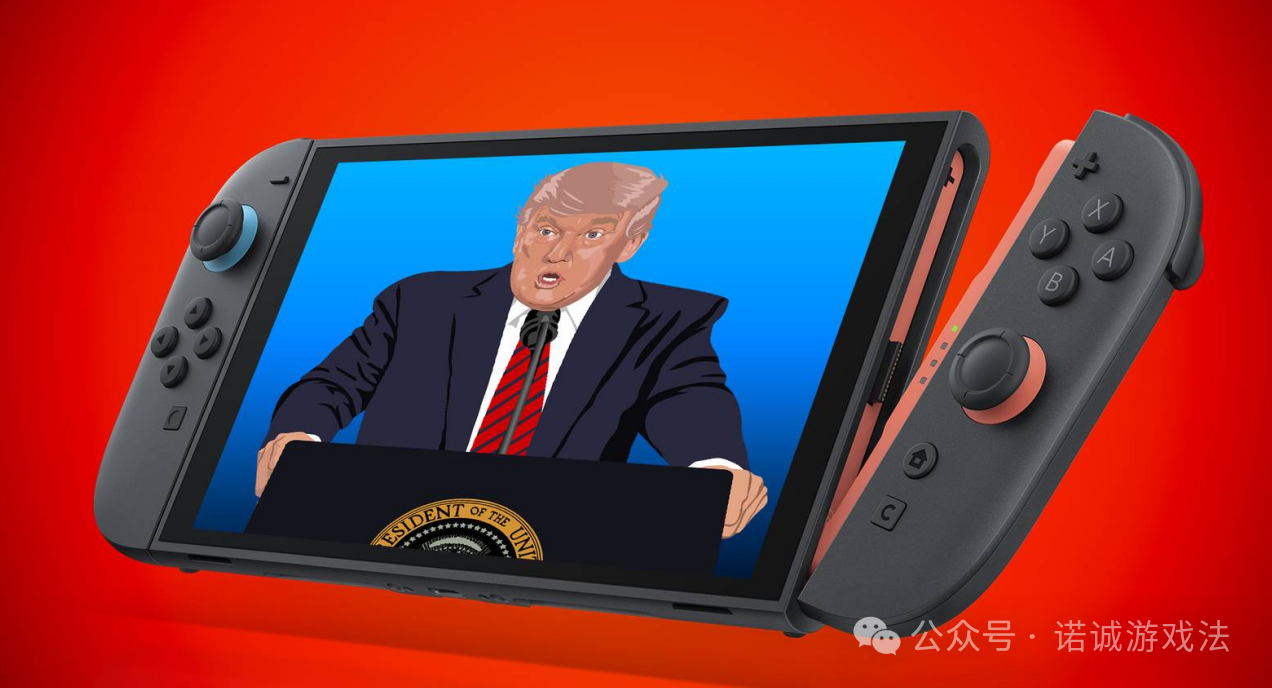
The Court held that IEEPA is intended for economic sanctions and emergency restrictions, not tariff-setting, and that allowing such authority would violate the constitutional separation of powers.
However, the Court did not decide whether previously collected tariffs must be refunded, leaving the issue to the CIT.
Nintendo argues that if the tariffs lack legal basis, the government’s retention of funds is equally unlawful. It seeks full refunds, interest, reprocessing of import records, and reimbursement of legal fees.
Over 1,000 companies, including Costco and FedEx, have filed similar claims.
The dispute arose from U.S. tariff measures imposed in 2025 on imports from China, Canada, and Mexico, later expanded through “reciprocal tariffs.” The policy coincided with the release of Nintendo Switch 2, leading Nintendo to delay U.S. preorders and adjust pricing and supply chains.
Nuocheng Commentary:
This litigation highlights a growing trend: the gaming industry is increasingly affected by international trade policy.
As game companies expand beyond software into hardware, esports equipment, physical collector editions, and IP merchandise, they become more exposed to tariffs, trade disputes, and export controls.
For Chinese game companies, as overseas expansion accelerates, trade and tax risks will become increasingly significant.