
PART 1
Case Introduction
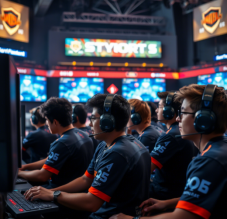
In the recently concluded case (2024) Hu 0116 Min Chu 12544 at the Jinshan District People's Court of Shanghai, a trading company (Plaintiff) and an esports club (Defendant) disputed over the “Club Promotion Cooperation Agreement.”
The plaintiff claimed the club failed to fulfill contracted obligations including Weibo promotions and player livestreaming, and that the club's head coach's inappropriate remarks and repositioning of popular players triggered a collective fan boycott, leading to declining merchandise sales. The plaintiff sought compensation for lost profits and legal fees. The club counterclaimed for payment of remaining sponsorship fees and liquidated damages.
The court ultimately ruled that the club did not commit fundamental breach of contract, ordering the trading company to pay the remaining service fees while dismissing other claims.
 PART 2
Controversy Focus: Who Bears Responsibility for Boycotts?
The core value of esports marketing lies in establishing emotional connections with young audiences through player IP and tournament settings, thereby enhancing brand recognition and loyalty.
As evidenced by the aforementioned case, this exposure heavily relies on monetizing traffic and fan economies, harboring significant performance risks:
(1) Fragility of Traffic
The exposure value of esports teams often centers on monetizing the traffic of core players. Fluctuations in a key player's form, transfers, or retirement can drastically impact brand exposure. For instance, in this case, the position change of main player Yang triggered fan backlash, highlighting the double-edged sword effect of individual player IP on brands.
Moreover, esports exhibits an extreme “winner-takes-all” dynamic. Sustained poor performance or lack of competitiveness by a club can diminish fan engagement and support, thereby reducing brand exposure conversion rates. While the brand in this case failed to prove (and it is indeed challenging in practice) a causal link between “poor performance” and “declining sales,” such disputes frequently arise in real-world scenarios.
(2) The Unpredictability of Fan Economy
Fan support for players or clubs can evolve into emotional investment in brands, generating substantial exposure during periods of backing.
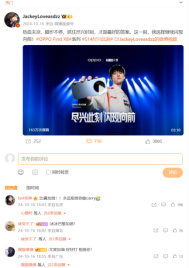 However, if a team performs poorly or players engage in inappropriate conduct—or even cross ethical boundaries—it can trigger spontaneous collective boycotts and cyberbullying from fans. This, in turn, adversely affects the brand and leads to public relations crises.
In this case, the court dismissed the plaintiff's compensation claim primarily due to “insufficient proof of causation.” The sponsor failed to demonstrate a direct link between the club's actions (such as player role adjustments or coach statements) and the decline in sales. This ruling logic highlights the blurred boundaries of responsibility in esports sponsorship disputes:
1. Commercial Risk vs. Breach of Contract: Esports sponsorship inherently resembles a traffic-based wager, requiring brands to anticipate inherent uncertainties like player form, team performance, and fan sentiment. Unless contracts explicitly assign such risks to the club (e.g., promising “team qualification for playoffs/world championships”), related losses may be deemed commercial risks rather than breach damages.
2. Attributing Liability for Negative Publicity: Fan boycotts often exhibit spontaneity and unpredictability. Even if a club exhibits management flaws (e.g., coach misconduct), courts may deem the club has fulfilled reasonable obligations if remedial actions (apologies, personnel changes) were taken, absolving it from liability for fans' extreme reactions.
3. Objective obstacles in loss calculation: Brand sales are influenced by multiple factors including market competition, product quality, and marketing strategies. The exposure effect of esports sponsorships is difficult to isolate and quantify independently. The “backend sales data” provided by the plaintiff was deemed “insufficiently probative” by the court due to the lack of a control group (e.g., projected sales without sponsorship).
 PART 3
Compliance Recommendations
To address the unique risks associated with esports sponsorships, brands and clubs must establish a risk prevention system covering contract design, public sentiment management, and performance monitoring:
1. For Sponsors: Dynamically assess traffic value and establish predefined exit mechanisms
(1) Player IP Risk Control Clause: Clearly define the roster of core players in the contract, stipulating that “if a core player retires, transfers, or is absent for an extended period, the sponsor has the right to deduct fees proportionally to the loss of rights, terminate the contract early, or request replacement rights.”
(2) Performance-based clauses: For sponsorships heavily tied to exposure value and tournament results, stipulate requirements like “the team must qualify for playoffs/international tournaments.” Failure to meet these targets triggers proportional refunds or benefit replacements.
(3) Installment Payments: Adopt a “334” payment structure (e.g., 30% upon signing, 30% mid-season, 40% post-season). Consider linking payment milestones to key milestones, such as paying the final 10% upon qualifying for the World Championship.
2. For Clubs: Strengthen Public Sentiment Management and Establish Emergency Response Systems
(1) Member Conduct Restrictions: Add “sponsor protection clauses” to coach and player contracts, prohibiting actions that may harm sponsor interests.
(2) Crisis PR Contingency Plans: Define response protocols for negative incidents (e.g., issuing statements within 24 hours, providing compensation plans within 48 hours) to prevent escalation. For example, prepare contingency resources like pre-recording three 15-second brand endorsement videos from players to address sudden public relations crises.
(3) Force Majeure Clauses: Clearly define rules for contract temination and mutual loss allocation when unforeseen external factors occur, such as tournament cancellations or league policy adjustments.
PART 4
Conclusion
Behind the traffic frenzy of esports sponsorships lies a strategic game between brands and clubs regarding risk perception. Both parties must clearly understand specific risks, meticulously refine contracts beforehand, and transform esports traffic into a sustainable engine for brand growth.
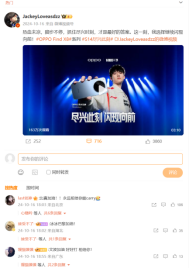 但是,如果队伍表现不佳、选手有不当言行乃至触碰红线,也会引发粉丝集体的自发抵制、网络暴力,反使品牌方受到不利影响,引发舆情事故。
 PART 3