
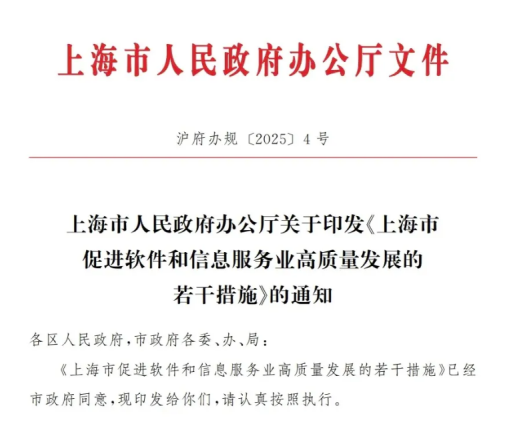
On July 7, 2025, the General Office of the Shanghai Municipal People's Government issued the “Several Measures for Promoting High-Quality Development of the Software and Information Services Industry in Shanghai.” Article 9 proposes fostering the clustering of the digital content industry in Shanghai, supporting the establishment of digital content industry clusters, and promoting service models for innovation incubation, registration, trading, and financing in fields such as digital games.
Of particular note, Shanghai will launch a pilot policy treating game products developed by foreign-funded game companies in Shanghai as domestically produced games. This represents a significant policy boost for foreign-funded game enterprises.
As a major hub for foreign-funded game companies, Shanghai boasts a strong international environment that has attracted numerous renowned foreign game firms to establish branches. This pilot policy will accelerate the approval process for game licenses and increase the likelihood of approval for foreign-funded game companies, incentivizing them to establish a foothold in Shanghai for development and global market expansion.
 According to current regulations, overseas games entering the Chinese market must undergo a series of stringent compliance procedures.
First, game content must comply with Chinese laws, regulations, and cultural values, and must not contain harmful elements such as violence, pornography, terror, or ethnic discrimination.
Second, games require an import game version number, which is a prerequisite for legal operation. The application process for import game version numbers is relatively complex, typically requiring submission of detailed game content descriptions, operational plans, copyright certificates, and other materials, followed by multiple rounds of review. The review cycle is lengthy, and the annual quota for import game version numbers is limited, presenting significant challenges for many overseas games entering the Chinese market.
The introduction of this Shanghai pilot policy offers greater convenience for game products developed in Shanghai by foreign-funded game companies. It is expected to streamline certain review procedures and improve the efficiency of obtaining version numbers.
 Obtaining a version number is crucial for overseas games to operate in mainland China. This version number serves not only as a “passport” for legal operation but also as a key threshold for entering the Chinese market. Without it, games cannot be listed on major app stores in mainland China, cannot conduct commercial operations, and thus cannot generate revenue.
Even with the new pilot regulations, we believe overseas games operating in mainland China must still strictly adhere to Chinese laws, regulations, and relevant policies. First, game content must comply with Chinese laws, regulations, and cultural values, and must not contain any illegal, non-compliant, or socially immoral elements. Second, game operations must comply with relevant Chinese laws and regulations such as the Cybersecurity Law and Data Protection Law to ensure user information security and data security.
Additionally, game operations must comply with China's tax policies, anti-monopoly laws, and other relevant regulations to ensure lawful and compliant operations. While the implementation of Shanghai's pilot policy provides greater convenience for game products developed by foreign-funded companies in Shanghai, it does not imply a reduction in regulatory requirements for game content and operations. On the contrary, this will prompt regulatory authorities to further strengthen oversight of game content and operations, ensuring the healthy and orderly development of the gaming market.
In summary, the implementation of Shanghai's pilot policy represents a significant positive development for foreign game companies, potentially streamlining the process for overseas games to enter the Chinese market and improving the efficiency of obtaining game licenses. However, overseas games operating in mainland China must still strictly comply with Chinese laws, regulations, and relevant policy requirements to ensure healthy game content and lawful, compliant operations.
Full text of the notice:

 依据现行有关规定,海外游戏进入中国市场需要经过一系列严格的合规流程。
 获取版号对于海外游戏在中国大陆的运营至关重要。版号不仅是游戏合法运营的“通行证”,更是游戏进入中国市场的关键门槛。没有版号,游戏无法在中国大陆的各大应用商店上架,无法进行商业化运营,也就无法实现盈利。