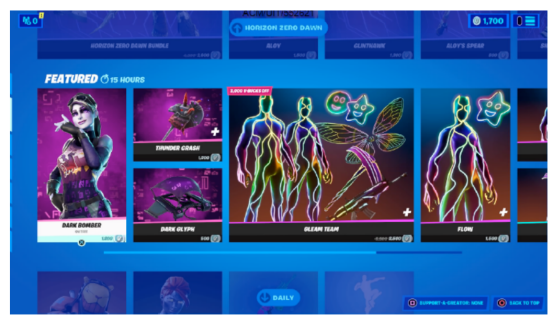
On May 14, 2024, the Netherlands Authority for Consumers and Markets (ACM) issued a penalty decision against Epic Games for employing unfair commercial practices targeting minors in Fortnite. ACM's investigation found that the company “exploited the vulnerability of minors” through design choices in its in-game item shop. This included using coercive language such as “Get it now” or “Buy now” in certain advertisements, as well as employing misleading countdown timers for offered items. ACM issued binding instructions to the company along with two fines totaling €1,125,000.
PART 1
How was Fortnite determined to be a product targeting minor users?
ACM elaborated on whether Fortnite qualifies as an internet product targeting minors to refine its enforcement logic for protecting minors' consumer behavior. ACM's assessment primarily considered the following dimensions:
1. Gameplay and Mechanics Design: Fortnite is a colorful game featuring a non-realistic style (imaginative, vibrant, playful, exaggerated, and cartoonish). When opponents are incapacitated, the game refers to “elimination” (not ‘killing’), no blood is visible, and eliminated players are picked up by robots and flown away. Additionally, the game incorporates themes appealing to minors and may prompt players to perform dances and “moves” popular among minors. Thus, the game closely aligns with minor experiences. Moreover, as mentioned earlier, Epic has integrated parental control features into the game, allowing various restrictions to be set for minors. This indirectly indicates that Epic Games is fully aware of the inevitable presence of underage players and consequently provides such functionality to regulate their gaming behavior.
2. Game Rating: The PEGI age rating system deems it suitable for minors aged 12 and above.
3. Game Merchandise Audience: Epic Games has granted licenses to IMG Licensing and toy manufacturer Hasbro to sell Fortnite merchandise specifically targeting minors. Examples include school supplies, children's apparel (including costumes), and toys (including toy weapons, board games, other games, and action figures). These products are sold in the Netherlands.
In summary, ACM concludes that Fortnite is targeted at minors, or that Epic had reason to foresee minors as being particularly susceptible to its influence, and that the game holds strong appeal for minors.
PART 2
What are the violations in Fortnite?
According to the ACM's publicly released investigation order documents, the specific actions that led to Epic Games receiving fines and corrective orders include the following details:
I. Deceptive scarcity item countdowns
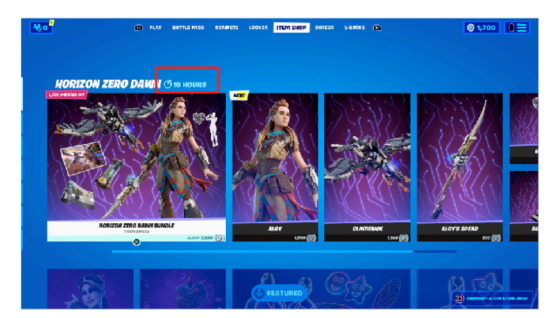
Between February 1, 2021, and December 3, 2021, the Fortnite Item Shop offered various products, including so-called “Third-Party Item Packs” (hereinafter referred to as TP Item Packs). For example, see the collection of TP Item Packs under the title “Horizon Zero Dawn” in the image below.
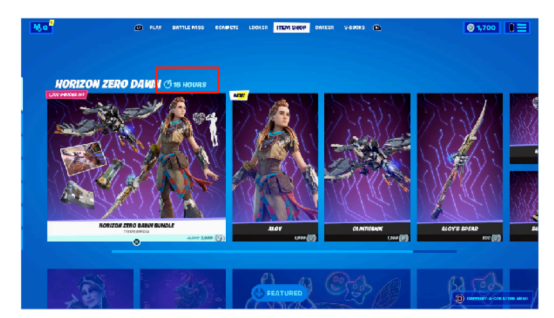
Next to each title, a timer counted down from 24 hours (as indicated by the red box in the screenshot). When the timer expired, the offer would “refresh,” sometimes causing the TP Item Bundle and its accompanying individual items to disappear from the Item Shop. However, TP bundles typically remained unchanged in the Item Shop for several consecutive days. During this period, new 24-hour timers would continuously appear. The Item Shop provides no explanation for the timers' purpose. Epic's website offers the following clarification under its FAQ section: "Available items in the Item Shop rotate constantly. If an item you want is out of stock, check back often as it will likely become available again later. You can see when items change by looking at the countdown timers above the ‘Featured Items’ and ‘Daily Items’ sections. We also occasionally announce when special items will return to the store via social media or blog posts.“ This explanation provides no information about the timer on the ”Third-Party Item Bundle" homepage. The timer in the Item Shop also makes no mention of the explanation found in Epic's website FAQ.
According to ACM's investigation, between February 1, 2021, and December 3, 2021, ACM regulators recorded the sales duration of TP item bundles offered in the Item Shop under unique titles over consecutive days each month. Of the 60 TP item bundles documented, half were available for over 24 hours. For 14 of these TP items, officials precisely recorded their availability duration, averaging 15 calendar days. This test result indicates that the timers accompanying TP item bundles are deceptive.
ACM contends that minors playing Fortnite may perceive the timer displayed near offered products—indicating the window during which these items can be purchased—as signaling their imminent removal from the Item Shop. When TP item bundles carry a 24-hour countdown timer, children may believe they have a maximum of 24 hours to decide whether to make a purchase from these bundles.
Beyond time pressure, the timer creates a deceptive perception of scarcity for specific TP item bundles. In a sense, minors might believe that once the timer expires, the currently available TP item bundles will no longer be accessible. ACM contends that the scarcity created by deceptive timers triggers minors' FOMO (fear of missing out). When experiencing FOMO, individuals may think less rationally in the moment before making decisions. Consequently, minors may be unable to make informed decisions about offers.
Regarding the timer mechanism, while Epic contends its explanation in the official website FAQ clarifies that the timer does not indicate offer availability but rather the remaining time before the Item Shop refreshes its offers, ACM contends that the explanation on Epic's website is too distant from the timers accompanying the TP item bundle category within the in-game Item Shop to serve as any meaningful reference for minors making purchase decisions. Minors would then have to independently search outside the game (on Epic's website) to understand the timer's meaning in the Item Shop. Furthermore, even if minors did find this explanation, it specifically targets timers above offers in the Item Shop's “Daily” and “Featured” categories. Minors must independently infer that this explanation also applies to the TP Item Bundle countdown timer.
II. Inducing Minors to Make Purchases
While playing Fortnite, minors inevitably encounter promotional content related to in-game purchases, including:
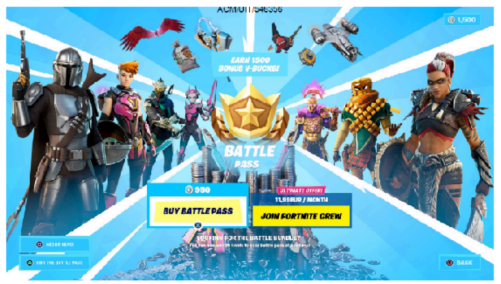
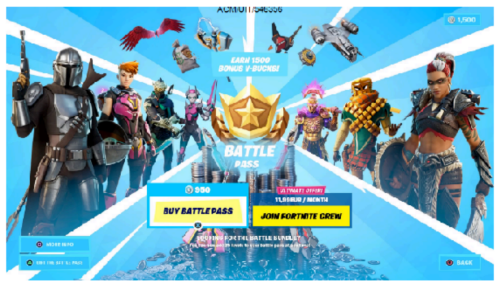
1. Paid Battle Pass Upgrade Promotional Videos
At least between December 2, 2020, and December 3, 2021, minors were compulsorily pushed pop-up ads for Battle Pass upgrades whenever a new season commenced.
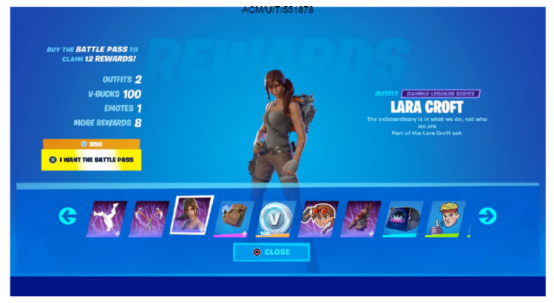
2. “Claim Rewards” Pop-ups
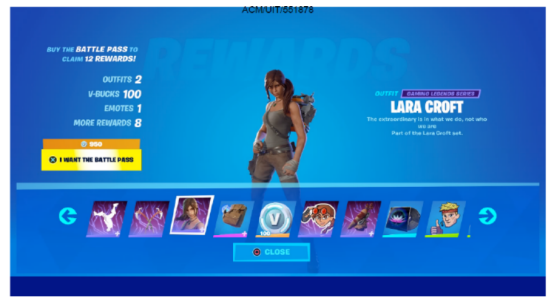
Between December 2, 2020, and June 7, 2021, when minors reached a higher rank during a match, the following interface appeared on the post-match summary screen. Minors first saw a screen displaying unlocked rewards. If the user had not upgraded the Battle Pass, a second screen appeared showing rewards unlocked during the current season but unclaimed (due to not upgrading the Battle Pass).
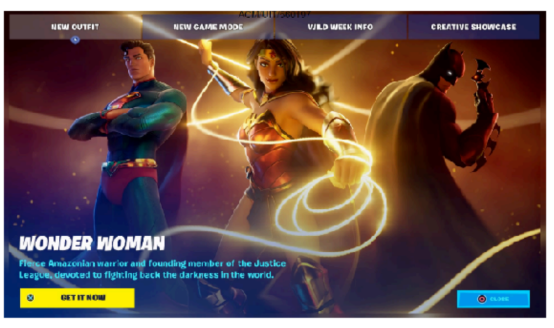
3. Message of the Day (hereinafter referred to as “MOTD”)
From December 2, 2020, to December 3, 2021, when minors logged into Fortnite, they would typically first encounter a “News” notification followed by a full-screen MOTD pop-up. Minors usually had to click through each one individually to reach the game's main menu. MOTDs could cover new game features or updates to existing ones. They also frequently highlighted specific in-game items, such as subscriptions, Battle Pass upgrades, and paid items in the Item Shop.
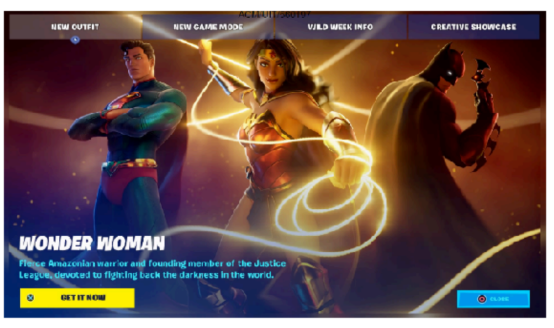 Following the above investigation, ACM determined that under the Dutch Civil Code, directly urging minors to purchase advertised products or persuading their parents or other adults to buy products for them in advertisements constitutes aggressive commercial practices under all circumstances. Given this, ACM concluded that minors were directly persuaded to make purchases or to persuade their parents or other adults to purchase on their behalf within the “Battle Pass upgrade” promotional video, the “Claim Rewards” screen, and the “MOTD.” On this point, ACM determined that this violated provisions of the Dutch Consumer Protection Implementation Act and the Dutch Civil Code.
III. Complex Pricing Displays Under Time Pressure
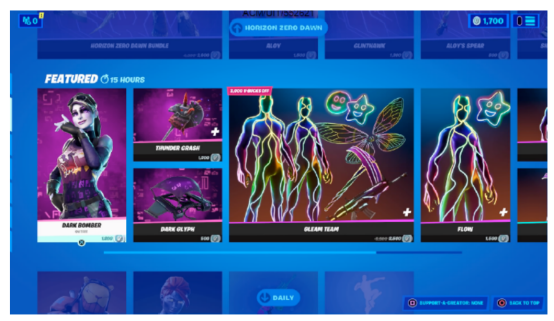
ACM's investigation revealed that countdown timers appear next to specific items in the item shop. When the timer reaches zero, these items sometimes disappear, while other times they remain available. Consequently, underage users are uncertain whether they can still obtain desired items after the timer expires. This uncertainty prompts minors to make purchase decisions more hastily, fearing they might miss out on desired items—even though these items remain available the following day. Since the Item Shop provides no information about whether items truly become unavailable after timers expire, minors lack essential knowledge about the shop's inventory, which is critical to their purchasing decisions.
Simultaneously, the colored frames and labels attached to paid items ostensibly represent their rarity. All items offered in the Item Shop's “Daily” and “Featured” categories are categorized into four tiers via colored borders and labels: green (“Uncommon”), blue (“Rare”), purple (‘Epic’), and gold (“Legendary”). The game provides no in-game explanation for the colored frames and labels surrounding the offered items. Without further context, these color-coded labels indicating rarity are essentially arbitrary tags that not only fail to assist players but may actually complicate purchasing decisions. The so-called tiered frames and labels do not reflect actual scarcity metrics: the historical supply frequency of an item; its current availability window; or the likelihood of an item reappearing in the Item Shop. The framework and labels also fail to enable players to estimate the scarcity of items bearing specific tags (e.g., “Rare”) relative to items with other tags (e.g., ‘Uncommon’). Since the “Item Shop” lacks transparency regarding item rotation and rarity levels, players must rely on external websites to independently research item rarity information.
According to ACM's perspective, the combination of these design features can be termed a “dark pattern.” Artificially creating scarcity within complex product offerings, introducing uncertainty about product availability, and applying time pressure all contribute to the exploitation of FOMO. This increases the likelihood of impulse purchases. Minors may be particularly vulnerable to Fortnite's scarcity strategies, as they are inherently more impulsive than adults and younger players purchase cosmetics and other in-game items more frequently in Fortnite.
PART 3
What are the specific fines and corrective measures required by the administrative order?
ACM considers the situation particularly severe where vulnerable consumers (minor users) are systematically and inevitably subjected to consumer rights violations during their long-term use of Fortnite. Taking all factors into account, ACM imposes a base fine of €562,500 for each violation by Epic Games, totaling €1,125,000.
Simultaneously, ACM requires Epic Games to promptly implement the following corrective measures to protect the legitimate rights and interests of minor users, reduce commercial practices that encourage impulsive spending, and eliminate “dark patterns”:
1.Clearly indicate the sales period for specific paid items in the item shop. Epic Games must specify for each item and clearly indicate to minors when it will be removed from the item shop. This will eliminate uncertainty regarding item availability, enabling minors to make more informed purchasing decisions.
2.Provide sufficient time for purchase decisions. Epic Games must allow minors adequate time to consider purchases of offered items.
In response to the ACM administrative decision, Epic Games has also implemented the following updates as corrective measures to mitigate consumer harm resulting from the established violations:
1.Color boxes and labels indicating item tiers displayed alongside price discounts will be removed from the item shop globally;
2.Countdown timers for limited-time purchases will be removed from the item shop globally;
3.In the Item Shop, the user's local time will be displayed, indicating when the Item Shop refreshes;
4.On each available item's product page, a set date will be displayed, indicating when that item will be removed from the Item Shop;
5.For players under 18 years of age in the Netherlands, only items available for 48 hours or longer will be visible and purchasable in their Item Shop;
6.“Cabined Accounts” will be rolled out globally. Players under 16 in the Netherlands will require parental/guardian consent to view certain content and use certain features (including making real-money purchases);
7.A “Cancel Purchase” button will be introduced, allowing purchases to be canceled within 24 hours of purchase or until the player first uses it (whichever comes first);
8.Each player will receive three return tickets, allowing them to return items to the Item Shop within 30 days of purchase, regardless of whether the item has been used. Players will receive one additional return ticket each year as long as they have fewer than three remaining (players can hold a maximum of three return tickets at any given time).