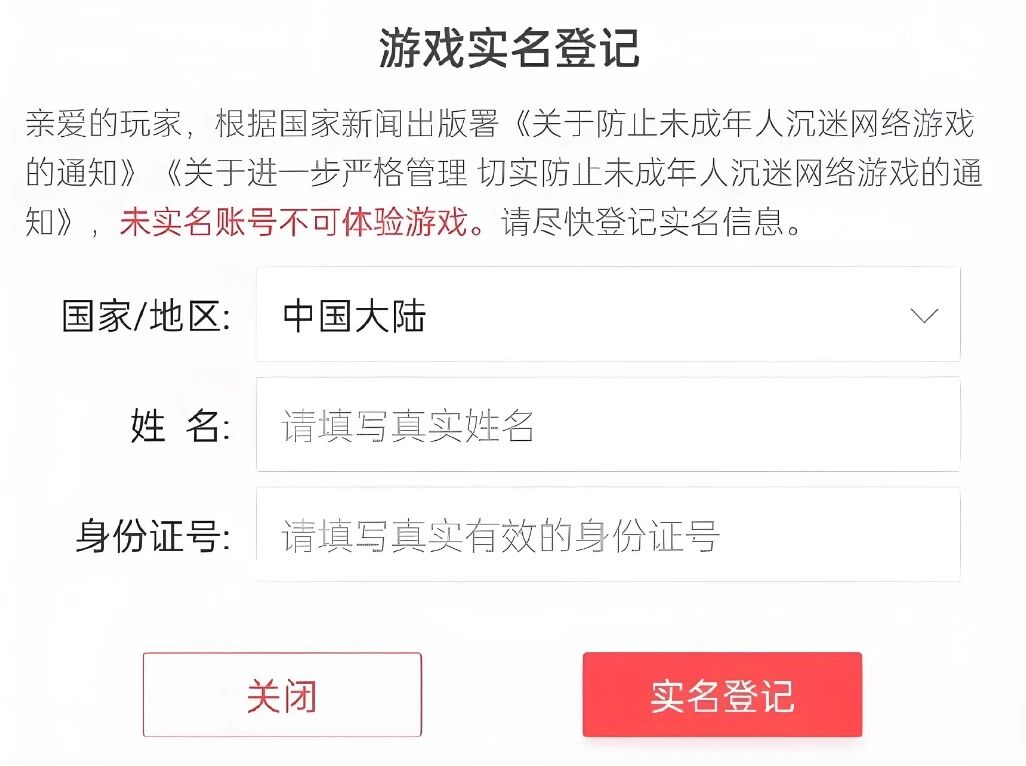
In recent years, the online gaming industry has continuously strengthened protective measures for minors, with compliance frameworks for identity verification, addiction prevention, permission management, and recharge refund mechanisms becoming increasingly robust. However, even with these comprehensive compliance systems in place, internet gaming companies still struggle to fully prevent minors from circumventing anti-addiction systems by using adults' identity information, or from requesting refunds after recharging accounts authenticated under adult identities. This article will explore litigation strategies for minors seeking refunds in such scenarios through case analysis.
PART 1
Case Overview
Minor Zhang claims he registered the game account in question without consent from his legal guardian, Zhang (Zhang's father), using Zhang's mobile number and identity information. He subsequently made in-game purchases during gameplay.
Plaintiff Xiao Zhang contends that he was only 14 years old—a minor—at the time of the in-game top-ups. The substantial top-ups made to his game account lacked the consent or ratification of his legal representative, rendering the related civil acts invalid. Defendant Beijing Technology Company, as the game operator, should therefore refund the top-up amounts.
Defendant Beijing Technology Company argued that the registration, use, and top-ups of the game account were all performed by an adult, rendering the online service contract legally valid. It requested the court to dismiss all of the plaintiff's claims.
PART 2
Court's Ruling
(I) Rationale for the Judgment
1. In this case, plaintiff Xiao Zhang claims that the registration, use, and recharging of the game account in question were all performed by the plaintiff himself. However, the evidence provided by the plaintiff shows that the mobile phone number used to register and use the game account in question belonged to his guardian, Zhang Mou, the real-name authentication used the identity information of guardian Zhang Mou, and the WeChat account used for recharging belonged to guardian Zhang Mou. This is insufficient to prove that the actual user of the game account in question was plaintiff Xiao Zhang.
2. Conversely, evidence submitted by the defendant indicates that the user of the game account engaged in activities inconsistent with the typical lifestyle patterns of minors, such as making top-ups during school hours and in the early morning hours. The names of the game characters used also do not align with preferences commonly associated with minors, and comments made within the game do not reflect language characteristics typical of minors.
Considering the above circumstances, the plaintiff's evidence fails to prove that he was the actual user of the game account or that he personally conducted the recharges. He must bear the adverse consequences of failing to meet the burden of proof. Therefore, the plaintiff's claims to invalidate the online service contract and demand a refund lack factual and legal basis, and the court rejects them.
(II) Judgment Outcome
First Instance: All claims by plaintiff Xiao Zhang are dismissed.
PART 3
Legal Analysis
In refund disputes involving minors' gaming activities, the key lies in proving that the account user and recharge initiator was a minor. The plaintiff bears the burden of proof for the facts underlying their claims. Consequently, internet gaming companies as defendants should focus on organizing the following evidence:
(1) In-Game Nicknames
Game nicknames can to some extent reflect a player's general preferences and cognitive level. There are certain differences in the character names used by adults versus minors.
1. In this case, the primary character names used in the involved game account included “Caribbean Donald,” “Sinbad,” “Xu Zhu,” and “Guixu Night Owl.”
2. In the case of Su Xiangming v. Shenzhen Youyuan Chuangxiang Network Technology Co., Ltd. (Case No.: (2022) Yue 01 Min Zhong 3782), the game character names used included “Hua Xiangrong” and “Yun 乀 Hua Xiangrong.” The court also held that feminine and obscure characters were clearly inconsistent with the preferences and cognitive level of a ten-year-old boy.
(II) In-Game Chat Records
If the linguistic logic and vocabulary used in-game clearly deviate from typical minor speech patterns, it becomes difficult to prove the account's actual user is a minor.
1. In this case, the involved game account sent private messages such as:
“My wife and kids are asleep, not convenient for voice chat,”
“Then try adding me on WeChat,”
“I'm 42,”
“My son is already 15 years old,”
and posted content like:
“Almost forgot the event during parent-teacher conference,”
“Recharged nearly 200,000 RMB,”
“I'm puzzled myself,”
“Since my salary isn't high,”
in chat channels. My son is already 15 this year.“ In the chat channel, messages included: ”Almost forgot the activity because of the parent-teacher meeting,“ ”Recharged nearly 200,000 RMB,“ ”I'm puzzled myself,“ and ”Because my salary isn't high."
2. In the case of Su Xiangming v. Shenzhen Youyuan Chuangxiang Network Technology Co., Ltd. [Case No.: (2022) Yue 01 Min Zhong 3782], the account had posted messages in the game chat channel such as “I'm over thirty,” “My kid can already run errands,” and “I discovered this game while watching my child take online classes.” It also sent private messages to others containing statements like “I had an accidental miscarriage before.”
(Ⅲ) Gaming Duration and Recharge Timing
Activities such as gaming and recharging during school hours and late at night deviate from the typical daily routines of minors, aligning more closely with adult consumption patterns and lifestyles.
1. In this case, the involved gaming account recorded 683 top-ups totaling 188,412 yuan. Account logins and top-ups frequently occurred during school hours (8:00-11:00 and 14:00-17:00 on non-holiday days) and at midnight (0:00-6:00), exceeding 200 instances.
2. In the case of Su Xiangming v. Shenzhen Youyuan Chuangxiang Network Technology Co., Ltd. (Case No.: (2022) Yue 01 Min Zhong 3782), consumption times were more dispersed, with top-ups occurring across multiple time slots throughout the day. However, a significant portion of spending was concentrated late at night, with consecutive days showing top-up activities between 11:00 PM and 4:30 AM the following day.
3. In the case of Huang Mou 1 v. Zhejiang Zhengyou Network Technology Co., Ltd. Contract, Breach of Duty, and Unjust Enrichment Dispute [Case No.: (2021) Zhe 0683 Min Chu 1438] The game account was registered on March 31, 2019, and showed frequent logins and successive top-ups until January 16, 2021. Logins and top-ups frequently occurred during the hours of Zi (11 PM to 1 AM) and Chou (1 AM to 3 AM).
(Ⅳ) IP Addresses Used for Game Logins
If a game account exhibits numerous login IP addresses, this contradicts the stable learning patterns expected of minors, making it difficult to prove that the account was primarily used by a minor.
In the case of Su Xiangming v. Shenzhen Youyuan Chuangxiang Network Technology Co., Ltd. (Case No.: (2022) Yue 01 Min Zhong 3782), the login IP addresses for various characters under the game account were distributed across locations including Qinhuangdao, Shijiazhuang, Beijing, Shanghai, Guangdong, Sichuan, Zhejiang, and Jiangsu.
Furthermore, based on our case handling experience, collecting evidence of prior refund requests for the involved game account and whether the account continued to be used after the refund request is equally significant. For example: multiple prior refund requests with inconsistent reasons, where previous claims were not based on minor status but rather impacts on work/life or marital relationships; or continued gaming activity and top-ups after filing a minor-related refund request.
Overall, when handling refund requests from minors, internet game companies should conduct preliminary assessments using existing compliance systems. For accounts clearly not used by minors, relevant evidence should be collected and organized to prepare for potential future litigation. During actual court proceedings, cross-referencing evidence can demonstrate to the court that the actual user of the game is an adult rather than a minor, thereby effectively safeguarding the legitimate rights and interests of internet game companies.