
Apple Inc. and Google have long maintained dominant market positions in the mobile ecosystem. In recent years, this situation has raised concerns among regulators. As the European Union’s Digital Markets Act (DMA) begins imposing restrictions—such as placing the App Store on a new list of regulated digital gatekeepers—the landscape of mobile applications may soon change.
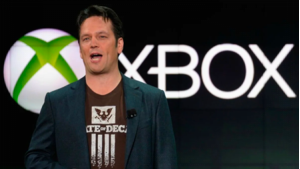
Faced with these potential shifts, Microsoft appears ready to take action in order to capture market share. According to a report by Bloomberg, Microsoft Gaming CEO Phil Spencer recently stated at the CCXP convention in São Paulo: “Building our own game store is an important part of our strategy and something we are actively working on today—not only by ourselves, but also by talking with partners who are interested in doing the same, to understand how they can gain more options to monetize through mobile.” In an interview with Bloomberg, Spencer discussed the company’s ongoing plan to enter the mobile gaming market through its own digital storefront.
As early as October 2022, during the investigation into Microsoft’s acquisition of Activision Blizzard, Microsoft had already hinted at this concept in a document submitted to the UK’s Competition and Markets Authority (CMA). For game products, in-app purchases represent a key source of revenue, and Microsoft clearly hopes to expand its business in this area. The document noted that acquiring Activision Blizzard would enhance Microsoft’s ability to create a next-generation game store capable of operating across multiple devices, including a mobile game store strengthened by Activision Blizzard’s content.
Microsoft’s mobile game store concept could also benefit from growing dissatisfaction with current market leaders Apple and Google. Regulatory initiatives such as the EU’s Digital Markets Act aim to increase competition and openness within the app-store ecosystem. However, persuading consumers to move away from the Google Play and Apple’s App Store will require significant changes in consumer behavior. Microsoft hopes that by offering well-known and popular content it can encourage players to try something new. Nevertheless, building a successful competitor capable of challenging Google Play or the App Store will be a major challenge, and attracting third-party developers will be essential if Microsoft hopes to make progress.
At present, Microsoft’s Xbox Game Pass subscription service has achieved considerable success. Large numbers of new games are added to the platform each month, and players can access them by paying a fixed monthly subscription fee. In fact, in December of last year alone, Microsoft announced the addition of 14 new games. The company has also recently completed its acquisition of Activision Blizzard and its major intellectual properties, including Call of Duty and Candy Crush Saga, significantly strengthening its mobile product portfolio overnight. With the support of this newly added content, Microsoft appears ready to enter the competition. However, the company has confirmed that Activision Blizzard titles will not appear in the standard Game Pass catalog in the near future.
In addition to strengthening its products to attract users, Microsoft seems to hope to build a more open distribution environment as a foundation for its strategy. For example, the company has suggested allowing developers to run their own app stores on the Xbox mobile platform and to use their own payment systems to handle in-app purchases—advantages that companies such as Apple and Google currently do not offer. Of course, these commitments have not yet been fully extended to the Xbox console platform. Microsoft plans to work toward gradually implementing these ideas over time.