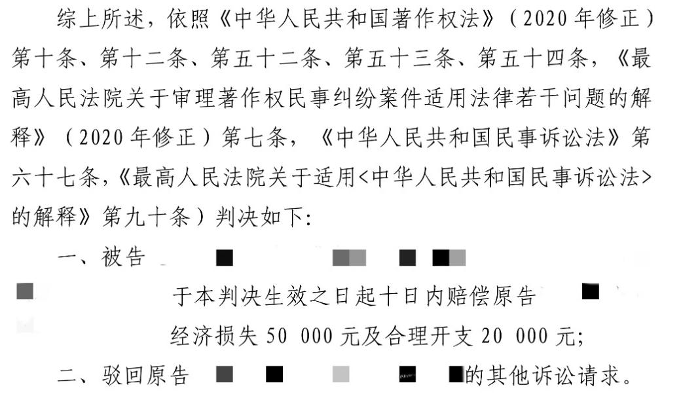
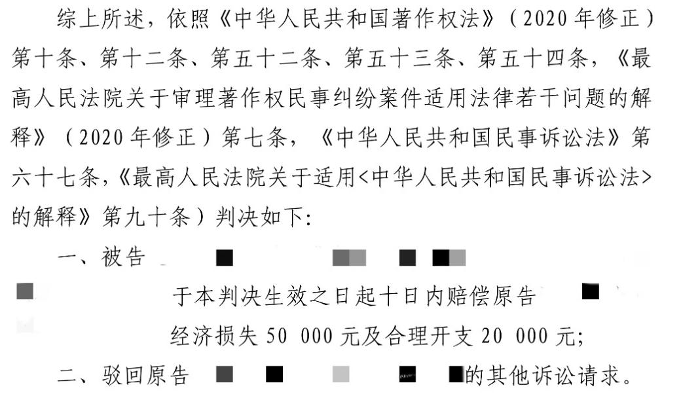
Recently, Kinding Law Firm represented a case involving a claim for tens of millions of yuan over “live streaming gift effects.” Significant progress has been made in this copyright infringement case. The Beijing Intellectual Property Court issued a final judgment, reducing the original claim amount from tens of millions to under one million yuan, substantially mitigating the client's financial losses.
PART 1
Case Background
The client, an operator of a domestic live streaming platform, purchased the disputed gifts from a third-party gift supplier and utilized the gift effects on its streaming platform. The plaintiff alleged that the gift effects deployed by the client's company were identical or substantially similar to those on the plaintiff's live streaming platform, constituting copyright infringement and unfair competition.

The plaintiff first filed a complaint with the app store and subsequently initiated litigation at the Beijing Internet Court, seeking the following relief:
1、Order an immediate cessation of acts infringing the plaintiff's copyrighted works;
2、Order an immediate cessation of unfair competition practices;
3、Order clarification of facts regarding copyright infringement and unfair competition in this case, along with a formal apology and elimination of adverse effects;
4、Award compensation for economic losses and reasonable expenses incurred in enforcing rights totaling RMB 10 million.
PART 2
Kinding's Handling Process
After accepting the client company's mandate, Kinding Law Firm conducted extensive research into similar case rulings for interpretation, analysis, and evaluation. We developed a defense strategy for this case and presented arguments from the following perspectives to protect the client company's rights and interests.
1. Kinding challenged the plaintiff's rights basis by deconstructing the involved virtual gifts.
Kinding conducted a rights attribution search for the live-streaming gifts in question. We thoroughly examined the plaintiff's live-streaming platform to locate the disputed gifts, then compared them against the plaintiff's copyright registration certificates and engineering documents. This analysis traced the formation dates of the gifts, their actual deployment timelines, and compared the engineering specifications with their practical implementations.

Building on this foundation, the firm deconstructed the display content and effects of each gift, analyzing their nature. It confirmed that the dynamic effects of the gifts involved merely constituted simple artistic imagery moving up, down, left, right, or from far to near, lacking the unique visual effects produced by the sequential connection of frames. The firm thus argued that the gifts constituted artistic works rather than audiovisual works, challenging the plaintiff's legal basis.
2. Kinding attorneys conducted an in-depth analysis of the operational model of live-streaming products to clarify the factors for determining compensation in this case.
Kinding attorneys extensively researched judgments on artistic work infringement, studied court guidance documents, and analyzed compensation standards for artistic works. Simultaneously, they conducted in-depth investigations into the operational and profit models of live-streaming platforms, analyzing the contribution levels of gifts within these platforms. They comprehensively researched and compiled the social reputation and commercial value of the plaintiff's live-streaming platform and the involved gifts through dozens of channels, including distribution channels and social media platforms, clarifying the compensation considerations for this case from multiple angles.
 Furthermore, regarding the plaintiff's multiple complaints, Kinding attorneys meticulously documented the content of each complaint and the client company's response approach. This objective confirmation of the case circumstances effectively rebutted the plaintiff's claim for punitive damages.
PART 3
Case Outcome
Through the diligent efforts of Kinding Law Firm, the firm secured a favorable outcome for its client.
Both the first-instance and appellate courts fully upheld Kinding Law Firm's arguments:
1、Determined that the live-streaming gifts in question constituted artistic works rather than audiovisual works;
2、Reduced the awarded damages from tens of millions to less than one million yuan;
3、Dismissed the plaintiff's other claims, effectively safeguarding the client's legitimate rights and interests while preventing additional losses for the client company.
 PART 4
Significance of the Case
Kinding Law Firm possesses extensive experience in copyright infringement disputes within the internet sector. This case exemplifies the firm's litigation capabilities, demonstrating how professional legal services can effectively mitigate losses for enterprises facing substantial claims. Simultaneously, this case contributes to clarifying the criteria for identifying audiovisual works and artistic works, defining the scope of protection, and specifying the category of live-streaming gift effects as works.
Through this case, Kinding Law Firm not only secured a substantial favorable outcome for its client but also established a benchmark for legal practice in related fields, demonstrating its professional competence and extensive experience in intellectual property protection.
 原告先通过向应用商店提起投诉,后向北京互联网法院提起诉讼,提出如下诉请:
 另外,针对原告提起的多次投诉,垦丁律师仔细梳理每次投诉的内容以及客户公司的处理态度和方式,从客观层面确认本案的情节,反驳原告提出的惩罚性赔偿的主张。