On June 27, the Kinding Law Overseas Team hosted a live stream sharing practical insights on game localization for the Japanese market. The session covered several core aspects of expanding into Japan, including: - Filing and operational procedures for the Funds Settlement Act - Compliance practices for gacha games - Regulatory requirements for prize promotions By integrating legal frameworks with real-world case studies, the presentation outlined essential compliance considerations for Japanese market entry. Throughout the livestream, the team addressed diverse questions from viewers regarding game localization strategies for Japan. Below is a recap of the key points covered in this practical sharing session.
PART 1
Funds Settlement Act Filing and Practical Implementation
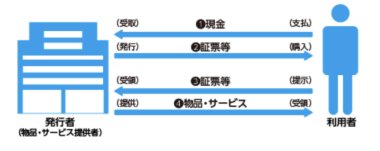
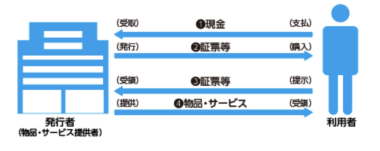
The Funds Settlement Act stipulates that entities meeting all four conditions below shall be subject to regulation under this Act:
(1) The amount or quantity of goods and services (number of items, units, degrees, etc.) is recorded on a bill, electronic device, or other item (hereinafter referred to as “bills, etc.”) or recorded by electromagnetic means.
(2) Consideration corresponding to the amount or quantity of goods/services recorded on the instruments, etc., or via electromagnetic means has been paid.
(3) Instruments, etc., bearing the recorded amount or quantity of goods/services, or numbers, symbols, or other identifiers related to the value of such assets, have been issued.
(4) The tickets, etc., or numbers, symbols, or other identifiers can be used by presenting, delivering, or notifying them when purchasing goods or receiving services.
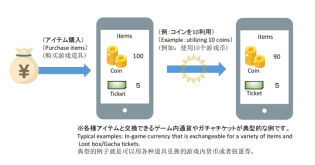
Specifically, this includes gift certificates, catalog gift certificates, magnetic stripe or IC card-type prepaid cards, and prepaid cards usable on the internet, all falling under the scope of the Funds Settlement Act. Focusing on game products, in-game direct-purchase currency represents the most typical prepaid payment tool.
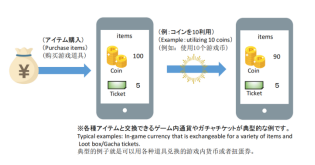 Considering the issuance model of in-game direct-charge currency, under the Funds Settlement Act, game companies issuing virtual currency will be classified as self-issuers (issuers subject to reporting requirements). A self-issuing entity refers to a body that issues prepaid payment instruments usable solely as a means of payment for goods or services purchased from the issuer, and that files reports with the Director-General of the Financial Bureau or equivalent authority as required by law. When the unused balance of the prepaid payment instruments issued by such an entity (total issuance amount minus total redemption amount) exceeds 10 million yen at the end of March or September, a report must be filed with the Director-General of the Financial Bureau or equivalent authority.
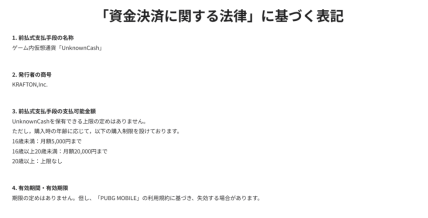
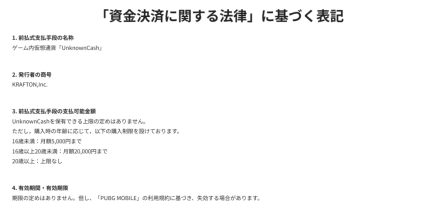
 In addition to fulfilling the filing and reporting obligations and the deposit of security deposits as stipulated in the Funds Settlement Act, game companies must also disclose relevant information regarding funds settlement to users on a designated webpage. This primarily includes: (1) The name, trade name, or designation of the issuer; (2) The available balance or the quantity of goods and services provided; (3) The period or term of validity for the use of the prepaid payment instrument; (4) The location and contact information (such as telephone number) of the window for receiving user complaints or inquiries; (5) Where terms and conditions exist: the existence of such terms and conditions.
 PART 2
Compliance and Practical Implementation of Gacha Mechanics
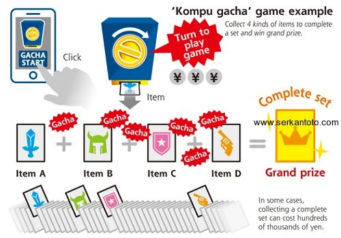
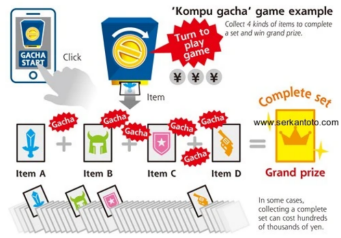
Japan's primary regulations governing gacha mechanics are detailed in the Prize Display Act's provisions regarding “misleading claims of advantage” and “misleading claims of superiority,” as well as various self-regulatory guidelines issued by gaming industry associations such as CESA and JOGA. Similar to regulations in most other jurisdictions, the core compliance focus lies in accurately disclosing the actual probabilities of in-game gacha mechanics to ensure consumer transparency. A particularly unique regulation in Japan prohibits the implementation of so-called “card-matching mechanics” in game products. According to the “Restrictions on Offering Prizes Through Rewards,” it is illegal to provide prize rewards by requiring players to present specific combinations of different types of tokens (such as text, images, or symbols) displayed on tokens.
 PART 3
Compliance Practices for Prize-Based Sales
Similar to gacha mechanics, prize promotions are also regulated under the Prize Promotion Act. According to this law, virtual items provided by online games—such as characters used to battle enemies or “avatars” that decorate virtual rooms—are considered “benefits, services, or other offerings” subject to the Act. This classification stems from the fact that such items enable users to gain advantages like defeating enemies or decorating virtual spaces within the game.
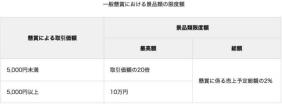
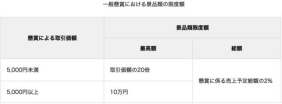
Restrictions on prizes offered through lotteries stipulate that the maximum value of any single prize shall be capped at 20 times the transaction amount and shall not exceed 100,000 yen. Additionally, the total value of all prizes offered shall not exceed 2% of the total transaction amount.
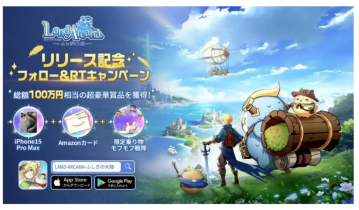
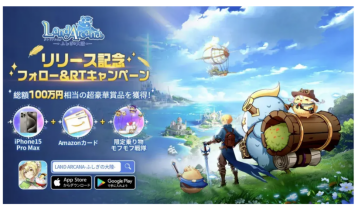
 Meanwhile, social media marketing campaigns commonly used in game promotions are not subject to prize limits. For example, social media sweepstakes where players can participate by following the company's account and liking posts will have campaign details published on the company's official website and social media platforms. Prizes will be mailed to winners. Unless other circumstances exist that could reasonably be deemed to involve a high likelihood of inducing transactions, this activity—from the release of information to the provision of prizes—is entirely free of any transactional elements and therefore does not fall under prize regulation.
 考虑到游戏直充货币的发行模式,根据《资金决算法》,发行游戏虚拟币的游戏公司,将被认定为自发型发行者(需申报的发行者)。自发型发行者是指发行仅在向发行者购买商品或接受服务时可作为其对价支付手段的预付式支付工具,并依据法律向财务局长等进行申报的主体。当其发行的预付式支付工具未使用余额(总发行额-总回收额)在3月末或9月末超过1000万日元时,需向财务(支)局长等进行申报。
 除了履行《资金决算法》规定的备案申报及保证金提存义务外,游戏公司同时需要在特定网页中向用户披露资金决算的相关信息,主要包括:(1)发行者的姓名、商号或名称;(2)可用金额或商品及服务的提供数量;(3)预付式支付工具使用期间或使用期限;(4)接收用户投诉或咨询的窗口的所在地及联系方式(电话号码等);(5)存在条款等时:存在该条款等的事实等。
 PART 2
 PART 3
 同时,游戏推广中常见的社媒营销活动并不受到奖品限额的约束。例如玩家需通过关注公司账号并点赞即可参加的社交媒体抽奖活动,活动信息将通过公司官网和社交媒体发布,奖品将邮寄给中奖者。除非存在其他可认定为具有较高可能性导致交易的情况,本活动从发布信息到提供奖品,均完全不附随交易,不属于奖品管制对象。