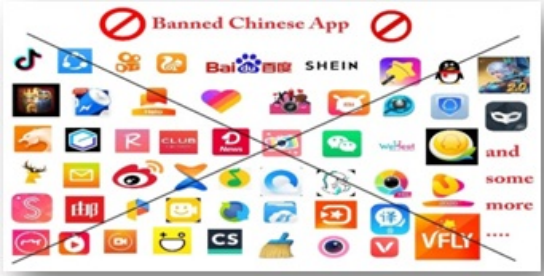
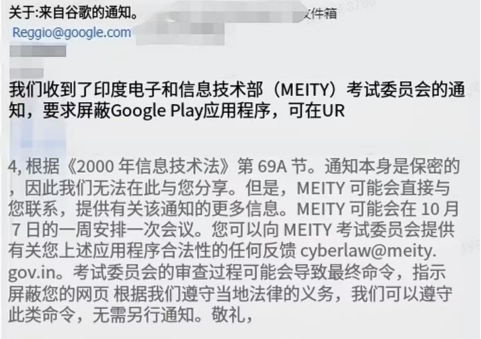
Recently, notifications sent to some developers' email accounts indicate that India has launched a new round of restrictions targeting overseas mobile apps. According to sources, this ban primarily targets the high-revenue sectors of gaming and social media. The restrictions are not limited to overseas products with Chinese investment backgrounds, and already installed applications may remain on mobile devices. However, since the latest versions of these apps have been removed from Google Play Store and Apple App Store, users will be unable to access future updates. This will significantly impact app maintenance and user experience.
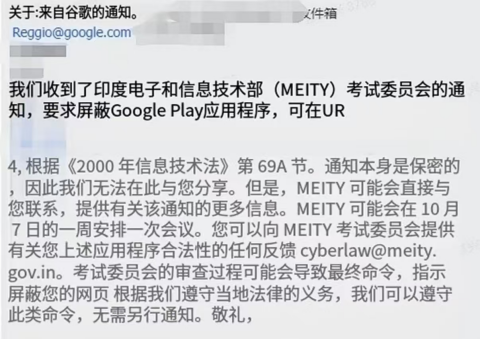 (Image source: Yangfan Chuhai WeChat Official Account)
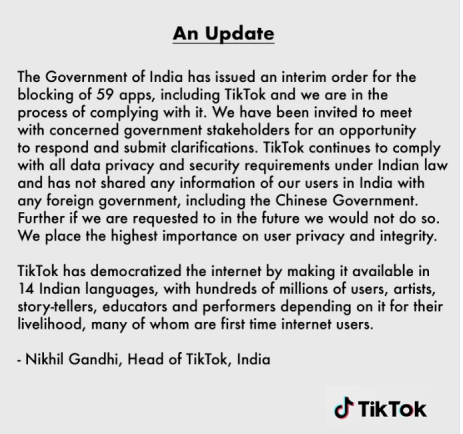
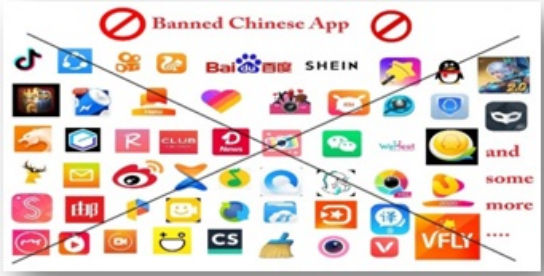
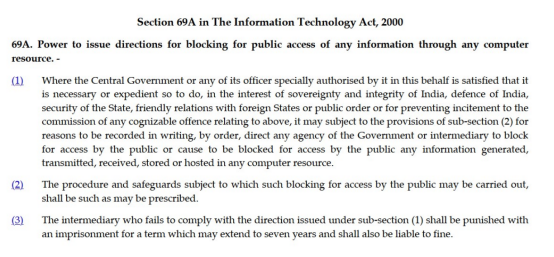
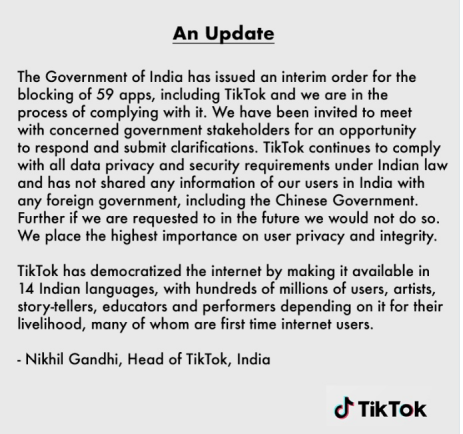
Section 69A of the Information Technology Act, 2000, referenced in the screenshot, serves as the primary legal basis for Indian authorities' app ban enforcement actions. In 2020, the Indian government banned 59 Chinese apps citing data security and national sovereignty concerns. These included popular apps such as TikTok, SHAREIt, UC Browser, CamScanner, Helo, Weibo, WeChat, and Club Factory. India's Ministry of Electronics and Information Technology stated in a press release that it had received “numerous complaints from various sources, including several reports about the misuse of certain mobile applications on Android and iOS platforms, which steal user data and secretly transmit it to servers located outside India without authorization.”
 India's Ministry of Electronics and Information Technology stated that the decision to block these 59 applications was made to safeguard “India's sovereignty and integrity,” citing enforcement measures under Section 69A of the Information Technology Act, 2000, and relevant provisions in the Information Technology (Procedures and Safeguards for Blocking Access to Information) Rules, 2009. The Indian government also noted that some citizens reportedly expressed concerns to the Computer Emergency Response Team-India (CERT-In) regarding data security and privacy breaches associated with these applications. Additionally, the Ministry of Home Affairs indicated it had received “detailed recommendations” from the Ministry's Indian Cybercrime Coordination Center. Although the Indian government did not publicly name China in its actions against these applications, public comments from officials including the Minister of Communications, Electronics and Information Technology and the Minister of Law and Justice suggest this “digital crackdown” was undertaken to “safeguard India's security, defense, sovereignty, and integrity, and protect the data and privacy of the Indian people.”
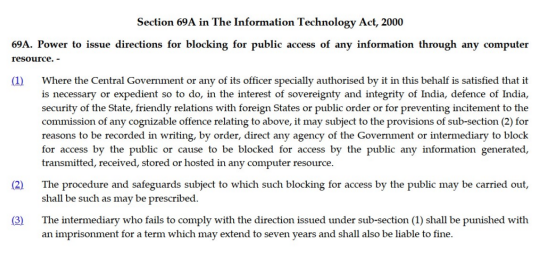 (The primary reasons for the ban include national security, territorial rights, and geopolitical relations.)
Under Section 69A of the Information Technology Act, the Indian government has both regular and emergency procedures for issuing bans. In the case of the 59 applications previously banned, the term “provisional order” used in the statement issued when TikTok was banned suggests the government took the emergency route. The emergency route allows content blocking based on directives from the Minister of Information Technology, who must consider the disputed content and document the reasons for doing so. Under normal circumstances, orders to block content require: (a) a decision by a government committee and (b) an opportunity for the relevant intermediary to present its views to the committee. These procedures are not required when using emergency provisions. However, in emergency situations, the Minister of Information Technology's order must be submitted to the government committee within 48 hours. Based on the committee's recommendation, the order may be finalized or revoked. The legal order authorizing the designated agency to implement the ban has not yet been published. Section 16 of the Information Technology (Procedures and Safeguards for Blocking Access to Information) Rules (“Blocking Rules”) mandates strict confidentiality for blocking requests, received complaints, and actions taken, providing statutory backing for such secrecy. Nevertheless, this lack of transparency in enforcement activities has drawn criticism and skepticism from some practitioners within India.
As a primary battleground for Southeast Asian companies expanding overseas, India's massive internet user base has made it a key target market for countless businesses. Yet, in recent years, the repeated app removal enforcement actions with no clear end in sight—coupled with concerns over product stability and the convenience of capital repatriation—have caused many practitioners to hesitate when considering India, once a prime destination for overseas expansion.
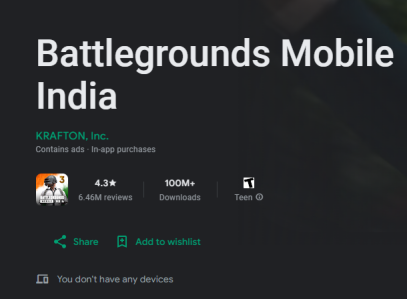
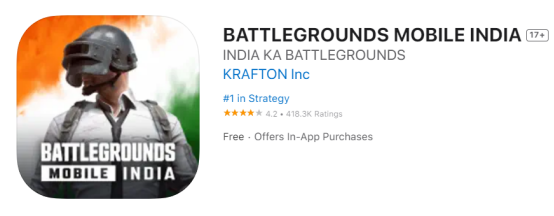
Previously, this author covered PUBG's attempts to re-enter the Indian market (see “PUBG Returns to India: Data Localization + Anti-Addiction Measures + Content Compliance”). As one of the first apps banned in 2020, PUBG—a leading battle royale mobile game—did not stand still. Krafton revamped PUBG and launched BGMI, a battle royale game tailored for the Indian market. Within just one year of its launch, BGMI attracted over 100 million cumulative users before being banned by the Indian government for the same reasons. To secure the re-listing of its game, Krafton maintained active communication with Indian regulators and finally announced in 2023 that the product would soon return. According to public disclosures, Krafton implemented comprehensive corrective measures to facilitate BGMI's re-approval, including daily usage time limits to prevent excessive gaming, particularly targeting anti-addiction mechanisms for children. Additionally, Indian authorities required Krafton to modify in-game animations to ensure no depictions of blood. These corrective actions align with the Online Gaming Operating Rules issued earlier that year by India's Ministry of Electronics and Information Technology (as detailed in the article “India Releases New Online Gaming Regulatory Policy”). According to these Operating Rules, online games must:
1.Prevent game content from causing harm to users, such as self-harm or psychological damage.
2.Implement corresponding interactive measures to protect children from inappropriate or harmful online games through parental or access controls and age rating mechanisms.
3.Reduce risks of gaming addiction, financial loss, and fraud by repeatedly warning users and allowing them to exit the game upon reaching user-set time or monetary limits.
4.Ensure online real-money gaming does not violate India's sovereignty and integrity.
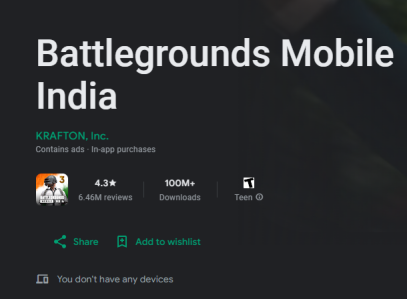
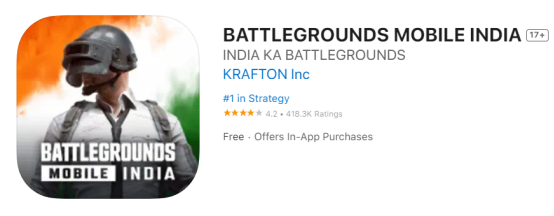 (BGMI remains available on both platforms, with the latest update dated September 20, 2024)
The BGMI case demonstrates that embracing regulation and proactive communication form a crucial foundation for establishing a foothold in the Indian market. Even so, the future landscape of the Indian market remains unpredictable in an enforcement environment lacking transparency. For overseas enterprises, the balancing act between revenue streams and compliance costs remains an enduring challenge. Throughout the compliance journey, businesses must continuously monitor regulatory shifts while maintaining risk management awareness in their operational strategies—demanding the courage and resolve to make tough decisions when necessary.
 作为东南亚出海主战场,印度以其庞大的互联网用户基数成为无数出海企业的重点布局国家,但近些年不断反复且解禁遥遥无期的APP下架执法,出于对产品稳定性以及资金回流便利性的顾虑,让一众从业者面对印度这一曾经的出海宝地望而却步。