
Japanese Consumption TaxDigital Services Taxation

Attention travelers heading to Japan! Important notes on Japan's consumption tax

出海日本注意啦!日本消费税注意事项

January 16, 2026
5 views

Summary

From 2025, Japan has significantly tightened its consumption tax enforcement on overseas game and app developers. Starting April 1, 2025, non-Japanese developers selling paid apps or in-app purchases on the App Store are subject to a 10% Japanese consumption tax, which Apple, as a designated platform operator, is required to withhold and remit on their behalf. Recent enforcement actions—such as tax recoveries of approximately JPY 1.8 billion from Yota Games and JPY 3.5 billion from Epic Games—underscore this regulatory trend. Japan’s consumption tax, similar to VAT, applies broadly to digital services including in-game purchases and premium games. Even without a local entity, overseas companies may still be required to register, appoint a tax representative, and fulfill filing obligations if revenue or capital thresholds are met. Underreporting or tax evasion may result in substantial penalties or even criminal liability.

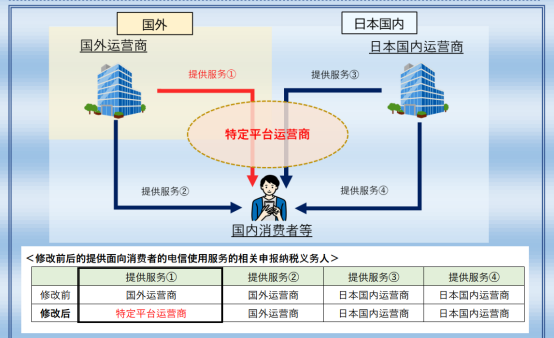
In February 2025, the Japanese government officially announced that it would collect a 10% consumption tax on behalf of non-Japanese developers starting April 1. Previously, Apple Inc. had been designated by Japanese tax authorities as a specific platform operator. It announced that effective April 1, 2025, all paid applications and in-app purchases (including game items) made by non-Japanese developers on the App Store would be subject to a 10% Japanese consumption tax, collected by Apple on their behalf.
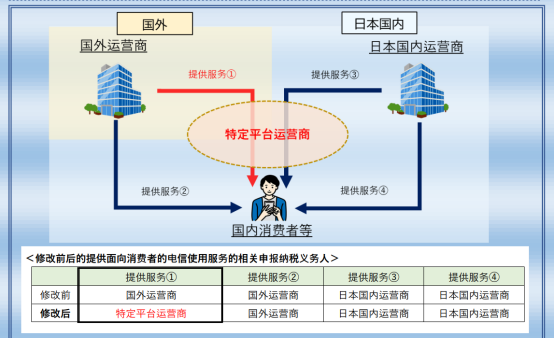
In February 2025, Hong Kong-based game company Yota Games was ordered by Japan's Tokyo National Tax Agency to pay approximately ¥1.8 billion in back taxes for failing to remit consumption tax related to in-game item sales. Previously, Epic Games was also ordered by Japanese tax authorities to pay ¥3.5 billion in back taxes (including taxes, late fees, and penalties) due to consumption tax issues.

Whether viewed through Japanese laws and regulations or enforcement trends, Japan's imposition of consumption tax on overseas companies is an inevitable trend. Chinese companies expanding into Japan must pay attention to this and understand matters related to Japan's consumption tax. Regarding Japan's consumption tax, Kenting Law Firm invited Mr. Zong Zaijian from Japan's OHANA Tax Accountant Office to share insights. Below is a summary of key points from his presentation.

1. What type of tax is Japan's consumption tax?

Japan's consumption tax is similar to Value Added Tax (VAT), levied on goods and services sold or imported within Japan.

2. What are the latest requirements for consumption tax?

Conditions are becoming increasingly stringent:

(1) Tax liability arises if revenue exceeds 10 million yen during the base period.

Reference Period:

Individual business operators: The preceding two calendar years (e.g., 2023 reference period: January 1, 2021 – December 31, 2021);

Japanese corporations: The preceding two fiscal years (e.g., 2023 reference period: April 2021 – March 2022)

Special Period:

Businesses exceeding ¥10 million in revenue during the first half of the preceding year are also liable for consumption tax. (For 2023, the special period is January 1, 2022 - June 30, 2022)

Examples:

A. If revenue from January 1, 2022 to December 31, 2022 did not exceed 10 million yen, no consumption tax is required for the period from January 1, 2024 to December 31, 2024; However, if revenue from January 1, 2023, to June 30, 2023, exceeds 10 million yen, consumption tax must be paid from January 1, 2024, to December 31, 2024.

B. If revenue exceeds 10 million yen in both 2022 and 2023, consumption tax payment begins in 2024.

(2) Starting October 1, 2024, overseas companies with registered capital exceeding ¥10 million must pay consumption tax. [Based on registered capital, not actual paid-in capital].

3. Which in-game content (e.g., in-app purchases, one-time payments) may be subject to consumption tax?

For internet companies, user payments such as in-game purchases (items, skins, etc.) and purchases for games sold as a one-time purchase will be subject to tax.

4. If operating game business through a Japanese subsidiary, which entity bears the tax liability—the subsidiary or the parent company? How does the Japanese subsidiary file tax returns?

If establishing a corporate entity in Japan, the independent legal entity Japanese subsidiary files consumption tax returns as the taxpayer and must also pay corporate tax (similar to China's corporate income tax).

The Japanese subsidiary is required to file annually, choosing any month between January and March as its fiscal year-end. For example, if filing for the fiscal year ending January 2025, the reporting period would cover February 2024 to January 2025.

Overseas game companies typically close their fiscal year in December. The filing period in Japan is from January 1 to February 28 of the following year.

5. Does a non-resident company with no physical presence in Japan, solely selling mobile games via digital platforms, need to register as a consumption tax payer? What are the practical steps?

Appoint a designated tax representative (tax agent) in Japan, who will handle filing and tax payments through a certified tax accountant firm.

B2C: If taxable income is generated in Japan, register as a taxpayer. No tax number is required, and consumption tax exemption may apply (e.g., if revenue under ¥10 million in the previous two years).

6. Does a company without a Japanese entity need to appoint a Tax Representative? What is the relevant process?

Appoint a Tax Representative to handle filing and tax payments on behalf of the overseas company. In case of issues, contact the Tax Representative first.

Specific tax filing procedures: Self-filing is the primary method, typically involving submission of transaction records. Tax audits may occur if issues arise.

7. What are the penalties for underreporting or falsifying sales revenue (e.g., fine percentages, criminal liability)?

Criminal liability may apply if tax evasion exceeds ¥100 million.

Penalty rates:

(1) For regular filings:

- Under ¥500,000: 5%-15%

- Over ¥500,000: 15%-40%

(2) For concealed income:

- Penalty rate: 35%-40%
中文原文

2025年2月,日本政府正式宣布从4月1日起代非日开发商缴纳10%的消费税。此前,苹果公司被日本税务机关指定为特定平台运营商,宣布自2025年4月1日起,所有非日本开发商在App Store上进行的付费应用和应用内购(包括游戏物品)都需要缴纳10%的日本消费税,由苹果代缴。

2025年2月,中国香港游戏公司友塔游戏(Yota Games)因未缴纳与道具销售等相关的消费税,被日本东京国税局追缴约18亿日元税款。此前,Epic Games也因消费税问题,被日本国税局追缴35亿日元(含税款、滞纳金及罚款)。

无论是从日本法律法规还是执法动态来看,日本对海外公司征收消费税是必然趋势。中国公司在日本出海时须予以关注,并对日本消费税相关事项进行了解。围绕日本消费税,垦丁律所邀请日本OHANA税理士事务所宗在建先生进行分享。现就部分分享内容进行梳理。

1.日本消费税是一种什么样的税种?

日本消费税类似于增值税(VAT),对在日本境内销售和进口的商品及服务征收。

2.目前消费税的最新要求是怎样的?

条件越来越严格:

(1)基准期只要收入超过1千万日元,就要交消费税。

基准期:

个体经营者:前两个自然年(如2023年基准期为:2021年1月1日-2021年12月31日);

日本公司:前两个财年(如2023年基准期为2021年4月-2022年3月)

特定期间:前一年上半年收入超过1千万也需要交消费税。(如2023年,特定期间是2022年1月1日-2022年6月30日)

举例:

A. 2022年1月1日至2022年12月31日收入未超过1千万日元,则2024年1月1日至2024年12月31日期间不需要交消费税;但是如果在2023年1月1日至2023年6月30日的收入超过1千万日元的,2024年1月1日至2024年12月31日期间需要交消费税。

B. 如2022年和2023年的收入分别超过1000万日元的,则在2024年开始缴纳消费税。

(2)2024年10月1日开始,海外公司的注册资本超1000万日元需要交消费税。【看登记注册的,不看实缴】。

3.游戏中的哪些内容(比如内购、一次性付费)可能会成为消费税的征收对象?

针对互联网公司,玩家内购(道具、皮肤等)、买断制游戏等用户付款内容都会成为应税对象。

4.若通过日本子公司运营游戏业务,纳税义务主体是子公司还是母公司?日本子公司如何进行税务申报?

如在日本设立公司主体,由独立法人日本子公司作为纳税主体进行申报消费税,同时需要缴纳法人税(类似国内的企业所得税)。

日本子公司强制要求一年申报一次,可选择1月-3月任何一个月作为决算月,如选择2025年1月申报决算的,则2024年2月至2025年1日作为一个年度进行申报。

海外游戏公司一般12月进行决算,在日本的申报时间是次年1月1日至2月28日。

5.一家公司作为非居民企业,在日本境内无实体存在,仅通过数字平台销售手机游戏,是否需要注册为消费税纳税人?具体实操是怎样的?

在日本指定纳税管理人(税务代表),由税务师事务所进行申报和纳税。

B2C:在日本有应税收入,注册为纳税人,不申请税号,可以享受不交消费税(如2年前收入不满1千万日元)。

6.未设立日本实体的企业是否需要指定税务代表(Tax Representative)?相关流程如何操作?

指定纳税管理人(税务代表),代表海外企业进行申报、纳税。如果出现问题,首先找纳税管理人。

具体税务申报实操:自主申报为主,一般提供流水数据。如出现问题,税务调查 。

7.漏报或虚报销售额的处罚标准(如罚款比例、刑事责任)?

如偷逃税超过1亿日元,可能有刑事责任。

罚金比例:

(1)如果正常申报的情形,50万日元以下:5%-15%;50万日元以上:15%-40%。

(2)如果存在隐匿收入,罚金是35%-40%。

分享文章

相关文章

General

【Weekly Gaming Law】Lawyers Comment on miHoYo’s Anti-Fraud Actions; Infringing “Reskinned” Game Ordered to Pay RMB 5 Million

【每周游戏法】律师评米哈游反舞弊;侵权游卡被判赔500万

This weekly update examines three recent legal developments in the gaming industry: miHoYo’s anti-fraud enforcement and supplier blacklist measures; a “reskin” infringement case involving a Three Kingdoms-themed card game resulting in a RMB 5 million damages award based on unfair competition; and Roblox’s launch of AI-powered interactive content generation tools. The article outlines the legal considerations arising from supply chain compliance, the boundary between public domain materials and protectable game design, and the intellectual property and compliance implications of AI-generated interactive content within UGC platforms.

0 views
General

How to Build Official Game Payment Systems in a Compliant Manner (Part II): Overseas

游戏官方支付如何合规搭建(二)海外篇

Against the backdrop of a global economic slowdown and evolving regulatory scrutiny over major app distribution platforms, an increasing number of overseas-oriented game companies are exploring the establishment of official website top-up platforms to reduce reliance on channel commissions. Building on the prior discussion of platform policies regarding payment redirection and third-party payment access, this article reviews practical cases of official website payment models adopted by several game companies, including their login mechanisms, purchasable content, regional availability, and qualification disclosures. Based on these practices, it outlines compliance considerations that overseas game companies should focus on when constructing official website payment systems, particularly in relation to account management, price display, promotional methods, and refund policy design across different jurisdictions.

6 views
General

EU’s DMA Enforcement Push: Apple and Epic Games Reach Temporary Truce

欧盟DMA强监管,苹果与Epic Games暂时握手言和

Since 2020, Apple and Epic Games have been locked in a global antitrust dispute over App Store policies. While Epic lost its U.S. lawsuit, it continued its resistance through noncompliance, resulting in a developer account ban. However, the dynamics shifted with the EU Digital Markets Act (DMA) coming into force on March 6, 2024. Epic reported that Apple, under pressure from the European Commission, agreed to reinstate its developer account in the EU. The DMA’s provisions, especially Article 5(3) and Article 6(4), require gatekeepers like Apple to allow third-party app stores and payment systems on iOS. Apple’s attempt to ban Epic amid DMA implementation triggered regulatory attention, leading to rapid Commission intervention. This incident not only highlights the DMA’s enforcement teeth but also signals a broader shift in platform governance within the EU. For global developers and digital exporters, especially those dependent on app store distribution, DMA compliance represents a strategic inflection point. Non-compliance risks include fines of up to 10–20% of global turnover, exemplified by the €1.84 billion fine Apple recently faced. As more third-party app stores (e.g., Mobivention, MacPaw) emerge, the EU’s digital market is poised for structural transformation.

5 views