
Against the backdrop of a global economic downturn, cost reduction and efficiency improvement have become core concerns for gaming professionals. Rather than intensifying competition in traditional customer acquisition channels like product development and advertising, an increasing number of established game developers are shifting their focus to transaction payment systems—a process directly tied to corporate revenue—in an effort to reduce reliance on high commissions charged by third-party distributors.
In the first two articles of this series, we primarily covered the regulatory requirements of major game distribution channels regarding “payment switching” and official recharge platforms, along with practical case studies of overseas game companies establishing their own official recharge platforms. We also provided relevant compliance recommendations by referencing actual platform operation practices.
As the concluding piece of this series, this article focuses on assessing the compliance of building domestic official website payment systems. It analyzes potential legal risks in the collaboration between official website payments and distribution channels, offering corresponding countermeasures.
PART 1
Competitor Official Website Payment Compliance Research
Given China's regulatory requirements for gaming products, anti-addiction settings and age verification related to minor protection are mandatory interactive features within game products. Therefore, when users log into official website payment platforms via third-party social media accounts or accounts self-built by game companies, do they still need to complete the relevant verification process?
(1) Does user login to the recharge platform require secondary verification?
Competitor research indicates that leading domestic game publishers' official payment interfaces allow recharging with verified accounts without secondary verification to confirm real-name registration.
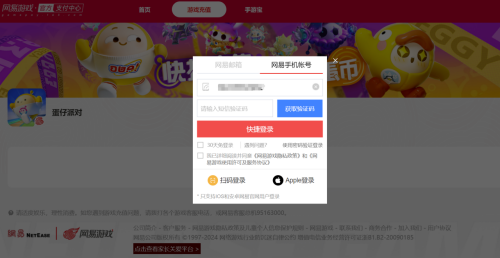
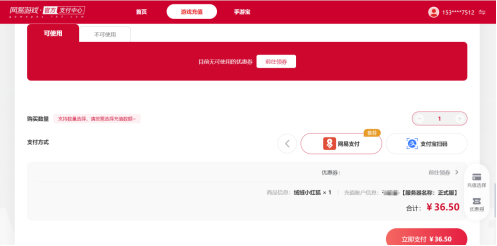
(2) Can unverified accounts recharge?
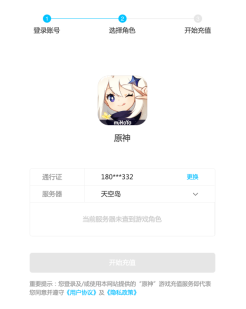
Since unverified accounts cannot log into games to create characters, they cannot recharge via the official payment interface. Recharging is only possible after creating a verified character. For example, the image below shows the Genshin Impact recharge center interface for unverified accounts, displaying that recharging is unavailable.
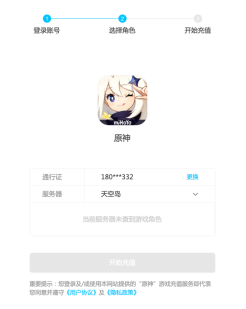 (Genshin Impact Recharge Center Interface)
Compliance Recommendations
(1) Regarding Real-Name Verification for Official Recharge Platform Login
When players log into the official recharge platform using their game real-name verified account, secondary age verification is unnecessary. Such logged-in players should be permitted to directly purchase/recharge. If the logged-in account lacks real-name registration or has not logged into the game, such users must complete the real-name registration process beforehand.
(2) Regarding the Compliance Obligations of Recharge Platforms to Enforce Minors' Recharge Limits
For users identified as minors after logging into or registering with the official recharge platform, game companies are advised to implement recharge amount restrictions for minors.
For minors across different age groups, game companies are advised to establish tiered recharge limits based on age brackets. Should users under eight years of age be detected, no paid game services may be provided to them. The minimum recharge age may also be raised at the company's discretion. According to our team's research, leading domestic game developers have established precedents prohibiting in-game spending by minors under twelve years of age.

PART 2
Channel Partnerships and Official Website Recharge Compliance
1. Can an official website recharge platform be established under a non-exclusive agency agreement?
Under a non-exclusive agency arrangement, unless otherwise stipulated in the agency agreement, the game company as the licensor does not necessarily infringe upon the licensee's agency rights by operating the game on its self-built platform. The game company may also retain self-operating rights on channels such as its official website and public accounts. Specifically, when the contract explicitly states non-exclusive agency, the game developer's right to independently promote, operate, and provide settlement services through its official website remains unaffected or unrestricted. This does not constitute breach of contract or unfair competition.
In other words, the agent holds non-exclusive agency rights based on the developer's limited authorization. The agent must not interfere with the developer's self-operations or the legitimate operations of other agents. Accordingly, the company may independently establish official website purchase and settlement channels to sell game items and/or provide top-up services without constituting a breach of contract by circumventing channel server payments.
2. Does offering exclusive promotional top-up schemes, official website-limited in-game items, or buy-to-own game-specific DLC on the official platform potentially constitute unfair competition?
Unless otherwise stipulated in the distribution agreement, exclusive sales on the official website must not materially impair the gaming experience of players on other distributor platforms. If exclusive discount recharge plans, exclusive in-game items, or exclusive DLC for buy-to-own games are offered solely through the official website and unavailable via other distributor channels, restricting sales channels may objectively prevent players from accessing complete game content through distributor servers. Players seeking the full experience may voluntarily migrate to specific channels, abandoning the licensed platform. This could potentially constitute unfair competition under Article 12, Item 3 of the Anti-Unfair Competition Law, which prohibits “maliciously rendering incompatible the network products or services lawfully provided by other operators.”
Licensing partners may sue to terminate the contract on grounds of “failure to achieve the contractual purpose” and demand liquidated damages. The company should pay particular attention to this matter.
3. How should conflicts between agent channel refunds and official refund policies be handled?
Game products fall under “digital goods such as audio-visual products and computer software that are downloaded online or opened by consumers.” According to the Consumer Rights Protection Law of the People's Republic of China and the Interim Measures for Seven-Day No-Reason Returns of Goods Purchased Online, digital goods are not subject to the seven-day no-reason return policy. The official platform may enforce a “no refunds once sold” policy under current laws. If players request refunds citing distributor channel policies, explain that different channels may have varying refund rules. However, the official and channel servers' refund policies should remain consistent whenever possible.
4. Compliance Recommendations:
(1) Regarding Agency Agreement Terms
i.It is recommended to explicitly state in the agency contract that the agency rights are non-exclusive. Clearly define the authorized scope (non-exclusive promotion, operation, and settlement channels) and the official's self-operation rights to avoid disputes over agency rights.
ii.For clarity, any discrepancies between different agency channels regarding refund policies, promotional activities, or cooperative details concerning trademarks or other intellectual property rights fall within the scope of free agreements between the manufacturer and each agency. Such details may be specified in the contract based on specific circumstances, but consistency should be maintained to avoid large-scale player backlash.
(2) Regarding Channel Server Refunds and Bad Debt Settlement
To prevent conflicts between channel refund policies and official payment platform refund policies, as well as disputes over bad debts, it is recommended that the agency agreement clearly stipulate:
i.Which party holds the final decision-making authority regarding refund approvals;
ii.The basis for fee settlement (e.g., settlement statements) must be mutually confirmed by both parties, with the game developer retaining the right to audit bad debts and bad debt rates;
iii.Define the fee settlement cycle. Bad debts not included in the current month's settlement statement shall not be carried over to offset or settle in the next month;
iv.In cases of malicious or collective refunds, the agency channel must promptly report to the company and coordinate resolution. If the agency channel independently handles such cases and causes losses to the company, it shall bear liability for compensating the company's actual losses.
 PART 2