
Google ad policyNFT gamesblockchain

In a move that bodes well for Web 3.0, Google Play has lifted its ban on blockchain game ads

Web 3.0利好,Google Play放开区块链游戏广告投放

March 27, 2026
9 views

Summary

Google updated its cryptocurrency advertising policy, effective September 15, 2023, allowing ads for blockchain games incorporating NFTs. This marks a step toward a more open yet regulated ecosystem for NFT-based gaming. While developers can promote games where NFTs are used as in-game items such as skins, weapons, or virtual goods, the policy imposes strict restrictions on gambling-related features. Prohibited content includes NFT-based betting for real-world rewards, simulated casino-style games offering NFT winnings, and staking NFTs for convertible crypto assets. The update aims to balance innovation with user protection, offering new marketing opportunities while imposing clearer compliance boundaries on game design.

Recently, Google released an update to its cryptocurrency advertising policies, allowing advertisers to promote blockchain games that feature NFTs.

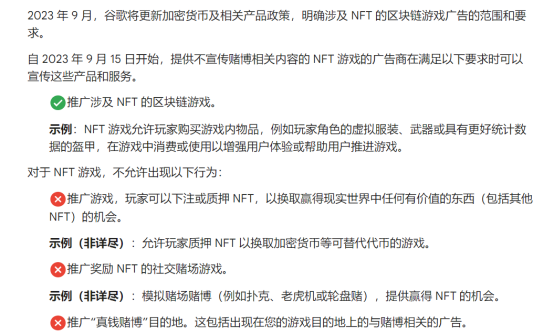
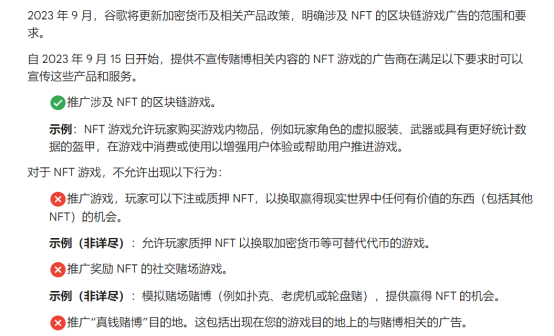
This update to the advertising rules will take effect on September 15, 2023, and may mark a significant step for Google in establishing an open and compliant market for blockchain and NFT games. Going forward, Google Ads can be used for blockchain games that integrate NFTs with in-game items, virtual clothing, weapons, or props.

However, while lifting the ban, Google has also emphasized certain restrictions to ensure the legitimacy of ads and protect user rights. Foremost among these are restrictions related to gambling policies; Google will prohibit the promotion of games that combine NFTs with gambling elements, such as:

a. Games where players bet NFTs earned to win physical rewards or engage in high-stakes gambling using NFTs (Note: NFT loot boxes seem to be a gray area?);

b. Games that simulate casino gambling (e.g., poker, slot machines, or roulette) and offer the chance to win NFTs (Note: Non-simulated gambling games are not restricted? Is it feasible to limit NFTs to use solely as in-game currency?);

c. Games that allow players to stake NFTs in exchange for cryptocurrency or other fungible tokens.
In summary, Google’s policy update represents an initiative targeting the blockchain gaming category, opening a new promotional channel for blockchain game developers. This is expected to increase their visibility and user base, which is highly beneficial for driving innovation and enhancing competitiveness. With the rapid rise of the NFT market in recent years, NFTs have become a powerful force in the digital asset sector. Google’s decision to allow the promotion of NFT-related games on Google Play will further drive the adoption of NFTs, offering users more choices and experiences.

For more detailed information on Google’s policy changes, please refer to the official Google Play policy page:

https://support.google.com/adspolicy/answer/13985443?hl=en

中文原文

近日,Google发布了加密货币相关广告的政策更新,允许广告商宣传含有NFT内容的区块链游戏。

此次广告规则更新将于2023年9月15日生效,或将是谷歌在建立开放合规的区块链和NFT游戏市场方面的重要探索。此后,谷歌广告可以用于那些将NFT与游戏内物品,虚拟服装、武器或道具结合的链游产品。

然而,在放开禁令的同时,谷歌也强调了一些限制性要求,以确保广告的合法性并保障用户的权益。首当其冲的是与赌博游戏政策相关的限制性要求,谷歌将禁止推广结合NFT与赌博元素的游戏,例如:


a.玩家通过赚取NFT下注以赢得实物奖励或通过NFT投注进行以小博大的游戏(思考:NFT Loot Box似乎是个灰色地带?);


b.模拟赌场赌博(例如扑克、老虎机或轮盘赌),提供赢得 NFT 的机会(思考:非模拟赌博游戏并未被限制?NFT仅限游戏内作为游戏币使用是否可行?);


c.允许玩家质押NFT以换取加密货币等可替代代币的游戏。

综上,谷歌此次政策更新是针对链游品类的一次尝试,为区块链游戏开发者拓展了一个新的推广渠道,有望增加其可见性和用户群体,这对于推动创新和竞争力的提高非常有益。随着NFT市场在近年来迅速崛起,已经成为数字资产领域的一股强大力量。谷歌允许在Google Play上推广涉及NFT的游戏将进一步推动NFT的普及,为用户提供更多选择和体验。


如需深入了解谷歌的政策变化,您可以参考Google Play官方政策页:

https://support.google.com/adspolicy/answer/13985443?hl=en

分享文章

相关文章

General

Roblox Faces New Lawsuit: Facilitating Gambling by Minor Users?

Roblox面临新诉讼 为未成年人用户赌博提供便利?

Roblox has recently been named in a class action lawsuit filed in the U.S. District Court for the Northern District of California, alleging that it knowingly facilitated minors’ access to third-party online gambling platforms through its in-platform virtual currency, Robux. Plaintiffs claim that Roblox conspired with third-party gambling websites and profited from the ecosystem by charging withdrawal-related fees. The lawsuit raises claims under the Racketeer Influenced and Corrupt Organizations Act (RICO), California’s Unfair Competition Law (UCL), and the Consumer Legal Remedies Act (CLRA). At the core of the dispute is whether Roblox knew of, monitored, and economically benefited from the linkage between its virtual currency system and external gambling sites targeting minors.

1 views
General

Case Study | [Case Dismissed by Police] Case of Illegal Business Operations Involving the Misuse of Game Version Numbers

典型案例 |【公安撤案】游戏套版号非法经营案

Recently, a criminal case involving alleged illegal business operations related to “license misuse” in the gaming industry reached a significant development. A local People’s Procuratorate in Zhejiang Province determined that key evidence was fundamentally flawed and requested the public security authority to withdraw the case. The prosecution had relied on an official appraisal identifying the game as an “illegal online publication” as its core evidence. However, the defense successfully challenged the legality and validity of the appraisal, leading to its dismissal and ultimately the withdrawal of the case. This case highlights key legal controversies surrounding criminal liability for operating games without proper licensing. From a legal perspective, the requirement for game publishing licenses is primarily based on administrative regulations rather than “state provisions” as defined under criminal law. Moreover, operating an unlicensed game, in the absence of illegal content, generally does not meet the threshold of “seriously disrupting market order.” The outcome reflects a cautious judicial approach to the application of the offense of illegal business operations and provides valuable guidance for gaming companies in managing licensing compliance and criminal risk.

2 views
General

【Weekly Game Law】Pirated ACG Figure Case Settled for RMB 300,000+; Lawyers Warn on Pay-to-Win Game Design Risks

【每周游戏法】盗版二游手办被判赔30余万;律师:设计数值付费需谨慎

This article addresses four major legal risks in the gaming industry: copyright infringement in unauthorized game-derived merchandise; consumer protection risks arising from misleading game progression design; criminal liability for operating private game servers; and the expansion of PEGI’s rating framework to incorporate monetization and interaction risks. These developments reflect a broader regulatory trend in which game design, monetization strategies, and IP exploitation are increasingly subject to legal scrutiny, requiring companies to integrate compliance considerations into both product design and commercialization strategies.

10 views