PART 1
Basic Case Details
Plaintiff Company A obtained a publishing license for its game “Charge Up XX” in 2021. Subsequently, Company A discovered on third-party website C that an installation package was fraudulently using the game name “Charge Up XX” for promotion, while the actual downloaded content was Company B's game “XX Continent.”
The plaintiff contends that the defendant game used the name “Strike Out XX”—which Company A had obtained a publishing license for and intended to operate—on its download and installation pages. This action: (1) constitutes confusion prohibited under Article 6 of the Anti-Unfair Competition Law; and (2) simultaneously infringes upon the “new release advantage” of the game name, specifically the promotional effect boost associated with a newly approved game title. Consequently, the plaintiff sued both Company B and third-party website C in court, demanding cessation of unfair competition practices and compensation for damages.

PART 2
Court Rationale
(1) Whether Confusion Regarding Commercial Identifiers Exists
The court held that regardless of the type of commercial identifier, only those possessing a certain level of influence or actual market recognition and public awareness can serve to identify the source of goods or services, thereby preventing market confusion. An identifier must have sufficient market recognition and distinctive features capable of distinguishing the source of goods to qualify for protection under Article 6 of the Anti-Unfair Competition Law.
In this case, Company A failed to provide evidence demonstrating that “Strike Out XX” possesses market recognition as a game title. Furthermore, screenshots submitted by Company B show Baidu search results featuring multiple companies promoting the “Strike Out XX” game, numerous gaming websites hosting links to “Strike Out XX,” and Bilibili publishing multiple videos related to the “Strike Out XX” game. indicating that the game title “Strike Out XX” has not established a corresponding relationship with Company A in market competition. Therefore, even if Company A possesses the qualification to launch and operate the “Strike Out XX” game based on the approval from the National Press and Publication Administration, the aforementioned alleged acts are insufficient to cause confusion or misidentification among the relevant public when the accused game does not use Company A's game publication number.
(2) Whether it violates the catch-all provision of Article 2 of the Anti-Unfair Competition Law
The court held that Company A obtained approval from the National Press and Publication Administration to operate the “Strike Out XX” game and secured a network game publication number issued by the National Radio and Television Administration. It thus has the right to use the “Strike Out XX” game name. However, Company A does not necessarily gain a competitive advantage in the market merely by having the right to use this game name. During the proceedings, Company A failed to submit evidence proving that the game was actually operational at the time of the alleged infringement, nor could it substantiate any market competitive benefits derived from the game name, much less demonstrate losses incurred due to the defendant's alleged infringing acts.
PART 3
Judicial Ruling
First Instance: All plaintiff's claims dismissed.
Appeal: Appeal dismissed, original judgment upheld.
PART 4
Legal Analysis
This case offers insights into strategies for protecting game titles. Safeguarding game names has always been a priority for game developers, as iconic titles leave a deeper impression on players and possess stronger viral potential. However, due to their brevity, game titles often struggle to meet the originality requirements of copyright law. Consequently, companies typically seek protection through trademark registration or by designing them as artistic works. We believe trademark registration, artistic works, and commercial identifiers form the three primary avenues for protecting game titles.
(1) Protecting Game Titles via Trademark Registration
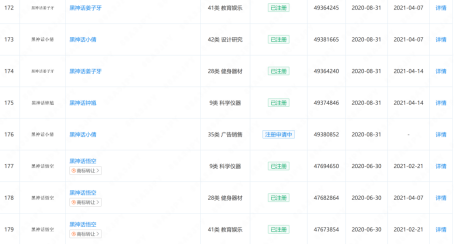
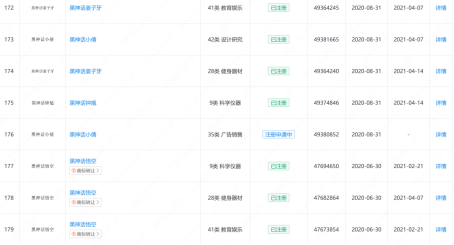
For instance, Game Science strategically registered trademarks before the launch of Black Myth: Wukong. Beyond the full title and abbreviations like “Black Myth: Wukong,” “Black Wukong,” and “Black Myth,” they also secured defensive trademarks such as “Black Myth: Xiao Qian” and “Black Myth: Jiang Ziya.”
Once registered, game titles gain protection through exclusive trademark rights. For instance, in the (2022) Yue 0106 Min Chu 30019 ruling, the court determined that the defendant's use of “Xia Jian Qing Yuan” and “Jian Shang” in the alleged infringing link page, post-download display, and installed game title could mislead the relevant public into believing the source was affiliated with the plaintiff or implied a specific connection, thereby causing confusion. The court ultimately ruled that the defendant's actions constituted infringement of the plaintiff's registered trademarks “Jian Xia Qing Yuan” and “Jian San,” and ordered the defendant to cease infringement and compensate for damages in accordance with the law.
(2) Protection through Design as an Artistic Work
Article 4 of the Implementing Regulations of the Copyright Law defines artistic works as two-dimensional or three-dimensional plastic artworks with aesthetic significance, created through lines, colors, or other means, such as paintings, calligraphy, and sculptures. Accordingly, a company may apply artistic design elements such as typography, shape, and color to a game title, endowing it with aesthetic appeal. This transforms the game title's presentation into a form that meets the requirements for “artistic works,” thereby qualifying for protection under the Copyright Law.
For instance, in the judgment (2018) Hu 73 Min Zhong 222, the court held: Although the Chinese characters “使命召唤” constitute only a portion of the involved artistic work, these characters are formed by square, angular strokes, thick lines, a parallelogram-shaped ‘撇’ stroke, and a pointed-tip finish resembling the character “使.” Thus, the Chinese characters “使命召唤” within the involved artistic work inherently constitute a two-dimensional form possessing aesthetic significance. The allegedly infringing use of the “使命召唤” artistic characters in the online movie posters and trailers at issue is identical to the corresponding Chinese portion in the artwork at issue. Therefore, Huaxia Company's use of the “使命召唤” artistic characters in the online movie posters and trailers during the distribution of the involved film constitutes copying the corresponding Chinese portion of the involved artistic work and disseminating it externally. This infringes upon Activision's reproduction rights and information network dissemination rights for the involved artistic work, and Huaxia Company should bear corresponding civil liability for this.
(3) Protection Based on Commercial Identifiers with Significant Influence
We believe that for a game title to qualify for protection under Article 6 of the Anti-Unfair Competition Law prohibiting acts causing confusion, one prerequisite is that the rights holder's work has attained a certain level of influence. Games that have only obtained a version number approval but have not formally launched operations are unlikely to be deemed to possess market competitive interests worthy of protection.
Regarding how to determine whether a mark has attained a certain level of influence, the Judicial Interpretation of the Anti-Unfair Competition Law provides supplementary guidance: a mark that possesses a certain degree of market recognition and has distinctive features capable of distinguishing the source of goods may be recognized as a mark “with a certain level of influence.” Determining whether an identifier “enjoys a certain degree of market recognition” requires comprehensive consideration of factors including: the level of awareness among relevant public within China; the duration, geographic scope, volume, and target audience of product sales; the duration, intensity, and geographic reach of promotional activities; and the extent of protection afforded to the identifier.
Accordingly, we recommend that as the plaintiff in such litigation, the company may submit the following evidence to demonstrate the market recognition and dissemination scope of the game title:
1.Profitability statements for relevant projects in the company's IPO prospectus;
2.Advertising and promotion contracts with channels and marketing agencies (note territorial agreements in promotion contracts);
3.Game accolades, awards, and player reviews;
4.News media coverage;
5.Rankings and revenue data from third-party data platforms;
6.Industry white papers, etc.
Furthermore, based on our case handling experience, collecting evidence demonstrating the infringer's subjective intent to free-ride and objective likelihood of causing confusion among the relevant public can also be highly persuasive. Examples include: whether the alleged infringement occurred precisely during the game's peak popularity period; whether the target audiences overlap; similarities in game themes, art styles, sales channels, etc.
In summary, protecting game titles is a comprehensive undertaking. Whether establishing clear exclusive rights through trademark registration, transforming game titles into artistic works to safeguard their unique artistic expression under copyright law, or treating game titles as influential commercial identifiers to prevent confusion under unfair competition laws—game developers must thoroughly understand and appropriately apply relevant legal provisions.
Simultaneously, when confronting infringement, the meticulousness and comprehensiveness of evidence collection directly determine the success of rights enforcement. Attention must be paid not only to evidence demonstrating the game title's reputation—such as prospectuses, advertising contracts, awards, media coverage, and third-party data—but also to evidence capturing the infringer's subjective malice and objective acts of confusion. Only when these pieces of evidence corroborate each other can the legitimacy of protecting one's game title and the unfairness of the infringement be fully demonstrated to the court during litigation. This approach enables game developers to effectively safeguard their game titles—a vital form of intangible property—amid increasingly fierce market competition and a complex legal landscape.

 PART 3