
Since 2020, Apple and Epic Games have been entangled in ongoing litigation. Epic Games had filed a lawsuit in the U.S. District Court for the Northern District of California, accusing Apple of violating antitrust rules by charging a 30% commission on App Store transactions. Rather than monetary damages, Epic sought injunctive relief to prohibit Apple’s commission practice and allow fair competition for third-party developers on the App Store.

Epic ultimately lost the case, but in protest, it deliberately violated Apple’s developer rules, leading to Fortnite’s removalfrom Apple devices.
Earlier this month, Apple escalated the conflict by revoking Epic Games’ developer account. The dispute began in February 2024, when Epic notified Apple of its plan to launch the Epic Games Store and Fortnite on European iPhones and iPads through its Swedish subsidiary. Apple initially granted Epic Games Sweden AB a developer account, but later terminated it, citing policy violations.
After the Digital Markets Act (DMA) came into effect, Epic turned to courts and regulators, demanding Apple and Google open their devices to rival app stores and cease excessive platform fees.
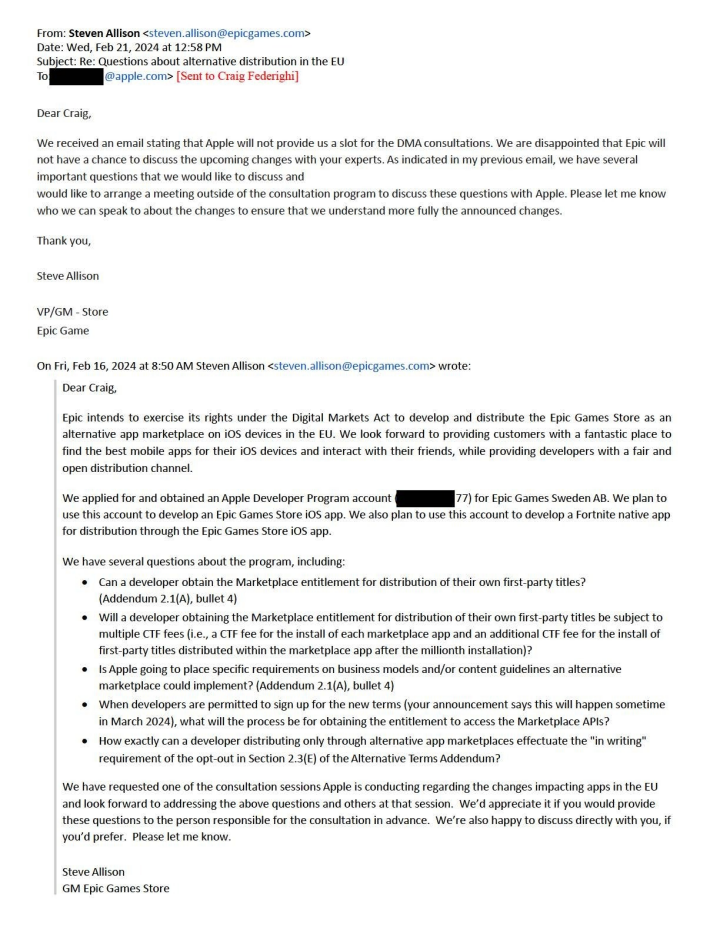
In its explanation, Apple reiterated the 2020 dispute, arguing that Epic had breached its developer agreements and engaged in public defamation. Thus, Apple claimed it had discretionary authority to terminate any of Epic’s accounts.

However, with the DMA now enforceable, Apple’s move to block Epic raised red flags in Brussels. As the European Commission entered the compliance audit phase, this high-profile clash began to ease.
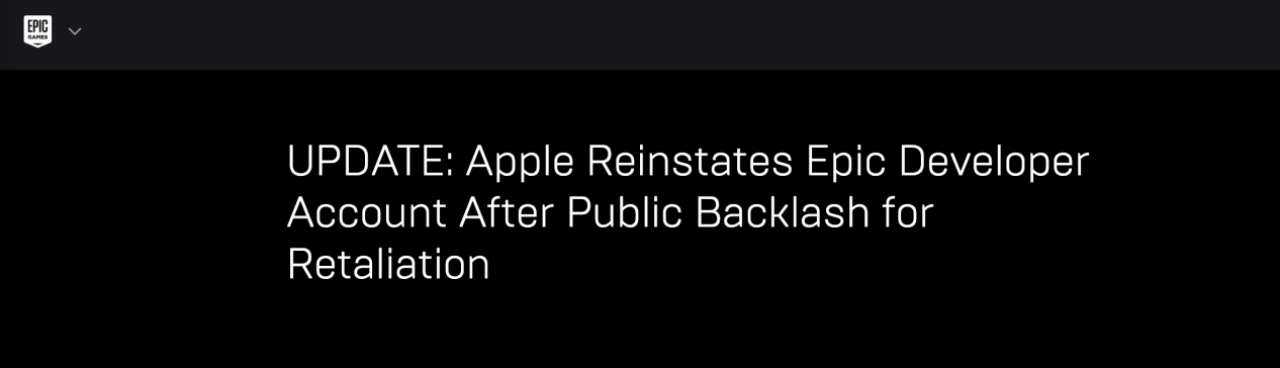
On March 8, 2024, Epic announced on its website:
“Apple has informed us—and committed to the European Commission—that it will reinstate our developer account. This sends a strong signal that the Commission will move swiftly to enforce the DMA and hold gatekeepers accountable. We’re moving forward with the launch of the Epic Games Store and bringing Fortnite back to iOS in Europe.”
Apple responded:
“After discussions with Epic, they’ve agreed to comply with our rules, including our DMA policies. As a result, Epic Games Sweden AB has been allowed to re-sign the developer agreement and rejoin the Apple Developer Program.”
EU Reaction and Regulatory Signals
Thierry Breton, EU Commissioner for the Internal Market, commented:
“After contacting the relevant parties, Apple reversed its decision to ban Epic. On just the second day of the DMA’s effect, we are already seeing tangible results!”
Under the DMA, gatekeepers can no longer silence or retaliate against business users. The Commission has prioritized investigating Apple’s account termination and called for developers to submit feedback regarding gatekeeper compliance.
Key Provisions of the DMA and Impact
The Digital Markets Act (DMA) aims to ensure fairness and competition in digital markets. It defines gatekeepers as large platforms providing core platform services such as app stores, messaging services, and search engines.
Under Article 6(4):
“Gatekeepers shall allow and technically enable the installation and effective use of third-party software applications or app stores using or interoperating with their operating systems, and allow access to such applications through means other than the gatekeeper’s own core platform services.”
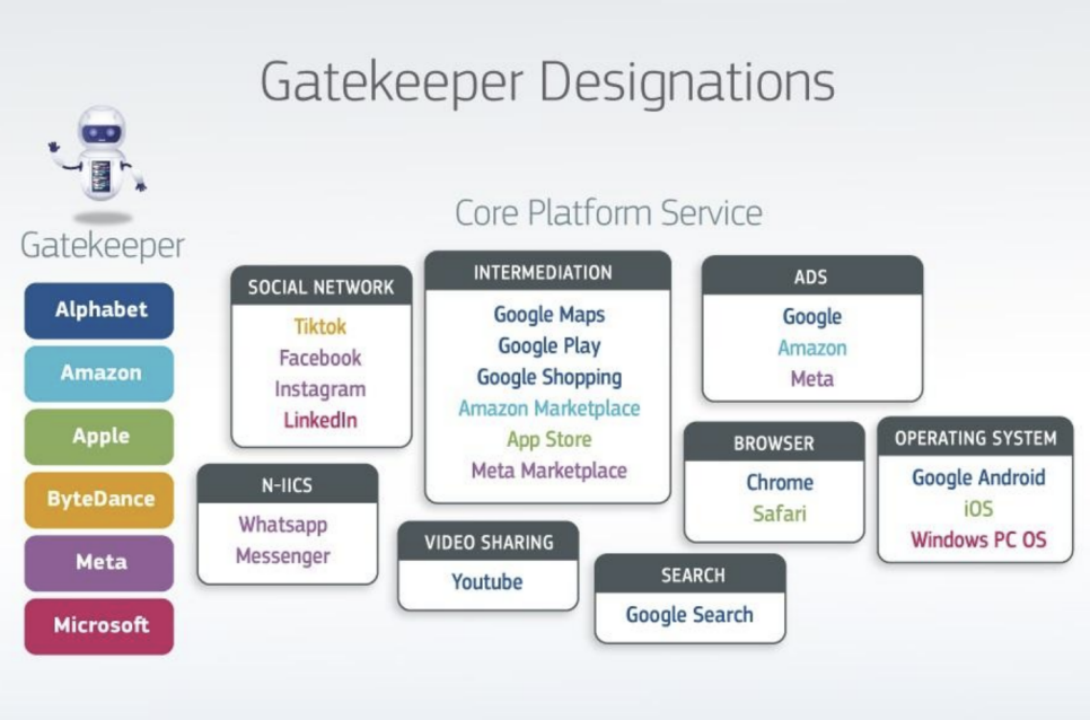
On September 6, 2023, the European Commission officially designated six companies as gatekeepers under the DMA:
Alphabet, Amazon, Apple, ByteDance, Meta, and Microsoft.
A total of 22 core platform services were identified.
For Apple, the DMA applies to:
iOS (Operating System)
App Store (Distribution Platform)
Safari (Web Browser)
These entities were required to achieve full compliance by March 6, 2024.
Under Article 5(3) of the DMA:
“Gatekeepers shall not prevent business users from offering the same products or services to end users through third-party online intermediation services or their own direct sales channels at different conditions (including price) than those offered via the gatekeeper’s services.”
This provision forces Apple to allow alternative app stores and payment mechanisms on its iOS platform within the EU.
Newcomers: Mobivention & MacPaw Enter the App Store War
On the very day the DMA came into effect, Germany-based Mobivention launched a new enterprise-focused app marketplace for iOS.
Key features include:
Simplified app publishing rules
Alternative billing models
Reduced revenue share for in-app purchases
Integrated alternative payment solutions
Simultaneously, MacPaw announced its own iOS App Store alternative, joining Epic in leveraging DMA reforms.
Massive Penalties for Non-Compliance
Gatekeepers who fail to comply face:
Fines of up to 10% of global annual turnover
For repeat offenses, up to 20%
Daily penalties of up to 5% of average daily revenue
If the Commission launches a formal investigation based on Epic’s or other developers’ complaints, Apple could face billions in fines. With Apple’s global turnover nearing $400 billion, a 10% fine would amount to $40 billion—a risk even tech giants cannot ignore.
Not Apple’s First EU Fine: Antitrust Crackdown Escalates
The EU’s DMA enforcement is more than theoretical. On March 4, 2024, the European Commission fined Apple €1.84 billion (~$2 billion) for blocking music streaming competitors on the App Store, marking Apple’s first-ever fine for breaching EU rules.
Harvard Business School Professor Andy Wu noted:
“Testing EU legal limits has become standard practice for U.S. tech firms. They often treat multi-billion-euro fines as a cost of doing business.”
Conclusion: A Strategic Inflection Point for Digital Exports
The Digital Markets Act represents the culmination of over a decade of EU debate and legal battles regarding the dominance of Big Tech. With a handful of platforms exerting disproportionate control over digital markets, the DMA aims to foster competition and fairness.
For internet-facing companies exporting products to Europe, the DMA creates direct obligations that impact product distribution strategies. Tracking platform policy updates and adjusting accordingly will be critical to operational stability and legal compliance.