
On February 19, 2024, the European Commission announced that it would initiate an investigation into TikTok under the Digital Services Act (DSA).

On April 25, 2023, TikTok was designated as a Very Large Online Platform (VLOP) under the DSA. Pursuant to the DSA, TikTok is required to comply with a series of obligations set forth therein.
The European Commission has opened formal proceedings to assess whether TikTok may have infringed the DSA in the following areas: protection of minors, advertising transparency, researchers’ access to data, and risk management related to addictive design and harmful content.
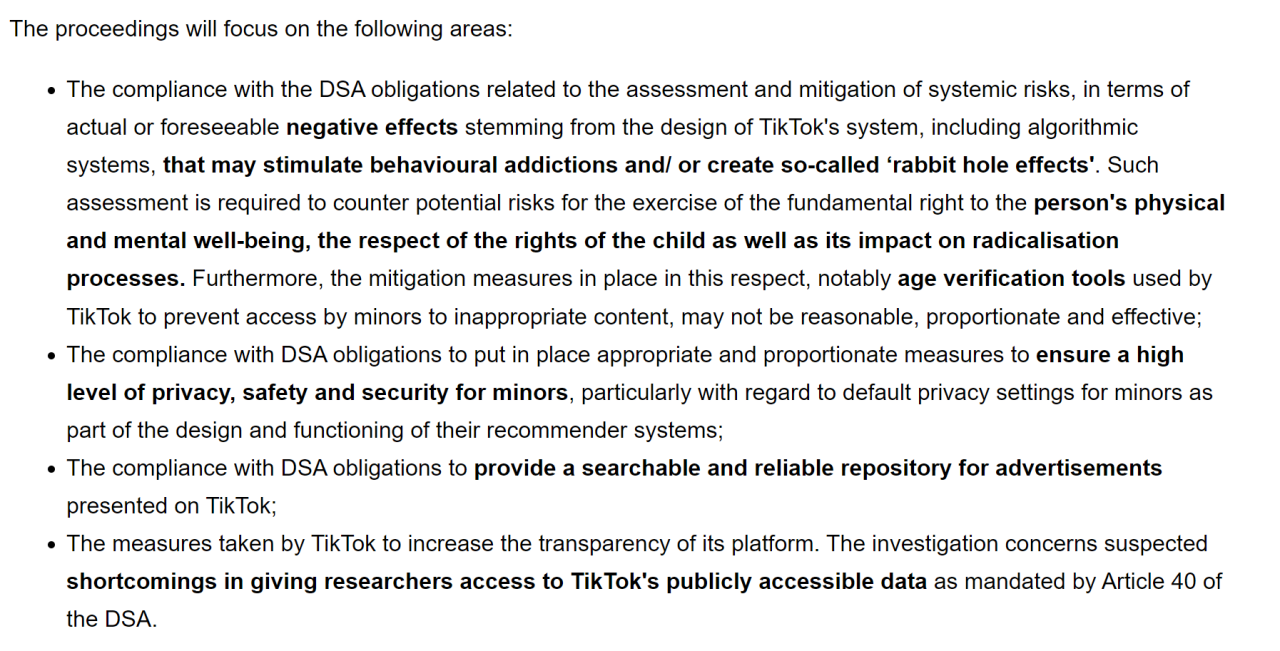
The Commission will prioritize the following areas of investigation:
- Compliance with DSA obligations concerning the assessment and mitigation of systemic risks, including potential actual or foreseeable negative effects arising from TikTok’s system design, including its algorithmic systems, which may stimulate behavioral addiction and/or create so-called “rabbit hole effects.” Such risk assessments aim to address potential impacts on fundamental rights, including mental and physical well-being, respect for children’s rights, and exposure to radicalization processes.
- Whether mitigation measures adopted in this regard—particularly age verification tools intended to prevent minors from accessing inappropriate content—are reasonable, proportionate, and effective.
- Compliance with DSA obligations to adopt appropriate and proportionate measures to ensure a high level of privacy, safety, and security for minors, including the consideration of default privacy settings for minors within the design and operation of recommendation systems.
- Compliance with DSA obligations to provide a searchable and reliable repository of advertisements presented on TikTok.
Measures taken by TikTok to enhance overall platform transparency. The investigation also concerns suspected deficiencies in providing researchers with access to publicly available data pursuant to Article 40 of the DSA.
Following the opening of formal proceedings, the Commission will continue to gather evidence and may adopt interim enforcement measures against TikTok. If the platform proposes commitments aimed at addressing the identified concerns, the Commission may accept such commitments.
If TikTok is found to be in breach of the DSA, it may face fines of up to 6% of its global annual turnover, in accordance with the Act.
Kinding Law Firm: Commentary and Analysis
This marks the second such investigation since the DSA entered into force.
On December 18, 2023, the European Commission initiated its first formal DSA investigation against X (formerly Twitter), examining potential violations in risk management, content moderation, dark patterns, advertising transparency, and researchers’ data access. That investigation remains ongoing.

Since February 17, 2024, the DSA has become fully applicable to all online platforms operating within the European Union. This means that all platforms with users in the EU—except micro and small enterprises employing fewer than 50 employees and generating annual turnover below €10 million—must adopt user protection measures, including:
Combating illegal content, goods, and services;
Protecting minors;
Providing users with information about why they are shown particular advertisements and identifying the paying entity;
Prohibiting advertising targeted at users based on sensitive data, such as political or religious beliefs or sexual orientation;
Providing users affected by content moderation decisions (e.g., content removal, account suspension) with statements of reasons and uploading such statements to the DSA Transparency Database;
Offering complaint mechanisms to challenge moderation decisions;
Publishing at least annual reports on content moderation practices;
Providing clear terms and conditions, including information on the main parameters used in content recommendation systems;
Designating a contact point for authorities and users.
The DSA represents not only a baseline compliance requirement but also a strategic tool for building user trust and competitive advantage. Chinese companies planning to expand into the EU market as digital service providers should pay particular attention to content governance, data protection, and algorithmic transparency.
Official announcement link:
https://ec.europa.eu/commission/presscorner/detail/en/ip_24_926