Basic Case Information
Recently, the United States Department of Justice filed a civil antitrust lawsuit against Apple Inc., accusing the technology company of illegally monopolizing the smartphone market.
Over the years, Apple has established a dominant iPhone platform and ecosystem, which has driven the company’s astronomical valuation.
According to the DOJ, Apple’s rise has, to some extent, benefited from the Microsoft antitrust case of 1998. Therefore, the Department now considers it necessary to advance technological innovation through another landmark antitrust action.
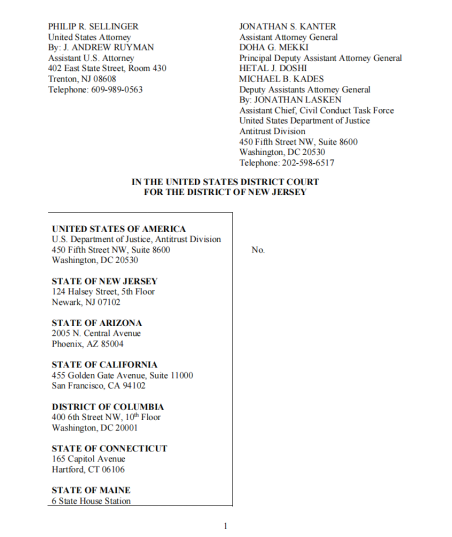
The lawsuit was filed in the District of New Jersey. The plaintiffs allege that Apple selectively restricts developers in multiple ways, in violation of antitrust laws.
This lawsuit aims to free the smartphone market from Apple’s anti-competitive and exclusionary conduct, restore competition, reduce smartphone prices for consumers, lower costs for developers, and preserve innovation for the future.
The United States, along with the states of New Jersey, Arizona, California, Connecticut, Maine, Michigan, Minnesota, New Hampshire, New York, North Dakota, Oklahoma, Oregon, Tennessee, Vermont, Wisconsin, and the District of Columbia, brought this case through their respective Attorneys General.
The complaint, totaling 88 pages, aims to address Apple’s anti-competitive and exclusionary conduct and to mitigate harm to competition.
Relief Sought by Plaintiffs
The plaintiffs listed five examples of Apple’s alleged monopolistic behavior:
1. Super Apps
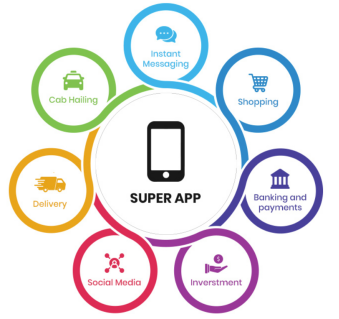
Super apps provide users with a broad array of functionalities within a single application.
Super apps are platform-type applications that aggregate various functionalities and can deliver a consistent, cross-device user experience, reducing user dependence on multiple single-function apps.
Suppressing super apps harms all smartphone users, including Apple users, by denying them access to high-quality experiences.
It also harms developers by preventing them from innovating and selling their products.
2. Cloud Gaming Applications
Cloud gaming applications allow users to play computation-intensive games through cloud storage.
Cloud gaming (and cloud services in general) reduce reliance on expensive hardware by enabling advanced computing tasks to be performed remotely, thereby enhancing smartphone competitiveness.
Suppressing cloud streaming games harms users by denying their right to play high-computation games, and harms developers by preventing them from selling such games to users.
In 2020, Apple introduced new rules that seemed to allow streaming services like Xbox Cloud Gaming, Facebook Gaming, and GeForce Now to enter the App Store.
However, under Apple’s review policy, each cloud game and its updates must be submitted as individual apps for Apple’s approval.
This increases the cost for developers to release applications on iPhone and reduces the number of games available to users.
Developers are forced to create separate iOS versions for their services instead of cross-platform versions based on the cloud.
Apple exercises its power over app distribution to effectively block third-party developers from offering cloud gaming subscriptions as native iPhone apps.

3. Instant Messaging Applications
These are applications that allow users to communicate with friends, family, and other contacts.
Apple prohibits third-party apps from sending or receiving carrier-based messages.
Apple does this intentionally to degrade product quality, privacy, and security for non-iPhone users and Apple users alike.
Apple also artificially restricts developers’ user base size, harming their interests.
For example, the Beeper Mini app, which allowed Android users to use iMessage and send blue bubble texts, was shut down by Apple in December 2023.
4. Smartwatches / Wearable Devices
These are expensive accessories that typically must be paired with smartphones.
Smartwatches are often compatible with different smartphones, thereby lowering switching costs between smartphone brands.
Apple damages innovation and sales for smartwatch developers by suppressing key features that enable pairing with iPhones—such as message responses and sustained connectivity.

5. Digital Wallets
Digital wallets are an increasingly important smartphone function that users find highly convenient and trustworthy.
They often contain users’ most sensitive information.
Cross-platform digital wallets allow users to switch between smartphone brands.
Apple refuses to allow users to access enhanced digital wallets or enable wallet developers (typically banks) to offer advanced digital payment services to their clients.
Apple’s Response
Apple contends that the lawsuit will result in government overreach, thereby limiting Apple’s freedom to design its technologies.
In a public statement, Apple declared: “This lawsuit threatens who we are and the principles that distinguish Apple products in fiercely competitive markets.”
“If successful, this lawsuit would hinder our ability to create the kind of technology people expect from Apple — technology where hardware, software, and services intersect.”
Should the Court rule in favor of the DOJ, Apple could potentially be forced to break up parts of its business. A DOJ official stated that the precise consequences must be determined after trial.
The official added: “Equitable relief for violations of Section 2 of the Sherman Act is on the table. A range of possible remedies could not only correct the violations but also prevent recurrence and fully restore competition in the market.”
A Fine Line Between Industry Dominance and Monopoly
This lawsuit by the DOJ against Apple seeks to establish a new landmark ruling in the realm of U.S. antitrust enforcement, focusing not just on individual Apple products but on the entire ecosystem and whether its operation constitutes monopolistic behavior.
In the short term, this case is unlikely to see significant substantive progress. The litigation process will inevitably involve prolonged confrontation between Apple and the DOJ, and the case may take years to resolve.
For example, Google was sued by the DOJ in October 2020 over similar issues, and it took nearly three years just to enter the trial phase. Remedies have not yet been finalized, nor has the appellate process begun.
For Apple, the challenge is not limited to this DOJ lawsuit. It must also comply with the European Union’s Digital Markets Act (DMA) and respond to regulatory investigations in other jurisdictions such as Japan and South Korea.
Since the DMA establishes a novel gatekeeper regime, independent from traditional antitrust frameworks, and imposes heavy penalties, Apple—already designated as a gatekeeper—is actively attempting to comply with its obligations.
These extraterritorial developments may influence the DOJ’s subsequent litigation strategies. It is possible that the Department will reference Apple’s compliance actions under the DMA as a benchmark when crafting its own demands in the U.S. proceedings.