
Recently, NetEase's mobile game Harry Potter: Magic Awakened sparked widespread player dissatisfaction due to adjustments to the game's product features. The related topic “10,000 Players Demand Resignation of Harry Potter: Magic Awakened Designers” surged in popularity.
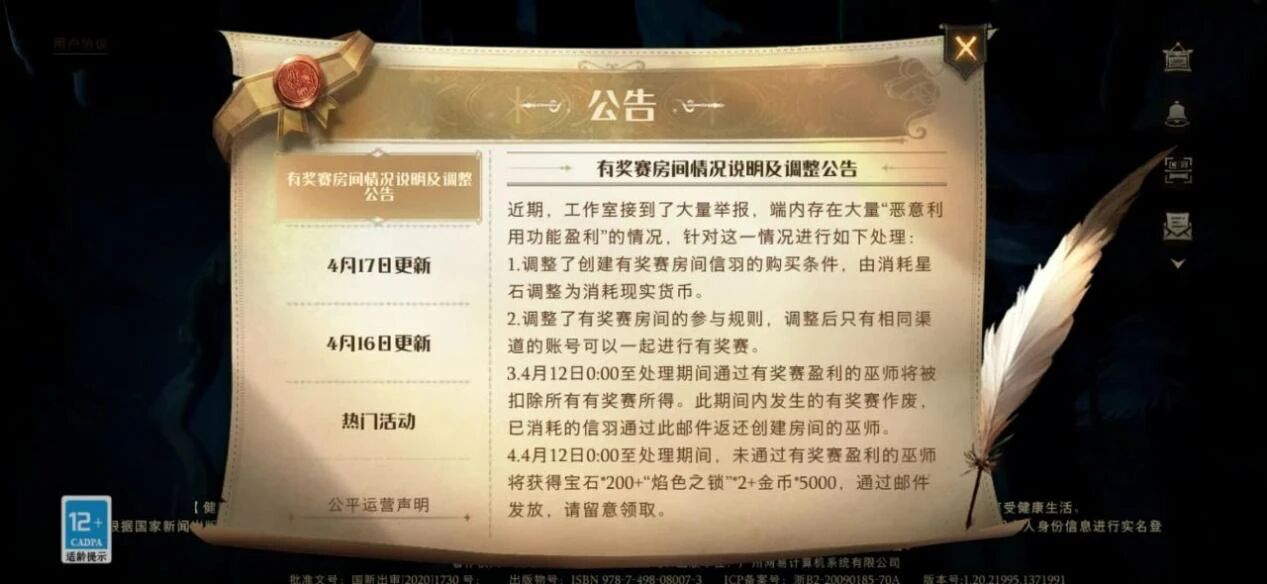 The primary reasons players strongly oppose these changes are:
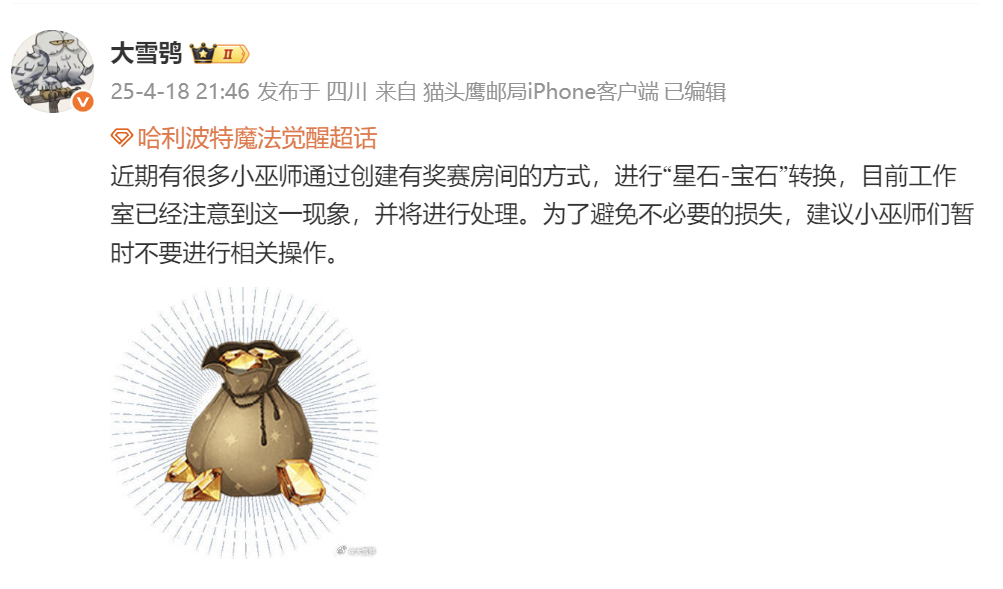
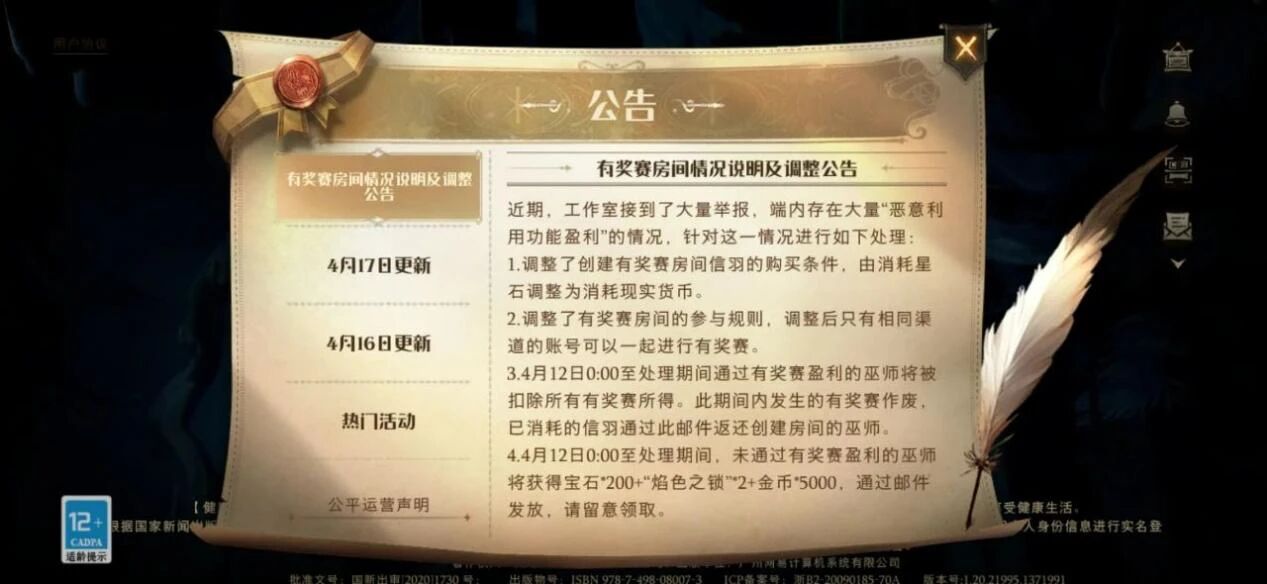
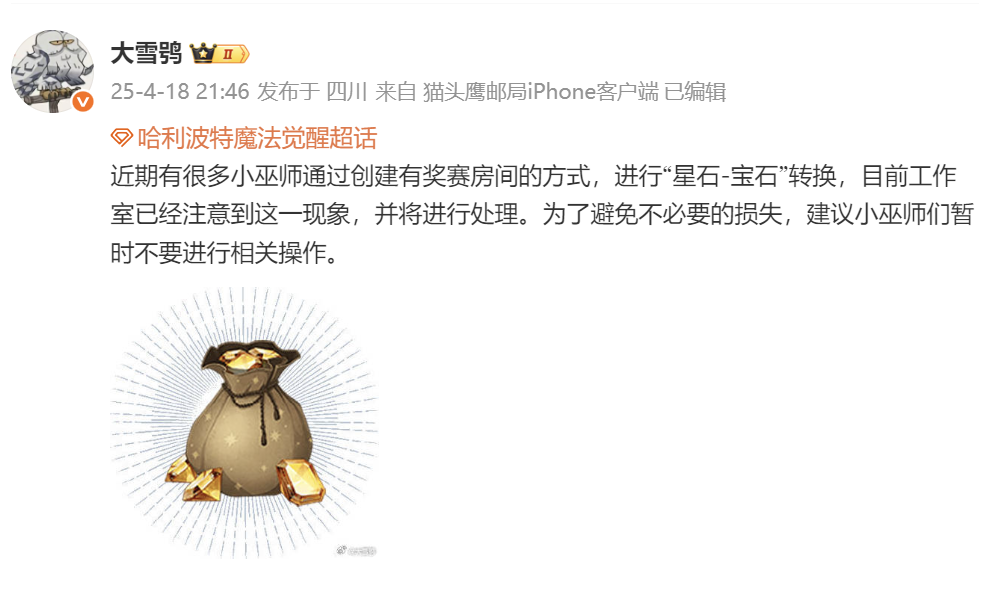
1. Sudden Announcement: The notice was abruptly released at midnight on April 22, 2025, without any prior warning or communication through official channels. Only an unofficial account named “Big Snow Goose” posted a statement on April 18th indicating the studio would address gem acquisition through prize competitions, leaving players unprepared for potential losses.
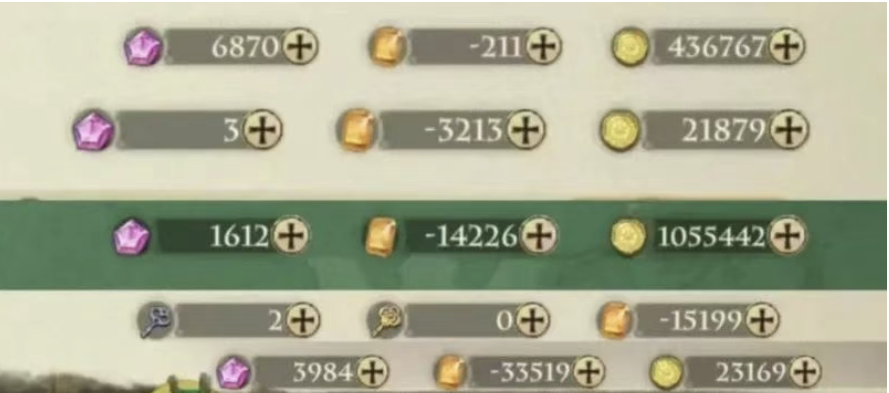
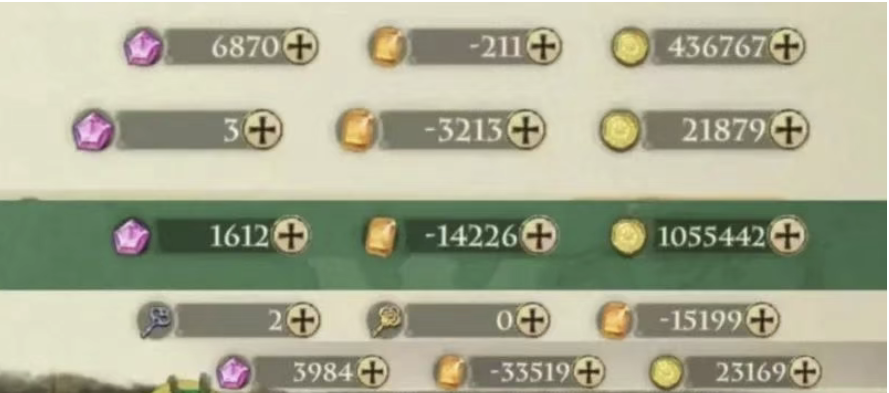
2. Retroactive Prize Deductions: While the announcement was dated April 22, 2025, prize deductions were applied retroactively starting from April 12, 2025. This starting date lacked any substantiating evidence. This action caused abnormalities in numerous players' gem accounts, with some players' gem counts even being deducted to negative values, severely disrupting their normal gaming experience.
3. Prize-winning behavior complies with game rules: The prize tournament rules have operated stably for three years. Players forming teams to obtain prizes did not violate game rules or exploit loopholes. The deducted prizes were acquired by players in full compliance with the game's regulations.
The game's official statement attributes this rule adjustment to the discovery of players “maliciously exploiting features for profit.” Specifically, players or third-party studios were found to be using channel recharge discounts and the team-based tournament system to profit, acquiring rewards like gems at prices below normal consumption levels.
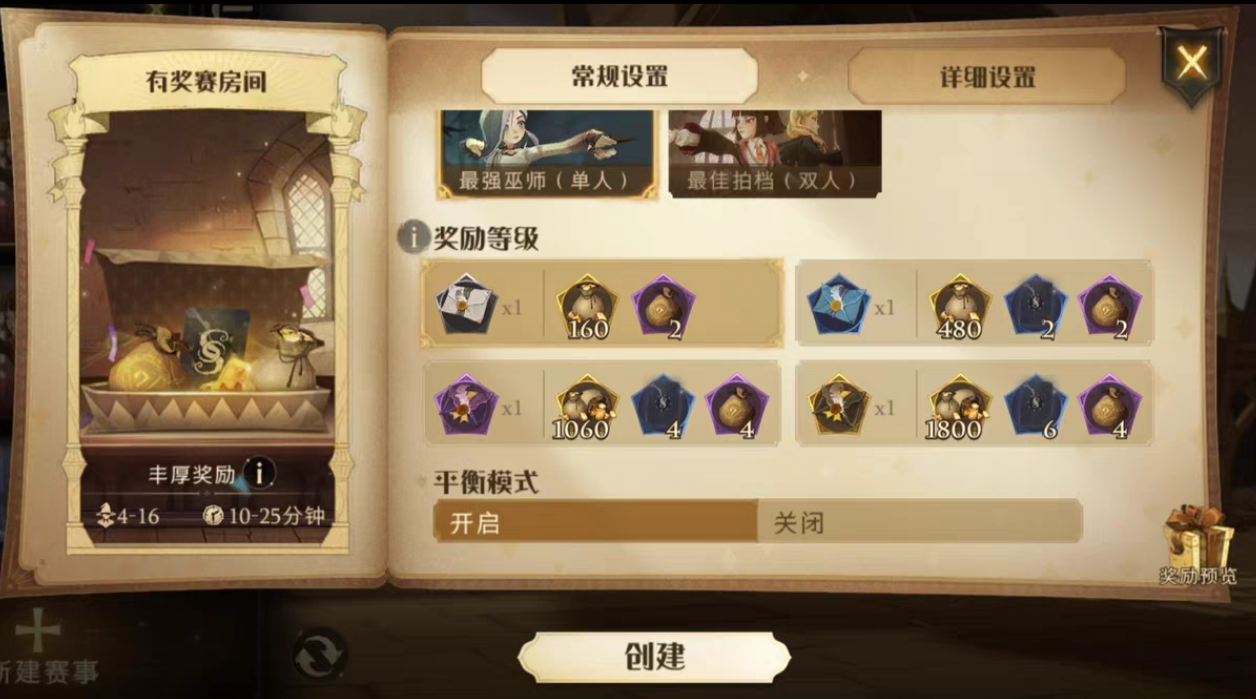
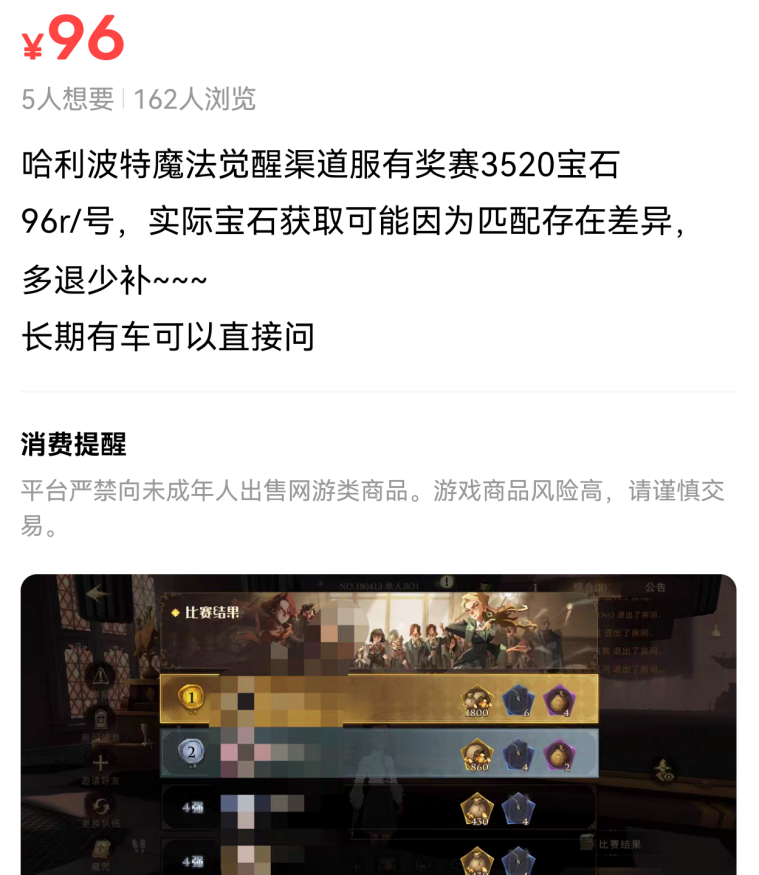
First, the game's channel servers offer a double-gem bonus for first-time Star Stone purchases. This led merchants to register multiple channel accounts to recharge, enabling them to purchase the “Feather of Trust” item—required to create prize-winning tournament rooms—at significantly reduced costs.
Second, players who create these rooms can invite others to join. Each room supports 4–16 participants, with rewards like gems distributed based on final rankings.
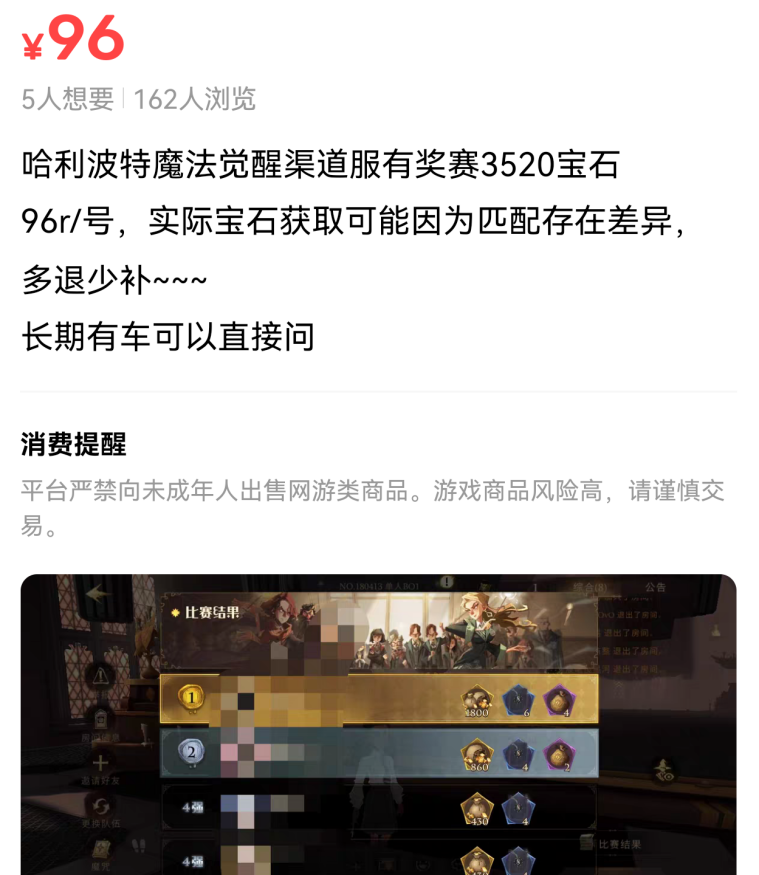
Merchants exploit this system by selling entry slots, effectively discounting gems. For example: - Official exchange rate: ¥1 = 10 gems (direct conversion value for Star Stones, subject to fluctuations in events) - Merchant rate: ¥1 = 37 gems Players prepay a fee, and merchants settle based on the actual gems earned during the event—overpayments refunded, underpayments collected.
In response to players' strong demands in the comment section to restore deducted gems, star stones, and prize event items, the official team of Harry Potter: Magic Awakened has yet to propose a concrete solution as of now.
Kinding Law Firm Commentary:
I. Does NetEase have a reasonable basis for recycling game revenue from prize event merchants?
NetEase's current user agreement contains relevant clauses stating: "Any game activities or virtual item transactions conducted for profit shall be deemed as seeking improper gains, including but not limited to users: (1) registering multiple user accounts and/or game character IDs to engage in game activities for profit; (2) participating in single or series of in-game production mechanics to sell obtained virtual items for profit; (3) Exploiting value discrepancies of virtual items across different servers to trade them for profit; (4) Acting as intermediaries for game account or virtual item transactions to collect fees for profit; (5) Trading user accounts or virtual items for profit on platforms not provided or authorized by NetEase..." The agreement explicitly states that NetEase reserves the right to impose penalties on all user accounts involved in seeking improper gains, including numerical deductions and recovery of virtual items.
Merchants listing team-up orders for prize-winning events on third-party platforms exploit gameplay mechanics for profit, thereby violating the Game User Agreement and constituting a breach of contract. NetEase reserves the right to impose penalties, including prize forfeiture, as stipulated in the agreement. Furthermore, these merchants knowingly engage in prohibited activities to achieve improper gains, despite being aware that the gaming industry universally prohibits exploiting gameplay mechanics for economic benefit and conducting in-game currency transactions through unofficial channels.
Such conduct not only severely disrupts the game's economic ecosystem but also improperly diverts commercial revenue rightfully due to NetEase. This violates Article 2 of the Anti-Unfair Competition Law and constitutes unfair competition. NetEase's self-help remedies to recover losses within the framework of the online service contract are both reasonable and lawful.
II. Does NetEase Games' retrieval of prizes won by “all players within 10 days prior to the announcement” through prize competitions constitute an abuse of contractual penalty rights or infringe upon the legitimate rights of regular players?
1. Failure to distinguish between regular players and malicious profit-seeking merchants may pose risks of infringing upon regular players' property rights. Game operators should recognize that not all players obtained prizes through commercial teaming practices. Given current public sentiment, it is possible that legitimate players' competition earnings were also recovered. However, participating in prize competitions and earning rewards fundamentally constitutes normal gameplay within the scope permitted by the game operator; not all prize winners engaged in improper profit-seeking activities. Against this backdrop, if the game operator fails to analyze player award data and effectively distinguish between legitimate players and malicious profit-seekers, then adopts a blanket approach to directly recover all gem rewards distributed in prize-based events within the past ten days, it would cause substantial harm to the virtual property rights of legitimate players.
2. Recovering player competition prizes awarded within ten days prior to the announcement of game rule adjustments risks infringing upon players' right to know. Article 8 of the Consumer Rights Protection Law explicitly states that consumers have the right to know the true circumstances of the goods they purchase or use, or the services they receive. In this incident, the game operator abruptly announced the recovery of all prizes obtained through prize-based events between April 12 and April 22, 2025, at midnight on April 22, 2025, without prior notification of any rule changes or risk warnings to players. When participating in the prize tournament, players reasonably expected that prizes obtained under valid conditions constituted legitimate gains based on the game's stable three-year operational rules, with no risk of confiscation.
However, the official failed to issue advance warning notices to players explaining that trading prizes through unofficial channels was prohibited and that penalties would be imposed on violating players. Nor did it clarify the standards or criteria for the recall before the action occurred. This left players in a state of complete information asymmetry, unable to anticipate the potential impact on their rights. It deprived players of their right to know the true circumstances of the game service, resulting in players losing their acquired prizes without any prior knowledge and suffering damage to their property rights.
Compliance Recommendations:
Drawing lessons from this incident, game companies should take note when combating merchants exploiting gameplay mechanics for unfair gains:
1. Strengthen Preemptive Risk Warnings: Game companies should clearly warn players in advance through multiple channels—official announcements, login pop-ups, and community pinned posts—that exploiting specific gameplay mechanics for profit is prohibited. They must strictly forbid trading game currency through unofficial channels while simultaneously informing players of the consequences of violations: the platform reserves the right to impose penalties, including currency recovery, based on the user agreement.
2. Ensure penalties are fully justified: Before imposing penalties, establish a complete chain of evidence. Ground decisions in user agreement terms while scientifically assessing violations through multi-dimensional factors like transaction frequency, abnormal monetary fluctuations, and abnormal gameplay patterns. This safeguards the legality and fairness of disciplinary actions.
3. Exercise caution with retroactive accountability mechanisms: If the game operator has not explicitly announced retroactive penalty rules beforehand, hastily imposing penalties on historical player actions may easily trigger legitimacy disputes, expose the platform to collective lawsuits, and potentially ignite widespread negative public sentiment. Therefore, unless significant operational risks or regulatory requirements necessitate it, retroactive accountability should be avoided whenever possible.
 此次游戏的调整之所以引起玩家的强烈不满,玩家群体认为主要是因为:
 2、回溯扣除奖品:公告于2025年4月22日发布,但奖品扣除时间却是回溯至2025年4月12日开始,而该起始日期的确定并无依据予以支撑。这一操作导致大量玩家的宝石账户出现异常,部分玩家的宝石数量甚至被倒扣至负数状态,严重影响玩家正常游戏体验。
 3、获奖行为符合游戏规则:有奖赛规则已稳定运行三年,玩家组队获取奖品的行为并未违反游戏规则或利用游戏漏洞等,被扣除的奖品是玩家在符合游戏规则的情况下获取的。
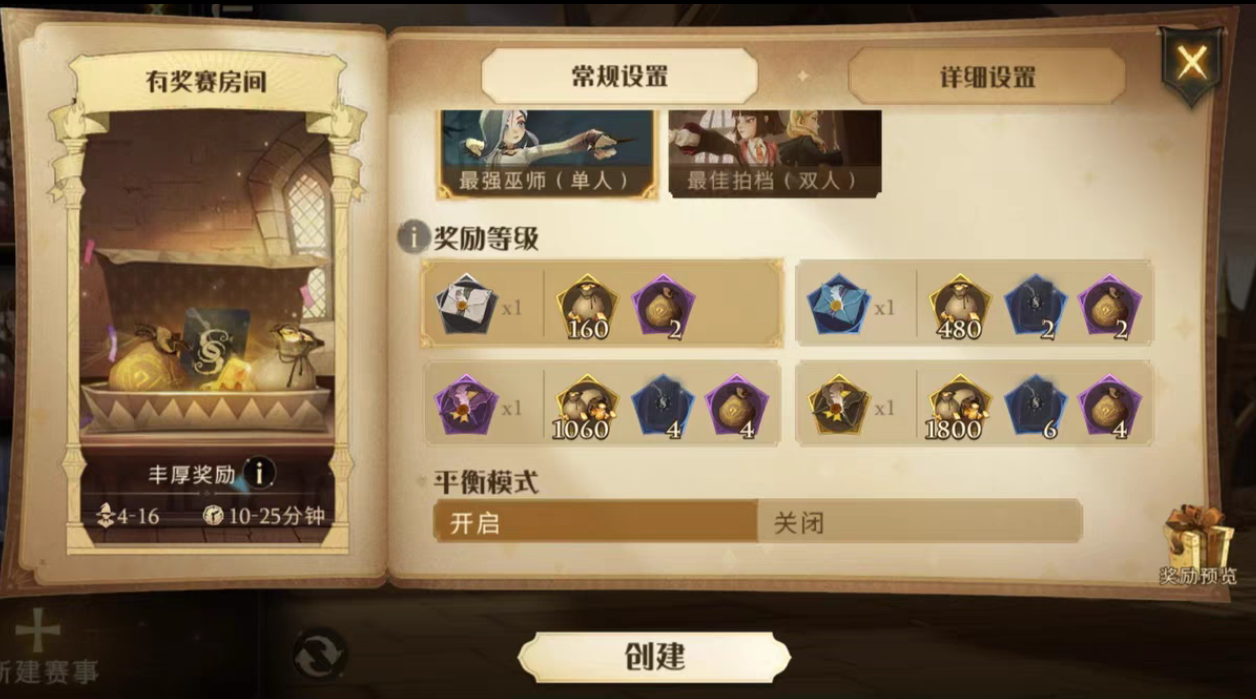 首先,游戏的渠道服有星石首充双倍的优惠,于是有商家注册多个渠道小号进行充值,从而通过花费较少的钱购买创建有奖赛房间的道具“信羽”。
 面对玩家在评论区要求恢复被扣除宝石、星石及有奖赛道具的强烈呼声,截至目前,《哈利波特:魔法觉醒》游戏官方仍未提出具体解决方案。