
game classificationloot boxesminor protection

Australia's Game Rating System Introduces New Standards; Gambling-Like Content Will Affect Ratings

澳大利亚游戏分级引入新标准,类赌博内容将影响评级

January 23, 2026
8 views

Summary

From 22 September 2024, Australia has implemented updated game classification standards targeting video games containing gambling-like features. The new rules focus on two categories: games with chance-based in-game purchases (such as loot boxes), which must now be classified at least M, and games featuring simulated gambling mechanics (such as social casino or slot machine simulations), which will automatically receive an R18+ rating. These changes reflect growing concerns over child protection and research linking gaming mechanics to gambling-related and psychological harms.

Recently, Australia updated its video game rating standards. Effective September 22, 2024, new ratings will apply to electronic games containing gambling-like content. These changes respond to growing societal concerns about children and research linking video games to real-world gambling issues and psychological and emotional harm. The update applies to computer games, electronic game consoles, mobile games, and tablet games.

PART 1

Regulated Game Types

The new ratings will apply to games falling into the following two categories:

1. Games featuring “in-game purchases with elements of chance” (e.g., loot boxes).

This category includes games where players can directly or indirectly purchase in-game loot boxes or other random rewards (including potential random rewards within battle passes) using real-world currency. Any random reward purchasable with real-world currency is included, regardless of whether it can be acquired through in-game currency earned or gameplay progression.

2. Games featuring “simulated gambling” functions (e.g., casino games).

This category includes social casino games featuring simulated gambling activities, such as slot machine simulators or roulette; games featuring interactive slot machines or other similar casino settings (but does not include electronic games that merely feature casino environments, imagery, or themes without allowing player participation or interaction with gambling activities). Currency in these games cannot be exchanged for real-world money nor traded with other players for real-world money.

PART 2

Rating Criteria

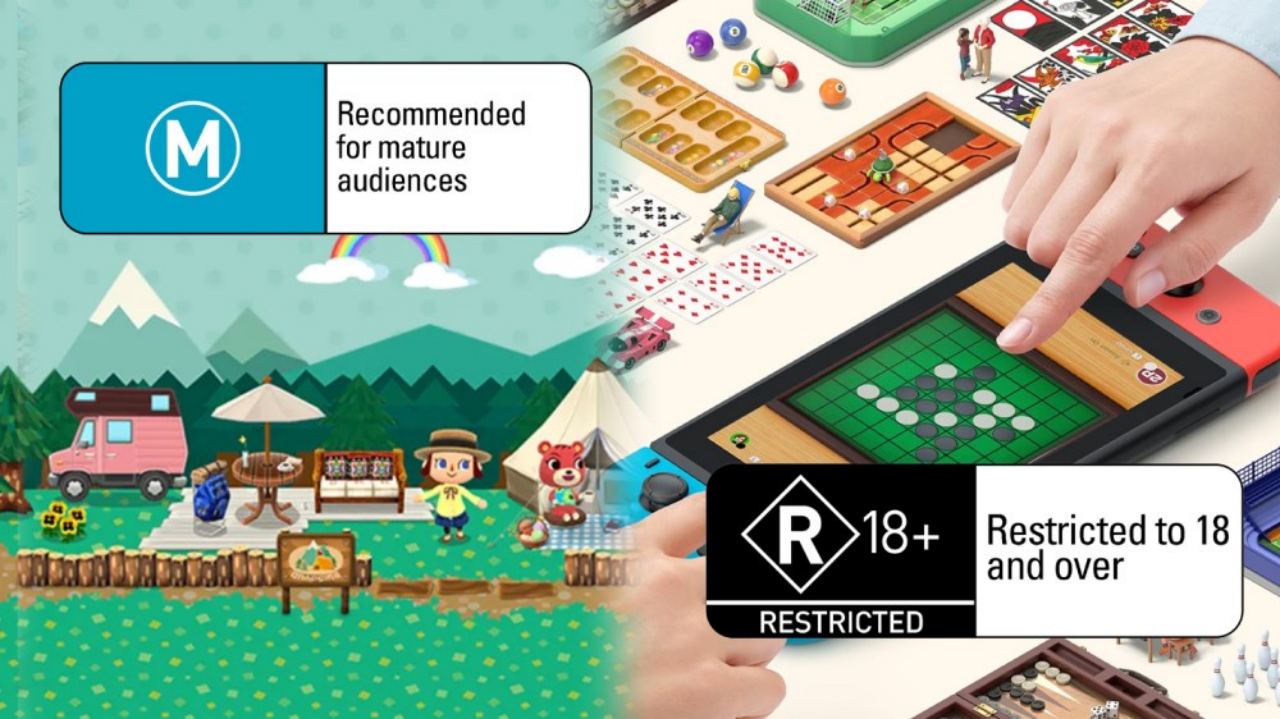
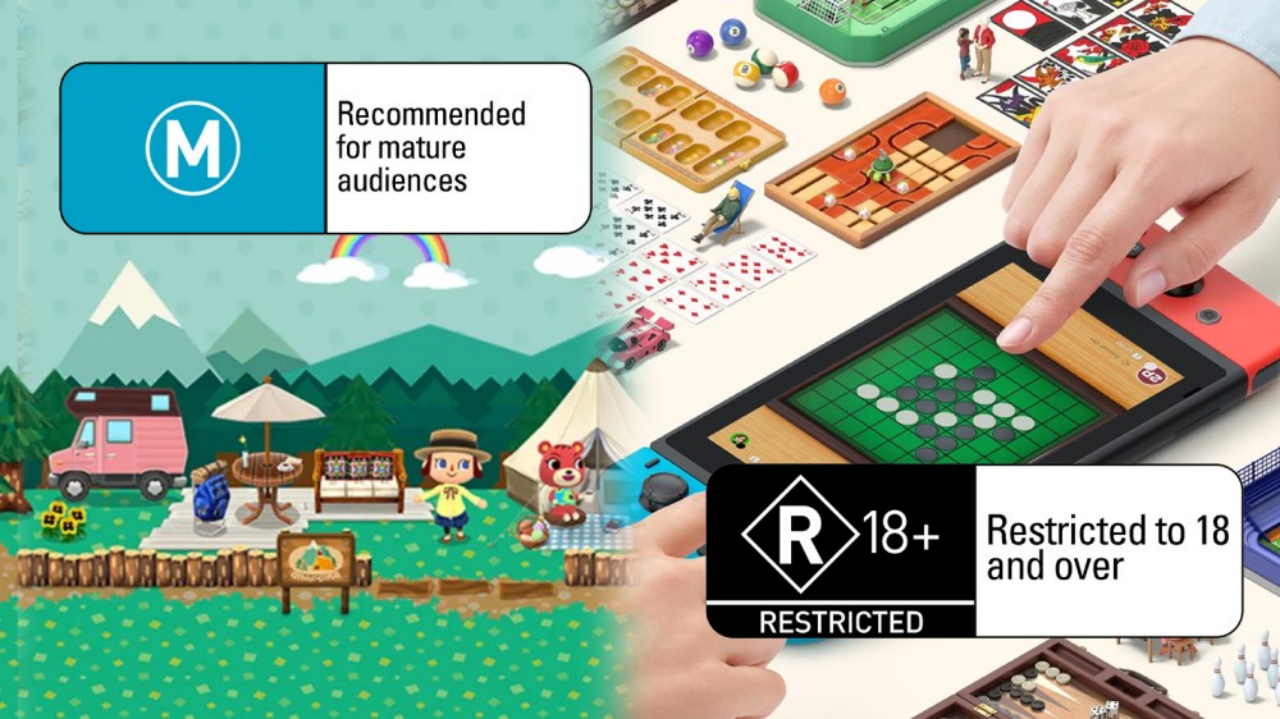
Under the new rating rules, games featuring “in-game purchases with chance elements” (e.g., loot boxes) will now receive a minimum rating of M (Not Recommended for Children Under 15).

For games featuring “simulated gambling” functionality, any game simulating gambling will automatically receive an R18+ rating (restricted to adults aged 18 and over).
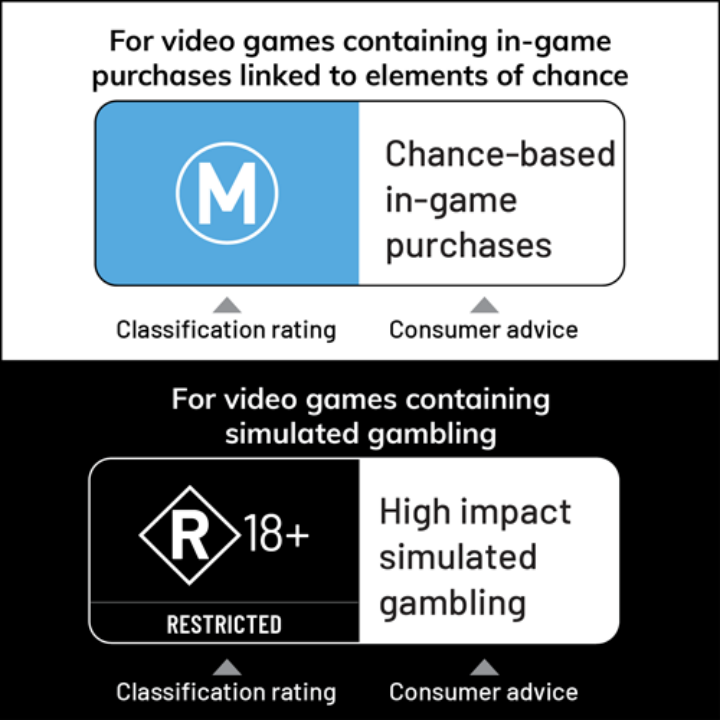
Note: The M rating is advisory; there are no legal restrictions on the sale or distribution of these games. The R18+ rating imposes legal restrictions, meaning it is illegal to sell or distribute these games to persons under 18 years of age.

PART 3

Circumstances Requiring Reclassification

Games rated prior to September 22, 2024, generally will not be reclassified. However, games that have been rated may require reclassification if, after September 22, 2024, in-game purchases related to chance elements or simulated gambling content are added that affect the game's rating.

For example:

1. Games rated G or PG after September 22, 2024, that add in-game purchases involving chance elements will likely require reclassification;

2. Games rated G, PG, M, or MA 15+ after September 22, 2024, that add simulated gambling content may require reclassification.

Original source link:https://www.classification.gov.au/about-us/media-and-news/news/new-classifications-for-gambling-content-video-games
中文原文

近日,澳大利亚对游戏分级标准进行更新,自2024年9月22日起,澳大利亚对含有类似赌博内容的电子游戏实行新的分级。这些变化是对社会对儿童日益增长的关注和对电子游戏与现实中的赌博问题以及心理和情感伤害联系起来的研究成果的回应。该更新适用于电脑游戏、电子游戏机、手机游戏和平板电脑游戏。
PART 1

规制游戏类型

该新的分级将适用于以下两类游戏:

1. “带有机会元素的游戏内购买”(例如战利品盒)的游戏。

该类游戏包括玩家可以通过现实世界货币直接或间接购买游戏内战利品箱或其他随机奖励(包括战斗通行证中可能的随机奖励)的游戏,只要随机奖励可以通过现实世界货币购买就包括在内,无论其可否通过游戏内赚取的游戏货币购买或根据游戏玩法获得。

2.具有“模拟赌博”功能的游戏(例如赌场游戏)。

该类游戏包括具有模拟赌博活动的社交赌场游戏,例如老虎机模拟器、轮盘赌;以互动式老虎机或其他类似赌场设置为特色的游戏,(但只以赌场环境、图像或主题为特色,但不允许玩家参与或与赌博活动互动的电子游戏不在此列)。该类游戏的货币不能兑换成现实世界货币,也不能与其他玩家交易兑换成现实世界货币。


PART 2

分级标准

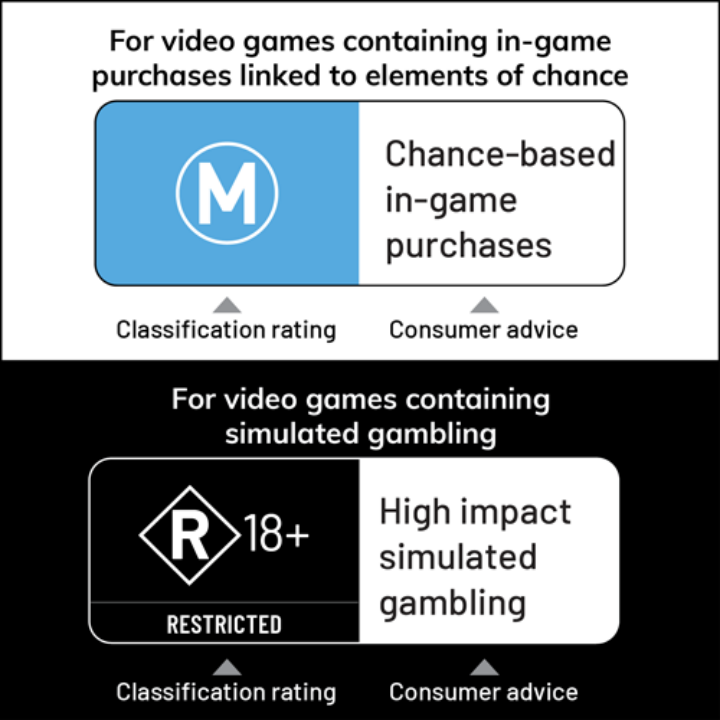
按照新的分级规则,对于“带有机会元素的游戏内购买”(例如战利品盒)的游戏,任何涉及机会元素的游戏内购买游戏现在的评级至少为M(不建议 15 岁以下的儿童使用)。

而对于具有“模拟赌博”功能的游戏,任何模拟赌博的游戏都会自动获得R18+评级(仅限18岁及以上成人)。


 注:M级是建议性分级,对这些游戏的销售或发行没有法律限制。R18+分级是一种法律限制,意味着向18岁以下人士销售或分发这些游戏是非法的。

PART 3

需要重新分级的情况

在2024年9月22日之前已经分级的游戏一般不会被重新分级。已进行分级的游戏,如果在2024年9月22日之后,添加与机会元素或模拟赌博内容相关的游戏内购买影响游戏的分级,则可能需要重新分级。

例如:

1.在2024年9月22日之后,被分为G级或PG级的游戏,如果增加了与机会元素相关的游戏内购买,很可能需要重新分类;

2. 在2024年9月22日之后,分为G、PG、M或MA 15+的游戏,如果增加模拟赌博内容,则可能需要重新分类。

附原文链接:https://www.classification.gov.au/about-us/media-and-news/news/new-classifications-for-gambling-content-video-games

分享文章

相关文章

General

【Weekly Gaming Law】Lawyers Comment on miHoYo’s Anti-Fraud Actions; Infringing “Reskinned” Game Ordered to Pay RMB 5 Million

【每周游戏法】律师评米哈游反舞弊;侵权游卡被判赔500万

This weekly update examines three recent legal developments in the gaming industry: miHoYo’s anti-fraud enforcement and supplier blacklist measures; a “reskin” infringement case involving a Three Kingdoms-themed card game resulting in a RMB 5 million damages award based on unfair competition; and Roblox’s launch of AI-powered interactive content generation tools. The article outlines the legal considerations arising from supply chain compliance, the boundary between public domain materials and protectable game design, and the intellectual property and compliance implications of AI-generated interactive content within UGC platforms.

1 views
General

How to Build Official Game Payment Systems in a Compliant Manner (Part II): Overseas

游戏官方支付如何合规搭建(二)海外篇

Against the backdrop of a global economic slowdown and evolving regulatory scrutiny over major app distribution platforms, an increasing number of overseas-oriented game companies are exploring the establishment of official website top-up platforms to reduce reliance on channel commissions. Building on the prior discussion of platform policies regarding payment redirection and third-party payment access, this article reviews practical cases of official website payment models adopted by several game companies, including their login mechanisms, purchasable content, regional availability, and qualification disclosures. Based on these practices, it outlines compliance considerations that overseas game companies should focus on when constructing official website payment systems, particularly in relation to account management, price display, promotional methods, and refund policy design across different jurisdictions.

6 views
General

EU’s DMA Enforcement Push: Apple and Epic Games Reach Temporary Truce

欧盟DMA强监管,苹果与Epic Games暂时握手言和

Since 2020, Apple and Epic Games have been locked in a global antitrust dispute over App Store policies. While Epic lost its U.S. lawsuit, it continued its resistance through noncompliance, resulting in a developer account ban. However, the dynamics shifted with the EU Digital Markets Act (DMA) coming into force on March 6, 2024. Epic reported that Apple, under pressure from the European Commission, agreed to reinstate its developer account in the EU. The DMA’s provisions, especially Article 5(3) and Article 6(4), require gatekeepers like Apple to allow third-party app stores and payment systems on iOS. Apple’s attempt to ban Epic amid DMA implementation triggered regulatory attention, leading to rapid Commission intervention. This incident not only highlights the DMA’s enforcement teeth but also signals a broader shift in platform governance within the EU. For global developers and digital exporters, especially those dependent on app store distribution, DMA compliance represents a strategic inflection point. Non-compliance risks include fines of up to 10–20% of global turnover, exemplified by the €1.84 billion fine Apple recently faced. As more third-party app stores (e.g., Mobivention, MacPaw) emerge, the EU’s digital market is poised for structural transformation.

5 views