
Against the backdrop of the rapid development of the online game industry, the importance of legal regulation has become increasingly prominent. Looking ahead to 2025, we anticipate that legal and regulatory oversight of online games will exhibit a series of noteworthy trends across several key areas.
Protection of Minors Online: Comprehensive and Deepened Regulation
More Refined and Stricter Regulation
With the successive implementation of regulations and national standards such as the Regulations on the Protection of Minors in Cyberspace, the Guidelines for the Construction of Minor Mode in Mobile Internet Applications, and the Information Technology—Technical Requirements for Online Game Minor Guardianship Systems (GB/T 44163—2024), as well as the continued governance actions carried out by the Cyberspace Administration of China concerning the protection of minors, regulatory oversight in this area will reach a new level.
Strengthened Implementation Through Technical Measures
Based on current judicial practice trends, merely integrating a real-name authentication system is no longer sufficient for game companies to fully discharge their obligations in preventing minors’ gaming addiction. As noted in the Compliance Guidelines for Regulating Youth Game Top-Up Behavior for Network Service Providers issued by the Hangzhou Internet Court:
“Where there are abnormal circumstances such as inaccurate account identity information or mixed account usage that raise suspicion of a minor account, online game service providers may further require verification of the account holder’s identity, and, prior to successful verification, restrict the game time and top-up amounts.”
Accordingly, in addition to more refined content review, game companies in 2025 may be required to more strictly implement real-name authentication, adopt measures to prevent minors from circumventing anti-addiction systems by impersonating others, continuously upgrade consumption control mechanisms, and effectively implement guardianship systems.

Litigation Concerning Game Intellectual Property Infringement and Unfair Competition: Parallel Intensification of Enforcement and Standardization
Continued Intensification of Crackdowns
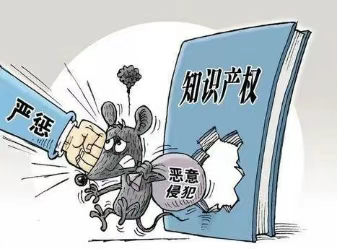
As the value of game intellectual property continues to rise, enforcement actions are expected to further intensify in 2025. As demonstrated by cases such as Shanda Games’ vigorous crackdown on Legend-related IP infringement in 2024, enforcement authorities will continue to strengthen protection of game intellectual property, and intensify crackdowns on private servers, cheats, game reskins, and infringement in derivative markets.
Normalization of Cross-Departmental Coordination
With the maturation of IP case handling mechanisms and enhanced emphasis on intellectual property protection, multiple regions have explored establishing “administrative–criminal coordination” mechanisms. For example, districts such as Xuhui in Shanghai, the Ningxia Hui Autonomous Region, and Baqiao District in Xi’an have already seen multiple departments jointly sign IP protection cooperation agreements, and a number of effective cases were handled in 2024.
It is foreseeable that, given the achievements of prior cross-departmental cooperation, coordination between administrative enforcement and criminal justice will become closer and more efficient in 2025, forming a normalized inter-agency collaboration mechanism that improves enforcement efficiency and increases the cost of infringement for violators.
Clearer Definition of Emerging Forms of Infringement
For emerging game-related fields such as digital collectibles and metaverse-related games, the law is expected to gradually introduce clearer rules to define infringing conduct, thereby providing clearer guidance for judicial practice.
Player Rights Disputes: Upgraded Rights Protection and Dispute Resolution Mechanisms
Greater Emphasis on Player Rights Protection
Drawing lessons from cases such as the Guangdong Consumer Council’s lawsuit invalidating a game company’s “account dormancy” clause, regulators are increasingly emphasizing the protection of player rights. Game companies are being urged to improve service quality and refine user agreements. For unreasonable standard terms and other “霸王条款” (unfair standard clauses), authorities are expected to select typical cases for rectification to safeguard players’ rights to information and choice in game consumption.
Improved Diversified Dispute Resolution Mechanisms
In addition to traditional litigation channels, diversified dispute resolution mechanisms such as arbitration and mediation will be further developed and refined. Players and game companies will be encouraged to resolve disputes through non-litigation means in a faster and more efficient manner, thereby reducing the cost of rights protection.
Enhanced Corporate Information Disclosure Obligations
Game companies may be required to provide more comprehensive and clearer disclosures regarding key game information, such as game rules, probability mechanisms, and data security measures, in order to reduce player disputes arising from information asymmetry. At the same time, game companies should ensure that promotional information is clear and truthful and properly handle customer complaints to prevent false advertising risks.
For example, according to a typical administrative penalty case published in Nanjing, a game company was subject to administrative punishment for failing to specify the activity period for a limited-time gift campaign, and for failing to disclose that a login reward required seven consecutive days of login to be granted.
Gambling-Related Risks in Randomized Game Mechanics: A Combination of Targeted Regulation and Technical Controls
More Refined Regulatory Standards
For randomized gameplay mechanics, regulators are expected to issue more specific and operable standards to clearly distinguish between legitimate game mechanics and gambling-related conduct. For example, regulations governing prize settings and winning probabilities in lottery-style promotional activities are likely to become more detailed.
Heavier Operational Responsibilities
Game operators will bear greater regulatory responsibilities, and will need to strengthen the review and management of gameplay mechanics to ensure that randomized features comply with applicable laws and regulations. Games with potential gambling-related risks will be required to undergo timely rectification.
Crackdown on Off-Platform Transactions
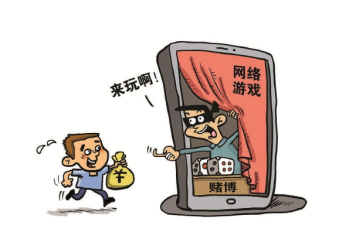
Regulatory oversight will also extend to off-platform transactions. As illustrated by a recently disclosed case involving a streamer who operated a gambling operation through an in-game “magic stone forging” mechanic, gambling-related issues in game currency and item trading markets are expected to attract heightened regulatory attention in 2025. Regulators will intensify inspections of such trading platforms and channels, crack down on gambling activities facilitated through off-platform transactions, and cut off the flow of funds and items associated with gambling activities outside games.
Conclusion
As an important component of the digital economy, online games not only serve entertainment functions but also bear multiple responsibilities related to cultural dissemination and social responsibility. The evolving trends in legal regulation of online games in 2025 are not merely a forceful rectification of industry misconduct, but also a foundation for building a fair, healthy, and innovative game ecosystem. Through the combined effect of rigid legal constraints and industry self-regulation, the online game industry is expected to achieve sustained innovation and development within a standardized regulatory framework.
 (图片来源于互联网)
 (图片来源于互联网)
 (图片来源于互联网)