
Within the mobile internet ecosystem, application distribution platforms and game aggregation platforms provide developers with important traffic entry points. In order to rapidly expand their content libraries, some platforms engage in packet-capturing practices, technically capturing and uploading third-party game installation packages for listing without establishing any cooperation, authorization, or revenue-sharing relationship with the game developers or operators.
Although such packet-capturing practices may appear to be a shortcut for rapid expansion, they in fact conceal significant civil liability risks. From a civil law perspective, the legal risks primarily involve copyright infringement and unfair competition, with liability attribution exhibiting diversified characteristics depending on the specific conduct model.
Copyright Infringement
I. Direct Infringement Risks Toward Game Developers
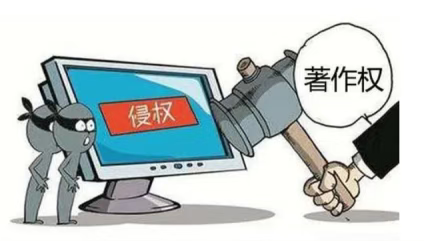
In disputes involving game copyright infringement, the more common scenarios include cracking and copying the source code of an existing game to develop a new game, or engaging in “reskinning” plagiarism, thereby infringing the software copyright of the original game. However, unauthorized packet-capturing and redistribution of third-party game installation packages by platforms may likewise constitute direct copyright infringement against game developers.
 (Image source: Internet)
Reference may be made to prior cases involving cloud gaming platforms accused of infringement, such as the representative “5G Sesame” cloud gaming infringement and unfair competition case ((2020) Yue 0192 Min Chu No. 20405). In that case, the defendant, Qiyun Company, pre-installed online games in which Tencent held copyright on its cloud gaming platform without authorization, allowing users to operate the games through the platform.
The Guangzhou Internet Court held that the defendant pre-installed the game software and, by means of cloud computing, enabled the games to run on cloud servers. Through interactive online video streaming, the platform transmitted compressed game images or operational instructions to users, enabling members of the public to access and operate the games at times and locations of their choosing, thereby infringing Tencent’s right of communication through information networks.
Similarly, in case ((2021) SPC IP Civil Final No. 2193), the Supreme People’s Court held that cloud gaming services fall within the scope of acts regulated by the right of communication through information networks, and that providing access to games to players without authorization from the copyright holder constituted infringement.
Compared with cloud gaming services, platform-based packet-capturing practices represent an even more typical form of infringement. After capturing game installation packages, platforms redistribute them to the public, which in essence constitutes making works available to the public through information networks and therefore carries a high risk of constituting copyright infringement.
 (Image source: Internet)
II. Direct and Indirect Infringement Risks Toward Third-Party Rights Holders
The Haidian District People’s Court of Beijing once issued a Research Report on Online Game Intellectual Property Infringement Cases, summarizing and categorizing service models adopted by game platform operators. Under a pure packet-capturing model, platform operators typically provide technical platform services only and do not conduct prior manual review, which may give rise to the following two types of infringement risks.
1. Direct Infringement Risks Toward Third-Party Rights Holders
Where platforms capture games from other platforms or official sources and list them for distribution, the capturing platform itself may be deemed the game provider, particularly where it is unable to identify or provide the true developer or rights holder. In such circumstances, the platform may be presumed to be the actual provider of the game and may therefore bear direct infringement liability.
2. Indirect Infringement Risks Toward Third-Party Rights Holders
In general, platforms engaging in packet-capturing practices do not conduct prior manual review of captured game content and do not participate in revenue sharing. Nevertheless, considering factors such as the positioning of the infringing games and the obviousness of the infringement, liability determination under the packet-capturing model should follow the fault-based principle.
Specifically, a platform may bear liability where it knew or should have known of the infringing conduct. Large-scale distribution platforms are subject to a heightened duty of care. Where a platform proactively uploads captured games, such conduct is typically presumed to have undergone reasonable review, resulting in a stricter standard for fault attribution.
If the captured game contains obvious infringing content, such as cracked versions of popular games or copied well-known art assets, and the platform fails to conduct review or conducts an inadequate review, the platform may be presumed to be at fault and face infringement liability. Moreover, after receiving a valid infringement notice, failure to promptly take measures such as delisting, blocking, or removal may result in the platform bearing joint and several liability with the developer or operator for the expanded portion of damages.
Unfair Competition Risks
I. Risks Toward Game Developers or Publishers
From the perspective of game developers, packet-capturing practices generally do not directly result in the loss of revenue sharing, unless the developer has entered into an exclusivity agreement with a specific distribution platform. In such cases, the exclusive distributor may assert claims against the packet-capturing platform. However, since developers do not proactively upload game packages themselves, the risk of being deemed in breach of exclusivity obligations is relatively low, and accordingly, the likelihood of liability claims initiated by developers remains limited.
II. Risks Toward Distribution Platforms Whose Games Are Captured
Where a captured game is exclusively distributed by another application distribution platform, user diversion from the original platform may occur, giving rise to unfair competition risks, even in the absence of direct revenue-sharing losses.
Although the capturing platform does not participate in game operation or revenue sharing, its packet-capturing practices divert users from the original distribution platform. As both parties operate as game distribution platforms, a clear competitive relationship exists. Such conduct may be characterized as substitutive competition or traffic hijacking, whereby the capturing platform replaces the core distribution function of the original platform, resulting in user loss or reduced transaction opportunities.
This type of conduct harms the lawful rights and interests of other business operators and falls within Article 2 (the general clause) of the Anti-Unfair Competition Law, constituting unfair competition.
In case ((2020) Jing 73 Min Zhong No. 2972), Mengxiyou Company circumvented Baidu Wenku’s technical download restrictions, enabling users to download documents through its services. The court held that this conduct diverted users from Baidu Wenku, reduced the likelihood of paid usage, affected document upload volumes, and impacted advertising and other revenues, thereby infringing Baidu’s lawful rights and constituting unfair competition.
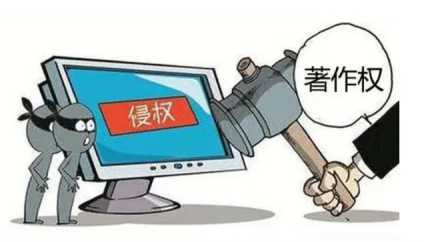
Accordingly, platform-based packet-capturing practices may simultaneously constitute copyright infringement and unfair competition. Platforms engaging in such practices must comply with the principles of good faith and recognized commercial ethics. Once infringement is established, corresponding civil compensation liability shall be borne. In addition, copyright infringement and unfair competition are often subject to administrative penalties, and there have been prior cases in which game aggregation platforms were administratively penalized for disseminating unauthorized online games.
Therefore, the traditional “direct packet capture and redistribution” model entails substantial legal risks.
 (Image source: Internet)
Optimization Recommendations
The most prudent approach is to establish direct cooperation with game developers or operators and to distribute game software through compliant application market mechanisms. Where such cooperation is temporarily unavailable, the following optimization recommendations may be considered:
1. Open Platform Model
The platform provides information storage or hosting services only and does not upload game applications itself. Games are uploaded by users, and upon receipt of infringement notices, the platform promptly verifies and takes measures such as delisting, deletion, or blocking.2. Comprehensive Game Review
License Number Verification: verify whether the game has obtained a valid license number, whether the game name corresponds to the license, and whether the same license number is used by other games, so as to avoid risks associated with license misappropriation or falsification.
Content Review: assess whether the game package has been modified and whether it contains gambling-related, pornographic, violent, or other prohibited content, so as to avoid illegal or criminal risks.
3. Avoid Active Promotion of Captured Games
In particular, avoid proactive recommendations or featured placement. Where no obvious infringement is identified following reasonable review, the overall civil liability risk remains relatively controllable.
 (图片来源于互联网)
 (图片来源于互联网)
 (图片来源于互联网)