On June 13, the Game Rating and Administration Committee of Korea (GRAC) announced that it had blocked on the global Steam platform a game containing content that demeans and distorts the May 18 Gwangju Democratization Movement, namely Gwangju Running Man.
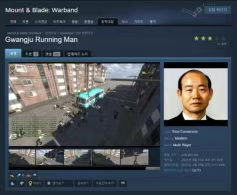 According to GRAC, as early as March of this year, it had prioritized restricting domestic access to the game within South Korea. Subsequently, GRAC engaged in further consultations with Valve Corporation, the operator of Steam, to ensure that users outside South Korea would also be unable to access the game. This process involved cooperation with the May 18 Memorial Foundation and the Ministry of Culture, Sports and Tourism.
The content at issue in Gwangju Running Man does not constitute a standalone game, but rather a user-created modification (mod) based on Mount & Blade: Warband, a game released in 2008. The mod adds models such as armored vehicles, buses, and soldiers to the original game. In September of last year, the mod was uploaded by a user to Steam’s Workshop, enabling a broader group of users to access and use the mod in an open-source manner.
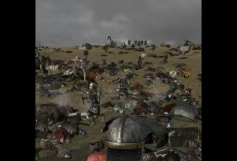 (Original in-game screenshots: when the mod replaces in-game elements with modern military forces or armored vehicles, the scenes resemble a reenactment of the Gwangju Incident.)
The Game Rating and Administration Committee explained to Valve the serious nature of the historical distortion involved in the mod. In response to GRAC’s position, Valve agreed and removed the content globally. Valve stated that it acknowledges the May 18 Gwangju Democratization Movement as an important historical event for the Korean people.
The Gwangju Democratization Movement represents a core event in South Korea’s democratic transition. South Korean mainstream media have characterized its historical evaluation as having undergone a fundamental reversal—from an initial narrative of “justified violent suppression” to recognition as a “milestone of democracy.” Through sustained historical education, cultural creation, and state commemorative activities, its spirit has become a symbol of resistance against authoritarianism and the defense of civil rights. By contrast, the controversial mod’s game content—mapping imagery associated with a military regime—clearly runs counter to mainstream historical understanding.
Historical Background and Course of the Gwangju Democratization Movement (May 18 Incident)
1. Timeline and Causes
From May 18 to May 27, 1980, a large-scale democratic movement erupted in Gwangju and South Jeolla Province in South Korea, historically known as the “May 18 Democratization Movement” or the “Gwangju Incident.”
The immediate trigger was the military coup launched by the Chun Doo-hwan military regime following the assassination of President Park Chung-hee in 1979. On May 17, 1980, the regime issued Martial Law Decree No. 10, which prohibited political activities, closed universities, and arrested democratic leaders such as Kim Dae-jung and Kim Young-sam.
2. Suppression and Civic Resistance
Violent Suppression:
Martial law troops deployed tanks and helicopters to open fire on demonstrators and severed Gwangju’s communications with the outside world.
Organized Civil Resistance:
Citizens established the “Citizens’ Struggle Headquarters,” formed a “Citizen Army” by seizing weapons, occupied the South Jeolla Provincial Government Office, and exposed military violence through a self-published newspaper, The Democratic Citizens’ Bulletin.
Casualties:
Official statistics report 191–207 deaths and 122 critically injured, although actual numbers may have reached several thousand. Economic losses exceeded USD 22 million.
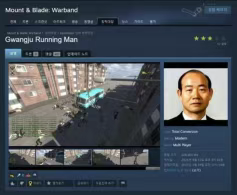 GRAC称,早在今年3月份优先阻止用户在韩国国内对该游戏访问后,GRAC与Steam的运营商Valve公司进一步协商,以确保除韩国地区以外的其他海外用户也无法访问该游戏。这个过程涉及与5月18日纪念基金会和文化、体育和旅游部的合作。
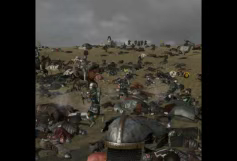 (原游戏截图,如果使用模组替换为现代军队或装甲车,仿佛是光州事件的重演)