
In recent years, alongside the rapid development of the online game industry, a new type of legal dispute has gradually emerged—litigation arising from adults impersonating minors to seek refunds from game companies. The core issue in such disputes lies in the fact that certain adult players exploit the legislative goodwill underlying the special protection regime for minors, attempting to obtain improper economic benefits by fabricating facts. Encouraged and amplified by a large number of legal consulting entities on self-media platforms, lawsuits of this nature against game companies have become increasingly frequent.
Review of a Typical Case
A case publicly disclosed by the Guangzhou Internet Court in June 2025 concerning a fraudulent minor refund claim is highly representative. An adult player, Da Li (pseudonym), accumulated more than RMB 20,000 in in-game top-ups, but attributed the spending to his three-year-old child, Xiao Li, claiming that the child had operated the game account without authorization and demanding a full refund from the game platform.
Upon trial, the court found that:
the child’s age at the time of the top-ups;
the game account’s frequent logins during late-night and early-morning hours;
repeated adult-oriented expressions appearing in the in-game chat channels, such as “I drank too much last night” and “Adults are talking, children don’t interrupt”; and
the fact that the payment accounts associated with the recharge periods showed internet café QR-code payment records
were sufficient to establish that the recharge behavior of the account was not carried out by the minor. The court held that Da Li, as a person with full civil capacity, maliciously exploited the minor protection mechanism, fabricated facts regarding minor recharges, and thereby constituted false litigation.
Accordingly, the court dismissed all of Xiao Li’s claims and issued a judicial fine decision against Da Li for his false litigation conduct, ordering him to pay a fine of RMB 10,000 within a specified period.
 (Image source: Internet)
Such cases reveal the current legal dilemma faced by the game industry: how to protect the legitimate rights of genuine minors while preventing certain adults from maliciously abusing the protection mechanism. Where a game company possesses conclusive evidence proving that the account was operated by an adult, it urgently needs effective response strategies to counter false and malicious litigation, in order to safeguard its lawful rights and maintain market order.
How to Respond?
Where an adult maliciously seeks a refund, and the game company has obtained and can adduce evidence proving that the game account was operated by an adult, the company may explicitly refuse the refund request and inform the user of the reasons. The adult’s recharge behavior fully satisfies the requirements of a valid civil legal act and therefore does not fall within the scope of the minor refund rules.
1. Civil Enforcement Pathway
If the user nevertheless files a lawsuit demanding a refund, the game company may, on the one hand, raise a defense that the plaintiff lacks proper standing, adducing in-game evidence pointing to adult operation of the account.
On the other hand, the game company may shift from a defensive to an offensive posture by filing a counterclaim or a separate action seeking compensation for losses caused by the malicious litigation, such as attorneys’ fees, investigation costs, and other rights-protection expenses incurred in responding to the fraudulent refund claim.
In addition, by reference to the above-mentioned false minor refund case adjudicated by the Guangzhou Internet Court, the game company may apply for the judge to conduct an investigation. Where it is confirmed that the plaintiff maliciously exploited the minor protection mechanism and constituted false litigation, judicial sanctions should be imposed, thereby effectively deterring fraudulent refund lawsuits.
At the same time, game companies may improve the “prohibition of false complaints” clauses in their user agreements, and, based on such agreements, impose measures such as functional restrictions or permanent account bans on the accounts involved. The relevant users (including their identity information, device information, payment information, IP addresses, etc.) may be incorporated into risk monitoring systems or blacklists, subjecting future account registration, login, top-up, and refund requests to stricter review or direct restriction.
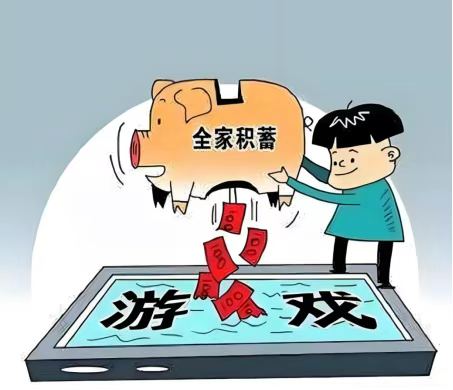 (Image source: Internet)
2. Criminal Enforcement Pathway
Where the evidence is conclusive, adults impersonating minors to seek refunds may incur criminal liability, and game companies may adopt more stringent countermeasures.
On the one hand, impersonating a minor to apply for a refund is, in essence, fraudulent conduct. Pursuant to Article 266 of the Criminal Law, where fraudulently obtained public or private property reaches a relatively large amount (generally RMB 3,000 or above), the conduct constitutes the crime of fraud. If the user misleads the court into supporting the fraudulent minor refund claim, thereby causing losses to the game company, the risk of constituting this crime arises.
On the other hand, once a malicious refund claim enters litigation proceedings, the actor may trigger the Crime of False Litigation under Article 307-1 of the Criminal Law, which provides:
“Whoever institutes a civil lawsuit based on fabricated facts, thereby obstructing judicial order or seriously infringing upon the lawful rights and interests of others, shall be sentenced to fixed-term imprisonment of not more than three years, criminal detention, or public surveillance, and/or be fined; where the circumstances are serious, the offender shall be sentenced to fixed-term imprisonment of not less than three years but not more than seven years, and shall also be fined.”
The judicial fine of RMB 10,000 imposed by the Guangzhou Internet Court on Da Li was precisely based on its determination of false litigation conduct.
In addition, there may be concurrence of multiple offenses. Depending on the specific conduct, if forged birth certificates, household registration books, or other documents are used to apply for refunds, the conduct may simultaneously constitute the crime of forging, altering, or trading official documents, certificates, or seals of state organs. Where minor identity information is illegally obtained for authentication purposes, the conduct may also trigger the crime of infringing citizens’ personal information. When reporting a case to public security authorities, game companies should comprehensively sort out the offender’s unlawful and criminal acts and prepare a criminal complaint, carefully assessing whether to pursue criminal enforcement.
Conclusion
Adults impersonating minors to demand game refunds essentially constitute an abuse of the special protection regime for minors. Such conduct not only infringes upon the lawful rights and interests of game companies, but also erodes the foundation of social integrity. The Guangzhou Internet Court’s judgment in the case involving fabricated recharge claims by a three-year-old child demonstrates the judiciary’s firm stance against false litigation and clearly delineates the legal boundary between legitimate rights protection and malicious fraud.
When facing such disputes, game companies should adopt multi-layered legal response strategies: establishing robust evidence preservation systems at the technical level; accurately deploying defenses based on standing and evidence chains in litigation; and, with respect to malicious conduct, resolutely pursuing civil compensation and criminal liability. The minor protection mechanism must not be allowed to be abused as a profit-seeking tool.
 (图片来源于互联网)
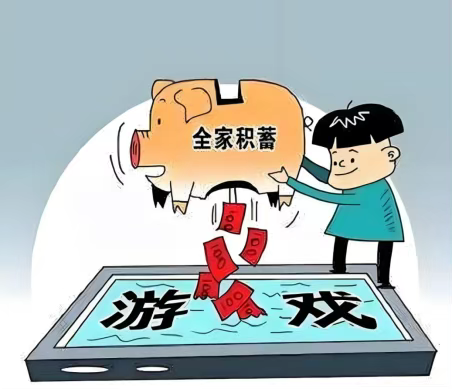 (图片来源于互联网)