
Recently, enforcement cases relating to game licensing (ISBN approvals) have attracted significant public attention. Cross-regional enforcement has become a focal point of discussion. Can administrative enforcement for game licensing violations be carried out across regions? Is there a legal basis for such cross-regional enforcement?
In fact, over the past two years, there have been multiple cross-regional enforcement cases concerning game licensing across the country. We have reviewed relevant cases and summarized them roughly as follows:
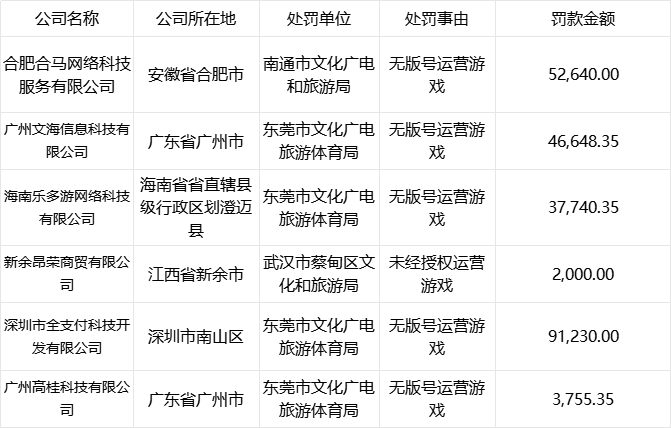 We observe that the phenomenon of cross-regional enforcement is gradually increasing, which has led to widespread questions: in cases involving game licensing, can authorities from other regions also exercise enforcement powers?
What Are the Jurisdictional Rules for Cultural Enforcement?
Article 22 of the Administrative Penalty Law of the People’s Republic of China provides that administrative penalties shall be under the jurisdiction of the administrative authority at the place where the illegal act occurs, but it does not clearly define the scope of “place where the illegal act occurs.”
For cases involving illegal game operations, the place of implementation of operational activities such as game development and publishing is generally limited to the location of the game company. Therefore, it is well-grounded that jurisdiction should be exercised by the cultural enforcement authority at the location of the game company.
Accordingly, in the absence of explicit legal provisions, enforcement authorities should not adopt an expansive interpretation of the “place where the illegal act occurs.” In other words, for cultural enforcement cases, cross-regional enforcement should not be applied.
 (Image source: Internet)
Unreasonableness of Cross-Regional Administrative Enforcement
Cross-regional administrative enforcement may seriously undermine the business environment. At present, the gaming industry is one of the better-performing sectors within China’s internet industry, and many game companies possess strong economic capabilities. If administrative authorities outside the location of game development or publishing are allowed to conduct enforcement, it may lead to “jurisdictional competition” and profit-driven enforcement, thereby severely damaging the business environment.
Enforcement authorities in other regions may not consider the company’s contribution to the local economy or market, such as whether it qualifies as a high-tech enterprise, but may instead focus on what benefits the case could bring to the “non-local” fiscal revenue. This would likely result in disorder in cultural market enforcement and further exacerbate the issue of profit-driven enforcement.
 (Image source: Internet)
Secondly, from the perspective of jurisdictional disputes: where two or more administrative authorities have jurisdiction, the authority that first files the case shall exercise jurisdiction. However, where the local administrative authority of the game company already has jurisdiction, if an authority from another region simultaneously asserts jurisdiction, disputes over administrative jurisdiction are likely to arise. Such disputes require coordination between the authorities, and if coordination fails, designation of jurisdiction by a common higher-level authority would be necessary. This is not conducive to the efficient advancement of administrative procedures.
Finally, from the perspective of legal remedies: if a game company disagrees with an administrative penalty decision, it has the right to apply for administrative reconsideration or initiate administrative litigation. However, in cases of cross-regional enforcement, the company must bring administrative litigation before a court in another jurisdiction, which undoubtedly increases the difficulty of seeking legal remedies and is unfavorable to the protection of its rights.
Kinding’s View
We believe that regulatory enforcement over illegal game operation activities should be exercised exclusively by the cultural enforcement authority at the location of the game company. In other words, the principle of territorial jurisdiction should apply.
This approach is optimal in terms of both legality and reasonableness: it helps maintain market order and combat illegal activities, while also protecting the business environment and preventing profit-driven enforcement.

 (图片来源于互联网)