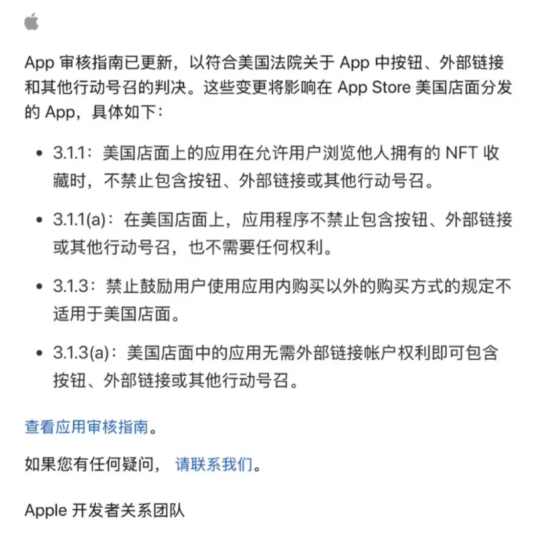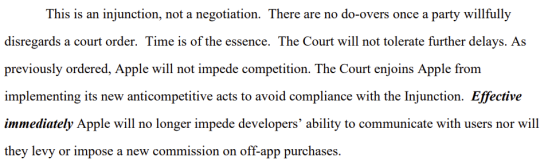
Throughout the entire May Day holiday, a single injunction issued by a federal court in Northern California against Apple Inc. captured the attention of countless companies operating overseas. Apple, for its part, promptly amended relevant U.S. App Store platform policies following the public release of the injunction, allowing applications to link users to their own websites so that users may purchase subscriptions or other digital goods.
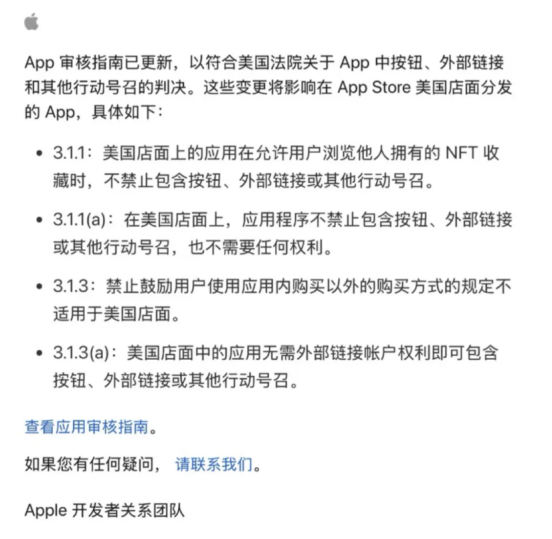
In an email sent to developers, Apple stated: “The App Review Guidelines have been updated to comply with the U.S. court’s ruling regarding buttons, external links, and other calls to action within apps.”
Case Background and Key Holdings of the Judgment
This ruling arose from long-standing challenges by developers to Apple’s App Store policies. Many developers have argued that Apple’s mandatory use of its proprietary payment system, coupled with commissions of up to 30%, as well as restrictions on direct communication between developers and users, constitute anti-competitive conduct in violation of U.S. antitrust laws.
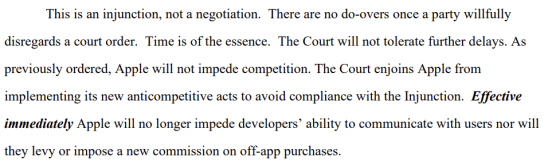
In her ruling, Judge Rogers pointed out that Apple’s conduct not only restricted market competition, but also harmed the interests of both developers and consumers. The core holdings of the judgment include the following three points:
Prohibition of New Anti-Competitive Measures
Apple is prohibited from adopting new policies or technical measures to circumvent compliance obligations, with the aim of ensuring fairness in the app distribution market.Opening Direct Communication Between Developers and Users
Apple may not prohibit developers from directly communicating with users through in-app prompts or other means, including informing users that payments may be completed via external websites.Prohibition on Commissions for Out-of-App Transactions
Apple may not charge commissions on transactions completed outside of applications, thereby safeguarding developers’ revenues and users’ freedom of choice.
The court emphasized that the injunction took immediate effect, and Apple was required to promptly adjust its relevant policies to comply with the ruling.
Current Status and Limitations of Apple’s Policy Adjustments
Although Apple’s policies in the U.S. market have shown signs of relaxation—particularly through amendments to Sections 3.1.1(a) and 3.1.3(a)—developers are still required to comply with stringent rules when implementing alternative payment arrangements.
Under the new policy, apps listed in the U.S. market are permitted to include buttons, external links, or other calls to action within the app to direct users to transactions outside of in-app purchases, and are no longer prohibited from encouraging users to use purchasing methods other than in-app purchases. On the surface, these changes appear to grant developers greater autonomy and flexibility, and in the short term, they do indeed reflect a loosening of policy.
However, we adopt a relatively conservative stance. Despite the policy adjustments, Apple’s long-standing reputation for opaque (“black box”) and stringent review practices means that numerous latent risks remain, which may still restrict the normal operation of products within Apple’s ecosystem. At best, such risks may affect revenue; at worst, they may result in developer account suspension or termination.
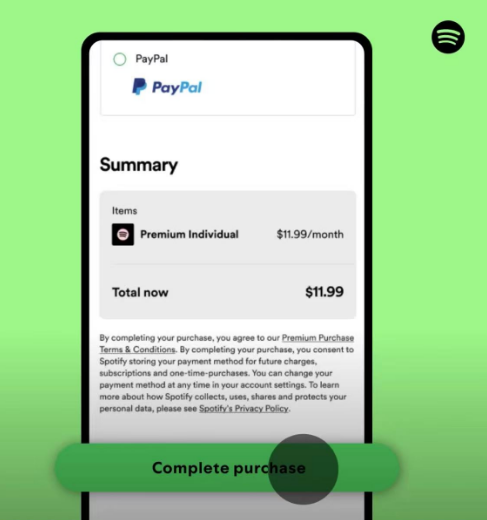
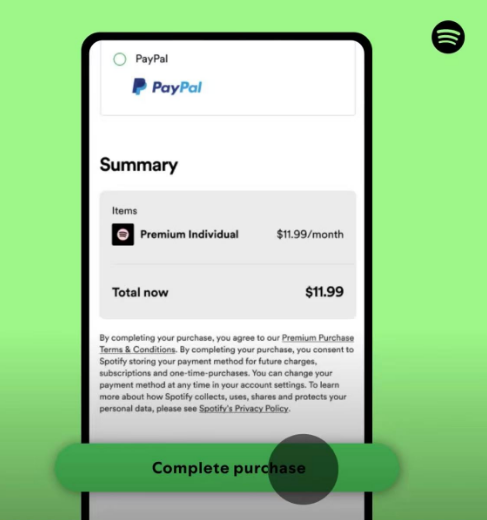 (Spotify has already released a new U.S. version integrating third-party payment options.)
While the new policy adjustments provide a degree of convenience for developers’ U.S. products, Apple’s review mechanisms remain highly uncertain. Developers must exercise caution when leveraging these changes to avoid triggering Apple’s implicit red lines. Apple may still rely on other policy provisions or review practices to restrict applications, or even take severe measures such as removing apps from the store or banning developer accounts.
Examples of policy grounds Apple may rely upon include:
Misleading Content
If Apple determines that an application contains false or misleading information, it may remove the app on the grounds of violating its “Content and Conduct” policies.
Unauthorized Payment Methods
Although external links are now permitted, if Apple deems a developer’s payment system to be insecure or unauthorized, the app may be considered in violation of payment-related rules and removed.
Abuse of Apple’s Payment System
If developers fail to comply with reporting or security requirements associated with external links, Apple may impose sanctions on the grounds of “payment policy violations.”
These examples demonstrate that, even amid policy relaxation, Apple retains ample room to impose restrictions on developers through other policy provisions. A minor misstep may expose developers to the risk of app removal or account suspension.
Key Points for Game Companies Expanding Overseas
For game companies operating overseas, the following points merit particular attention:
Scope of Application of the Injunction
The injunction and Apple’s updated review policies apply to the U.S. App Store and do not restrict the jurisdiction of the developer entity. Common scenarios—such as Hong Kong or Singapore entities distributing apps on the U.S. App Store—are equally covered by this policy update.Cautious Testing of Alternative Payments
Although the policy appears favorable, Apple’s review standards are notoriously unpredictable. If developers intend to experiment with alternative payment solutions in the U.S. market, it is advisable to conduct preliminary testing using backup developer accounts and test builds. Where necessary, a separate developer account and standalone build may be established exclusively for the U.S. App Store, isolated from other distribution regions.Website Payments as a Transitional Solution
At present, website-based payments remain a relatively safer transitional option. Although previous strict prohibitions against in-app traffic redirection have been relaxed, it is still recommended that relevant links be presented in a relatively discreet manner.
Conclusion
In summary, while Apple’s policy adjustments in the U.S. App Store provide developers with new opportunities, its stringent and opaque review practices mean that potential risks persist.
We recommend that developers maintain a conservative approach when leveraging the new policies, closely monitor Apple’s evolving policy landscape and review requirements, and ensure ongoing compliance to avoid revenue losses or account bans resulting from inadvertent violations. That said, a more open app market environment appears to be a broader regulatory trend across jurisdictions worldwide. Whether Apple will further relax restrictions on sideloading and third-party payments in additional regions remains a development worth close observation.